continued from previous post
also taken from the weekly Shabbos emails
This message underlies a famous story told in Maseches Bava Metzia (85b) of Rabbi Chiya, who described how he worked to ensure that Torah would not be forgotten from Israel. He brought flax, planted it, and used the produce to prepare nets, which he then used to catch deer. He fed the meat to the poor, and then used the skins to prepare parchment scrolls, upon which he wrote the Torah and Mishnah. He brought these scrolls to places where there were no teachers, and he taught children, thereby ensuring the continuity of Torah knowledge.
The commentators raised the question of why Rabbi Chiya went through this long process to prepare the scrolls. If Torah was on the verge of being forgotten, it would seem to have made more sense to expedite the process and to try to obtain scrolls that had already been prepared.
The answer is that preparation has an impact. Rabbi Chiya's pure intentions during the preliminary stages of planting the flax, catching the deer and preparing the parchment directly affected the quality of the Torah learning this process facilitated. If he had just obtained ready-made parchment, the learning would not have had the same impact. He injected sanctity into the scrolls through his intentions over the course of the process of preparing them.
Jun 29, 2016


Jun 28, 2016
Shuls, Shabbos and our Intentions
continued from previous post
I received the following in one of the weekly Shabbos emails I subscribe to:
I received the following in one of the weekly Shabbos emails I subscribe to:
The Vilna Gaon remarked (as cited by his brother) that if, when a shul is built, each and every nail is banged into place with the proper intentions, then one will not be able to pray in that synagogue without concentrating. The kedushah generated by the intentions with which it is built will have such an impact that people who pray in the building will automatically feel uplifted and inspired.
This applies to Shabbos preparation, as well. The purer our intentions when we prepare for Shabbos, the more of an impact Shabbos will have upon us. Whether it's the woman's preparation of food, or the work done by the husband to earn money with which to purchase food for Shabbos, if the preparations are done with sincere and pure thoughts, these thoughts will affect the spiritual impact of the Shabbos experience. Of course, Shabbos is inherently sacred and will thus have some impact regardless of the preparations, but the quality and force of that impact depends upon the preparation.
Jun 27, 2016
Do We Affect Inanimate Objects with our Moods and Intentions? part 4
The Ramban refers to this and it means we don't just look at the item, but at the person who put something into it, so that, for example, a Sefer Torah written by a min must be burned. We need to know who the sofer is. The sefer Beis Yisrael says that if the sofer is a yirei shomayim and he writes l'sheim shomayim, he brings a ruach of kedusha (spirit of holiness) into that Torah. If the sofer is a heretic, he brings a ruach ha'tuma (spirit of impurity) into that Torah and whoever reads from it will be influenced by that ruach ha'tuma.
Since I last posted about this, I've come across some new examples.
A man went to R' Yerachmiel of Pshischa and said, I'm a tailor and have acquired a reputation for my expertise. I received the most important commission of my life. The prince asked that I sew him a suit. But when I brought it to him, he yelled, and said it was awful. Rebbe, I am ruined. All my capital was invested in the cloth and my reputation is ruined too
R' Yerachmiel said, remove all the stitches and re-sew it and Hashem will help.
He did so and the prince loved it.
What was the difference between the first and second time when it resulted in the identical suit?
The first time, the stitches were sewn with arrogance which resulted in a repulsive suit, technically perfect but missing chein. The second time, the stitches were sewn with humility which gave the suit its beauty. (from Week in Review, vol. 8, No 16).
Jun 26, 2016
Knee Surgery - Moral Issue
What should a doctor do when a patient complains of knee problems? What if the patient is obese or heavy enough that it is adversely affecting his knees?
Should a doctor say to an overweight patient - no elective knee surgery until you lose weight and seek other ways to help your knees?
Is it morally acceptable for a doctor to operate on someone, which entails anesthesia which has its dangers, various possible complications, and a recovery period, and of course, a hefty fee for the doctor, when the patient's weight is bearing down on his knees and causing the problem? Is that the build-a-hospital-under-the-bridge idea of Chelm in which they don't fix the bridge that is rickety and results in multiple accidents, but construct a hospital on site to deal with the injuries?
Should a doctor say to an overweight patient - no elective knee surgery until you lose weight and seek other ways to help your knees?
Is it morally acceptable for a doctor to operate on someone, which entails anesthesia which has its dangers, various possible complications, and a recovery period, and of course, a hefty fee for the doctor, when the patient's weight is bearing down on his knees and causing the problem? Is that the build-a-hospital-under-the-bridge idea of Chelm in which they don't fix the bridge that is rickety and results in multiple accidents, but construct a hospital on site to deal with the injuries?
Jun 22, 2016
Rains of Blessing
The weather forecast yesterday was for a possible thunderstorm in the morning (which did not happen) and clear for the rest of the day.
It did not occur to me to check the forecast of the place I was going to, not far from where I live. I traveled on a frum bus line and as we arrived at our destination it began to sprinkle. Then drizzle. Then rain. Then pour!
I was completely unprepared for this. Although I had only a short distance to walk from the bus, it just wasn't possible without rain gear, which I did not have. What should I do? I could not get off the bus at the last stop. I said this to the bus driver, and the one person left on the bus said to me, "My daughter is coming to pick me up, do you want a ride?"
"Yes!"
Just getting in and out of the car was drenching but it was fantastic to have this chesed offered to me. He had a younger daughter, not the driver of the car, dash out in the downpour (she had a hood, but still!) to check whether we were at the correct address. Then he said I could use the umbrella in the car to get me the few feet to the door and his daughter came again in order to take the umbrella back from me.
A wonderful chesed, it was such a help, and I bless them.
It did not occur to me to check the forecast of the place I was going to, not far from where I live. I traveled on a frum bus line and as we arrived at our destination it began to sprinkle. Then drizzle. Then rain. Then pour!
I was completely unprepared for this. Although I had only a short distance to walk from the bus, it just wasn't possible without rain gear, which I did not have. What should I do? I could not get off the bus at the last stop. I said this to the bus driver, and the one person left on the bus said to me, "My daughter is coming to pick me up, do you want a ride?"
"Yes!"
Just getting in and out of the car was drenching but it was fantastic to have this chesed offered to me. He had a younger daughter, not the driver of the car, dash out in the downpour (she had a hood, but still!) to check whether we were at the correct address. Then he said I could use the umbrella in the car to get me the few feet to the door and his daughter came again in order to take the umbrella back from me.
A wonderful chesed, it was such a help, and I bless them.
Jun 20, 2016
You Are What You Eat
In Torah Tavlin I read, the Rambam in Moreh Nevuchim says that the foods that we are not allowed to eat are not only spiritually impure, but are harmful to the body. The Rashbam brings a proof for this from the Gemara in Shabbos 86b that gentiles who eat these foods have a different physical makeup than Jews.
Very interestingly, the Chasam Sofer (YD 158) says, based on this Gemara, that while non-Jewish doctors have ne'emanus (you can rely on them), nevertheless all their research is based on the biology of non-Jews, which is not like ours because of their different dietary habits. Therefore, their medical conclusions do not necessarily apply to Jews!
Jun 1, 2016
A Peek at Biblical Times
I just finished reading a book about a slum in India. The extreme poverty in which millions of people live is quite awful. However, what struck me about what I read, is how the people the author describes regularly transgress the sins of idol worship, sexual immorality, murder, theft, corrupt courts - that's five out of the seven Noahide Laws!
There is a scene in which a person is seen lying on the roadside, badly injured. The author describes various people who pass by and do nothing to help, being busy with their own lives. The hours pass. More people see the weakening man whose cries become fainter. By the end of the day his corpse is carted away and the wrong cause of death is deliberately written down in the records.
That is when it struck me - this is what Avrohom Avinu had to contend with, a world of idolatry, murder, immorality, and corruption, the likes of Sedom, the people of Canaan, of Egypt. Through India, we get to see the revolution Avrohom brought to the world. Monotheism! Kindness! Loyalty!
And we can see the inroads that the message of Avrohom and subsequent generations of Jews has made in the world. America, in particular, has championed the Bible and has promoted Torah morality and values. It is known as a malchus of chesed which is unprecedented in the history of the world. And where does this value of the sanctity of life and the desire to help others come from? From Avrohom and the Jewish people.
There are many Americans threatening these values today, those who equate the life of a gorilla and a human, those who seek to legalize immorality, those who support legalizing the murder of babies. But although this is terribly harmful, the bedrock was laid and we won't be going backward to barbarian times. Truth, justice, and the supremacy of one G-d will hold sway.
There is a scene in which a person is seen lying on the roadside, badly injured. The author describes various people who pass by and do nothing to help, being busy with their own lives. The hours pass. More people see the weakening man whose cries become fainter. By the end of the day his corpse is carted away and the wrong cause of death is deliberately written down in the records.
That is when it struck me - this is what Avrohom Avinu had to contend with, a world of idolatry, murder, immorality, and corruption, the likes of Sedom, the people of Canaan, of Egypt. Through India, we get to see the revolution Avrohom brought to the world. Monotheism! Kindness! Loyalty!
And we can see the inroads that the message of Avrohom and subsequent generations of Jews has made in the world. America, in particular, has championed the Bible and has promoted Torah morality and values. It is known as a malchus of chesed which is unprecedented in the history of the world. And where does this value of the sanctity of life and the desire to help others come from? From Avrohom and the Jewish people.
There are many Americans threatening these values today, those who equate the life of a gorilla and a human, those who seek to legalize immorality, those who support legalizing the murder of babies. But although this is terribly harmful, the bedrock was laid and we won't be going backward to barbarian times. Truth, justice, and the supremacy of one G-d will hold sway.
May 31, 2016
Seat Shadchan
I boarded a crowded train and saw an elderly frum woman get on too. She held on to a pole near me. She looked too elderly and fragile for that.
I looked over the possibilities and picked a man sitting in front of her who was busy with his phone. I said, "Sir ..."
No response.
"Excuse me ..."
He looked up. I gestured to the woman and said, "Maybe you'd give her ..."
He leaped up and said, "Sorry, I wasn't paying attention!"
The elderly woman was thrilled and she thanked me and thanked the man and sat down and opened her siddur.
Would I have done that for a non-Jewish person who looked in need of a seat? I think so.
I am grateful for having been given the opportunity to be a seat shadchan this morning.
I looked over the possibilities and picked a man sitting in front of her who was busy with his phone. I said, "Sir ..."
No response.
"Excuse me ..."
He looked up. I gestured to the woman and said, "Maybe you'd give her ..."
He leaped up and said, "Sorry, I wasn't paying attention!"
The elderly woman was thrilled and she thanked me and thanked the man and sat down and opened her siddur.
Would I have done that for a non-Jewish person who looked in need of a seat? I think so.
I am grateful for having been given the opportunity to be a seat shadchan this morning.
May 30, 2016
Saluting Servicemen who Died for their Country
Some Wikipedia information about Memorial Day and Jews in the military to remind us to feel grateful to our fellow Jews and all Americans who fought for our country:
Today is Memorial Day in the United States, a federal holiday for remembering those who died while serving the country's armed forces (not to be confused with Veterans Day. Memorial Day is a day of remembering the men and women who died while serving, while Veterans Day celebrates the service of all U.S. military veterans).
Today is Memorial Day in the United States, a federal holiday for remembering those who died while serving the country's armed forces (not to be confused with Veterans Day. Memorial Day is a day of remembering the men and women who died while serving, while Veterans Day celebrates the service of all U.S. military veterans).
Jewish Americans have served in the United States armed forces dating back to before the colonial era, when Jews had served in militias of the Thirteen Colonies. Jewish military personnel have served in all branches of the armed forces and in every major armed conflict to which the United States has been involved. The Jewish Chaplains Council estimated that there are currently 10,000 known Jewish servicemen and servicewomen on active duty.
A number of Jewish American servicemen have gained fame due to their military service, and many have received awards and decorations for distinguished service, valor, or heroism. More than 20 Jewish servicemen were awarded the military's highest award, the Medal of Honor.
Revolutionary War - American Jews served in numbers disproportionate to their small population of the period. Of an estimated population of 3,000, 160 Jews served on the Colonial side
Civil War - Jews were among the supporters of each side of the American Civil War. Some 150,000 Jews lived in the United States at the time of the American Civil War, about 0.5 percent of the population. One academic estimate was that at least 8,000 Jewish soldiers fought for the Union and Confederate during the Civil War. Another estimates that at least 10,000 Jews served, about 7,000 for the Union and 3,000 for the Confederacy, with some 600 Jewish soldiers killed in battle.
During World War II, approximately 500,000 American Jews, out of a total population of 4,770,000 American Jews, served in the various branches of the United States armed services. Roughly 52,000 of these received U.S. military awards.
Korean and Vietnam Wars - Over 150,000 Jewish Americans served in the Korean War. In Vietnam, 30,000 served.
May 29, 2016
Societal Realities
In a recent Family First article about kids at risk and grandparents, it says, "... Grandparents may feel entitled to an opinion; after all, their children didn't go off [the derech]! This thinking is flawed, rejoins the younger generation, because the absence of 1970s children-in-crisis probably had more to do with societal realities than exemplary parenting."
Case dismissed.
No explanation about what "societal realities" are being referred to.
No hard data to back up the statement.
Do the "societal realities" include the fact that babies weren't sent out to babysitters? That most mothers were home to send their children off to school and greet them when they came home and that most either worked part time or not at all?
Are there "societal realities" of the 1970's that we can reclaim in this decade?
I'd like an article on that subject.
Case dismissed.
No explanation about what "societal realities" are being referred to.
No hard data to back up the statement.
Do the "societal realities" include the fact that babies weren't sent out to babysitters? That most mothers were home to send their children off to school and greet them when they came home and that most either worked part time or not at all?
Are there "societal realities" of the 1970's that we can reclaim in this decade?
I'd like an article on that subject.
May 25, 2016
A Time for Everything
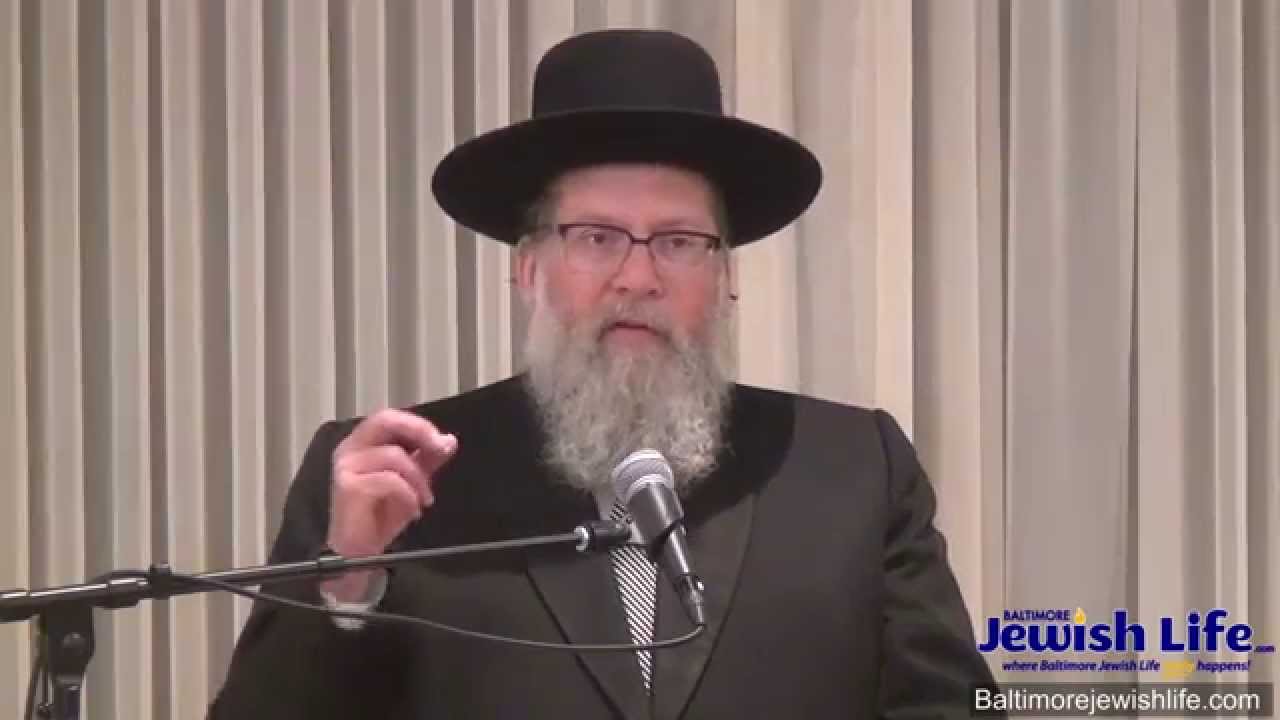
R' Moshe Tuvia Lieff said the following in a shiur this week that both surprised and delighted me. He said, the
highlight of kids' life is Purim.
There are boys who are given an opportunity to have fun, vehicles are rented to take them around to collect money for tzedaka and visit their rebbis' homes. However, recently there's been a trend by well meaning but misguided people who ask:
How much money do you raise with your group? $200 each? If you sit and learn for 10 hours on Purim, I'll give you $200!
Sounds good, kiymu v'kiblu, give up visiting the rebbi's house and raising money and learning Torah instead.
But, says R' Lieff, I think it's the most ludicrous thing we can do!
Why bother saying selichos on Yom Kippur? Just sit and learn! If learning is the most important thing in life.
Why do we bother saying Kinos till chatzos with explanations and hearing shiurim? Why not just daven the regular way and then sit and learn Kamtza and Bar Kamtza? Because we need to lament the churban!
Because we need to celebrate and dance with the Torah on Simchas Torah!
Learning for several hours on these days is commendable but it's Simchas Torah, it's Purim! This is sucking the marrow out of Yiddishkeit.
May 15, 2016
Time Needed for Creation
There are frum people who find it necessary to distort Torah to fit with scientific theories such as Age of the Universe. The fact that for thousands of years the Jewish people understood the Six Days of Creation to be six 24 hour periods doesn't stop them from quoting verses, Medrashim and other sources to further their apologetics. Of course they are aware that the Torah greats of previous generations were well aware of those sources they are quoting.
They wonder: How could Hashem have created this complex world in only six days? Even those (not necessarily Jewish) who believe in Intelligent Design maintain that eons were necessary to produce our universe.
The real question is the other way round: Why did Hashem need six days to create the world when He could have done so in an instant?
They wonder: How could Hashem have created this complex world in only six days? Even those (not necessarily Jewish) who believe in Intelligent Design maintain that eons were necessary to produce our universe.
The real question is the other way round: Why did Hashem need six days to create the world when He could have done so in an instant?
May 13, 2016
Dishonoring Our Great People

A longstanding peeve of mine was reinforced today as I was listening to a shiur. The person giving the shiur said, "I was walking on Shmuel Ha'Navi ..."
Shmuel Ha'Navi is the name of a street in Yerushalayim. There is a section of Yerushalayim where the streets are named for the prophets: Rechov Shmuel Ha'Navi, Rechov Yechezkel, Rechov Eli Ha'Cohen etc.
I have long thought it is wrong to name streets for great people because what ends up happening is, it is not an honor to them, but a dishonor. Like, "Let's meet for pizza on Shmuel Ha'Navi," or as the person giving the shiur said (though didn't mean it as it sounded), he walked on the prophet.
May 1, 2016
Post-Pesach Gratitude
A continuation of this :
I am grateful that this Pesach turned out so enjoyable with nary a glitch.
I am grateful that we had mostly good weather with some beautiful days, some nice days, pleasant temperatures, minimal rain.
I am grateful the gym was open on Chol Ha'Moed and that I went.
I am grateful that the Yom Tov was relaxing, not pressured.
I am grateful that my neighbor does an end-of-Pesach ne'ilas ha'chag - seudas Moshiach for a beautiful end to Yom Tov.
I am grateful that we are almost finished putting the house back together again after dismantling our Pesach set-up.
Apr 27, 2016
Beautiful Names
Sometimes you hear people say, "What a beautiful name!" when they hear the name of a baby or are otherwise told about a name.
Question is, what do they mean? What makes a name beautiful?
I can think of two factors. One is the significance of the name; it's not the name per se but what it signifies, maybe the person being named for.
Second is more mundane, that the syllables are pleasing to the ear. Names with a ches sound are not mellifluous. Names with a lamed are. And if there is more than one name, it's how pleasingly the names sound together, if they "work" well together or just seem stuck together randomly (in which case usually only one of the names will be used on a regular basis).
Other reasons?
Question is, what do they mean? What makes a name beautiful?
I can think of two factors. One is the significance of the name; it's not the name per se but what it signifies, maybe the person being named for.
Second is more mundane, that the syllables are pleasing to the ear. Names with a ches sound are not mellifluous. Names with a lamed are. And if there is more than one name, it's how pleasingly the names sound together, if they "work" well together or just seem stuck together randomly (in which case usually only one of the names will be used on a regular basis).
Other reasons?
Subscribe to:
Posts (Atom)

 Posts
Posts

