continued from previous post
A woman said that many years ago, her sister went to an Israeli abortion clinic to dissuade women from aborting their babies. She met a woman who was there for a scheduled abortion. Her sister said don't do it; give the baby to me! The woman instinctively said, it's my baby! Then she realized the irony in what she said, considering what she was about to do, and said her husband lost his job, and they were in the middle of renovations which they could not continue and were exposed to the elements. She felt desperate.
Her sister pledged to raise money for the woman and did so and the woman gave birth to a boy. They kept in touch and the sister went to the child's bar mitzva and wedding.
"Whoever sustains one Jewish life is like one who sustains an entire world."
Showing posts with label societal problems. Show all posts
Showing posts with label societal problems. Show all posts
Jan 26, 2017


Jan 25, 2017
Save Jewish Lives
I received a few emails promoting Efrat's fundraising campaign in which donations received were tripled in value. I think they run a campaign every year around parshas Shemos, the parsha where Pharaoh decrees that baby boys should be killed.
I have written about my outrage over the lack of protest about Jews killing Jews daily in Israel here . We are horrified and upset, rightly so, when Israelis are murdered by terrorists, but I fail to understand why Jews killing Jews through abortions is not as horrifying or upsetting to people. Maybe if pictures of babies were posted every day with reminders that they're being killed, and their deaths are paid for by the Israeli government, something would happen.
In the meantime, Efrat and Just One Life do what they can to prevent abortions. Here is what the founder of Efrat, Dr. Eli Schussheim, writes:
I have written about my outrage over the lack of protest about Jews killing Jews daily in Israel here . We are horrified and upset, rightly so, when Israelis are murdered by terrorists, but I fail to understand why Jews killing Jews through abortions is not as horrifying or upsetting to people. Maybe if pictures of babies were posted every day with reminders that they're being killed, and their deaths are paid for by the Israeli government, something would happen.
In the meantime, Efrat and Just One Life do what they can to prevent abortions. Here is what the founder of Efrat, Dr. Eli Schussheim, writes:
In 1977 when new laws about abortions came out and I found out that 60 thousand abortions are done yearly in Israel, I was totally shocked. I thought what I can do to stop this terrible plague but I had no means with which to proceed.
I felt it my obligation to act and not stand by the side. And so I stepped ahead and started to work on the matter by notifying people of the terrible situation.
In this way, we reached where we are today saving more than 68,600 terminations.
The amount of abortions shrank to a third of the amount it was then.
It is not only with contributions that we can try to minimize abortions in Israel. The main problem is that most of the Jewish population is unaware that 100 babies are lost daily due to abortions.
Nov 28, 2016
OTD in Yerushalayim
In a Binah magazine interview with Rebbetzin Chana Weinberg, of the Slonimer family, a 7th generation Yerushalmi, a descendent of the Boruch Taam, a Baharan* einikel, I read a shocking thing.
She said that after World War II, when she was in fifth grade, she went to the first Bais Yaakov school in Yerushalayim. One of the teachers was Chava Landsberg, a student of Sarah Schenirer. They were approximately forty girls and only three girls remained frum. "If I tell you their names, you will tremble ... daughters of roshei yeshiva, daughters of Rebbes, all went off the derech completely. All of my friends and neighbors joined the movements of the Haganah, Etzel, Brit Chashmonaim and Beitar, singing patriotic songs and going to meetings. The bachurim too joined the Haganah. I would see boys in the streets, without hats, with guns, and then I would recognize them as bachurim from Yeshiva Eitz Chaim.
"Some of the youth left because of the extreme poverty, but many left because of their chinuch. In some of these homes, the parents had come from Poland already influenced by the Bund. Their homes were not whole and the children went searching for what was missing. They wanted excitement, they wanted enthusiasm!
"My friends laughed at me and said that I was naïve, that I didn't know what was going on. I knew very well what was going on but I didn't ever want to go with them. I wasn't interested at all. There were many times I have asked myself why, why didn't I go?
"The only thing I can think of is that I had so much more at home. I was fulfilled; I wasn't missing anything."
*Baharan stands for Ben HaRav Nachum. Each of the five sons of Rav Nachum Shadiker (1810-1865) had a dream that they should move to Eretz Yisrael. Without knowing that the others had the same dream, each one packed to leave Poland. They all met at the boat and traveled together to Eretz Yisrael. They were known as the Baharan.
Oct 30, 2016
Taking a Tough Stance 2

Follow-up to this post: here
In the entertaining book, Ne Siyata D'Shmaya, the second to last story is about the author davening in a shul where bachurim were talking during kerias ha'Torah. He went over to them and gently told them it's forbidden to talk during kerias ha'Torah. They were silent for less than five minutes. He got up again and asked them to stop talking. They stopped for less than two minutes before resuming talking.
During the next Aliya he told them, the next time I hear you talking, I'm going to throw you out of shul. They looked at him scornfully, were quiet for a minute, then resumed talking.
He went behind them and grabbed the biggest bachur and shoved him out of shul.
Ten years later, he was back in that area and davened in that shul. He noticed a tall yungerman pacing the shul during kerias ha'Torah, ensuring there was no talking.
Unexpectedly, the man came over to him and shook his hand and hugged him. The author had no idea who he was. When davening was over, the young man said, "Ten years ago you threw a kid out of shul and he fell on a table and broke it. That kid was me and since then, I've been extremely careful never to speak a word during kerias ha'Torah. Plus, I make sure that no one in shul talks either."
So how long are parents, educators, and rabbis going to try the nicey-nice approach about derech eretz, tznius, decorum in shul, etc. without results before resorting to forcefully enforcing Shulchan Aruch and community standards?
Sep 19, 2016
Everything is Up for Discussion
There was an interesting article by R' Dovid Hofstedter in Mishpacha magazine in which he questions whether the overabundance of negative information we are bombarded with is good for us.
He brings Torah examples that demonstrate that exposure to negative things has an effect on us, even when those things are mitzvah related (like destroying an ir nidachas or seeing a sota in her disgrace).
Furthermore, R' Hofstedter says, we become connected to what we see and if we are connected to it, we are disconnected from Hashem. "Every connection to something extraneous from Torah and mitzvos, even something that is not prohibited, detaches us and disconnects us from Torah and mitzvos, our ultimate connection to Hashem."
It is interesting that Mishpacha printed his article which says "All kinds of topics that in the not-too-distant past were never found in our publications, now not only appear in print but also become conversation points at the Shabbos table and therefore, part of our lives. They thus attain a measure of de facto acceptability."
Not only that, but people say how "brave" the publication is for writing about what was formerly taboo! They think that somehow, magically, just by discussing it, we have accomplished something, even if all it amounts to is someone feeling better for having read it. But what about the negative fallout for bringing it out into the open?
Not only that, but people say how "brave" the publication is for writing about what was formerly taboo! They think that somehow, magically, just by discussing it, we have accomplished something, even if all it amounts to is someone feeling better for having read it. But what about the negative fallout for bringing it out into the open?
Nov 22, 2015
When Talk is Dangerous
Tehillim 73:15 אם אמרתי אספרה כמו הנה דור בניך בגדתי
"If I said, "I shall tell it as it is," behold I have made the generation of Your children into traitors."
Rashi: Said Asaph, “If I said in my heart to tell everything as it is, all that His people say about this, I would make them into traitors and wicked men."
Metzudas Dovid: If I say it the way it is, i.e. whatever it is that I think, then the talking will incite even those who are your children, i.e. those who believe in You, for when they hear what is thought, I will make them into traitors which is why I won't talk much.
I heard someone say, based on this verse, that the trend to discuss all our frum society's ills out in the open is the modern day version of "es iz shver tzu zayn a Yid" - it's hard to be a Jew. How many Jews are being turned off to frum life when they hear about all the crises and social ills we are suffering from?
Back in the early 1900's, when shomer Shabbos Jews sighed over the hardships of being religious, they lost their children who were not interested in living a hard, religious life. These days, why would someone want to belong to a society which has a shidduch crisis, tuition crisis, parnassa crisis, housing crisis, drop-outs, those who keep "half Shabbos," Kiddush clubs and alcoholism, drug addiction, mental illness, shalom bayis problems and molestation problems? Sounds quite unappealing!
Some editors and askanim pat themselves on the back for "breaking taboos" and (supposedly) dispelling stigmas by airing issues that used to be kept quiet. Are we gaining or losing thereby, that is the question. What would they say if they knew that just one person was turned off to Yiddishkeit because of this openness?
a related post
"If I said, "I shall tell it as it is," behold I have made the generation of Your children into traitors."
Rashi: Said Asaph, “If I said in my heart to tell everything as it is, all that His people say about this, I would make them into traitors and wicked men."
Metzudas Dovid: If I say it the way it is, i.e. whatever it is that I think, then the talking will incite even those who are your children, i.e. those who believe in You, for when they hear what is thought, I will make them into traitors which is why I won't talk much.
I heard someone say, based on this verse, that the trend to discuss all our frum society's ills out in the open is the modern day version of "es iz shver tzu zayn a Yid" - it's hard to be a Jew. How many Jews are being turned off to frum life when they hear about all the crises and social ills we are suffering from?
Back in the early 1900's, when shomer Shabbos Jews sighed over the hardships of being religious, they lost their children who were not interested in living a hard, religious life. These days, why would someone want to belong to a society which has a shidduch crisis, tuition crisis, parnassa crisis, housing crisis, drop-outs, those who keep "half Shabbos," Kiddush clubs and alcoholism, drug addiction, mental illness, shalom bayis problems and molestation problems? Sounds quite unappealing!
Some editors and askanim pat themselves on the back for "breaking taboos" and (supposedly) dispelling stigmas by airing issues that used to be kept quiet. Are we gaining or losing thereby, that is the question. What would they say if they knew that just one person was turned off to Yiddishkeit because of this openness?
a related post
Jul 2, 2015
Do We Care About Jewish Life?
One year ago, on June 30th, the bodies of the three teenaged boys abducted in Israel were found. This has been mentioned in the news, of course, the past week or two.
Question: What about the tens of thousands (that's tens of thousands) of abortions that take place in Israel every year?
Numerous articles have been written about the three boys, and rightly so. But where are the numerous articles about Jewish babies killed day after day, month after month, year after year in the State of Israel?
Question: What about the tens of thousands (that's tens of thousands) of abortions that take place in Israel every year?
Numerous articles have been written about the three boys, and rightly so. But where are the numerous articles about Jewish babies killed day after day, month after month, year after year in the State of Israel?
Aug 20, 2014
The Reason for Yeridas Ha'Doros
In the Pesach 2014 issue of Binah, Rebbetzin Feige Twerski writes:
"At a Torah Umesorah convention some years ago, R' Aharon Feldman, rosh yeshiva of Ner Israel, observed that children of our generation are not of the same caliber as those of his generation. The reason for that, he asserted, is that children today are not being raised by their mothers. They are, for the most part, consigned to a variety of daycare situations. He quickly added that economic reasons necessitated this phenomenon that has affected the quality of offspring who, by right, should be in the loving environment provided by parents, grandparents, and extended family."
She goes on to say that in an address to mechanchim, R' Hutner spoke about Rabbi Yehoshua ben Gamla who instituted formal education. Up until that time, Torah was transmitted directly from father to son while daughters learned from their mothers. It came to a point where many children were uneducated which is why R' Yehoshua instituted a yeshiva system where children were taught outside the home.
R' Hutner pointed out that although R' Yehoshua is praised in the Gemara for doing what he did and he saved the day, it was nonetheless a tragedy for Klal Yisrael. Why? Because ideally the Torah, "the art of living should flow from the same source as physical life. The same parents who brought the children into the world, the parents, should be the ones who provide the Torah path in life."
R' Hutner gave an analogy to a country where, because the air was polluted, all babies had to be put in incubators if they were to survive. This is not the ideal situation, of course, but if children can't breathe the natural air, we have to be grateful for incubators.
"Relegating our children to others to educate, shape, and form them is akin to placing them in incubators. This is not the ideal, but we have no choice. The Gemara praises R' Yehoshua ben Gamla. Given the change in times, his was a heroic act."
Rebbetzin Twerski pointed out that Hashem puts us in a situation for the good, and the point is not to pine for yesteryear. It's to acknowledge the reality of our situation and figure out how best to deal with it.
Jan 28, 2014
An Honest Critique

R' Berel Wein is intriguing because his books are published by Artscroll, which means he has the imprimatur of the black hat-brand of frum Judaism. And yet, his views are not party line.
He wrote a column earlier this winter (which I read eight days ago) entitled "The Truth of Satire." In it, he refers to a satire that describes the dissonance between the lifestyle of the Chashmonaim heroes of the Chanuka story and Israeli chareidim. He then goes on to say that today's black hat rank and file and their leadership are out of touch with reality. Rather than castigate the gedolim, he lambastes their "handlers" (as though that helps take the onus off the gedolim).
His primary complaint is that they support a system which cannot sustain itself, i.e. deliberate poverty and expectations of support, and refuse to consider change. It was refreshing to read an open critique by "one of our own." Read it here
Jan 27, 2014
Does It Work Both Ways?
There is an ongoing discussion in R' Grylak's column in Mishpacha magazine about parents who expel their wayward children from their homes. He is incredulous that parents can do this, especially to 15-16 year old girls.
A rabbi who founded a home for these homeless girls tells R' Grylak that it is the shame the parents feel because of their child, the feeling of betrayal, that she humiliated them in front of the world. "After we sacrificed so much for her, after we nurtured and raised her, she turns around and spits in our faces?" And he says that throwing her out is their revenge.
R' Grylak then goes on to elaborate on the erroneous idea that parents have that their children are their personal property which is why they feel so deeply ashamed and hurt when their children reject their upbringing.
When I read this, my mind went off on a tangent. According to R' Grylak's reasoning, there would be no good reason for parents to kvell and feel nachas when their children do well. If, according to him, we should not feel ashamed if our children do things to reject our teachings, by the same token, should we not feel proud and thrilled when our children embrace our teachings?
A rabbi who founded a home for these homeless girls tells R' Grylak that it is the shame the parents feel because of their child, the feeling of betrayal, that she humiliated them in front of the world. "After we sacrificed so much for her, after we nurtured and raised her, she turns around and spits in our faces?" And he says that throwing her out is their revenge.
R' Grylak then goes on to elaborate on the erroneous idea that parents have that their children are their personal property which is why they feel so deeply ashamed and hurt when their children reject their upbringing.
When I read this, my mind went off on a tangent. According to R' Grylak's reasoning, there would be no good reason for parents to kvell and feel nachas when their children do well. If, according to him, we should not feel ashamed if our children do things to reject our teachings, by the same token, should we not feel proud and thrilled when our children embrace our teachings?
Jun 21, 2013
Feb 25, 2013
Focus on Over-Consumption

I give Benzion Klatzko credit for his unpopular remarks in a recent talk entitled "The Grinch that Stole Purim." For those not up on their Dr. Seuss, it's a take-off on a story about a grumpy creature that makes plans to deprive the Whos of their holiday presents, dinners, and decorations.
Klatzko laments the wet-rag attitude towards Purim by those who seek to minimize (or eliminate) noise-making at the mention of Haman's name, minimize shalach-manos giving, minimize (or eliminate) drinking, and say you're too old to dress up. He thinks they're a bunch of spoil-sports and are taking Purim away from us, and he's got a good point!
Does drinking get out of hand? Sometimes. Does shalach manos giving get out of hand? Sometimes. But when we hear too much about things getting out of hand, then the mussar-giving is out of hand!
Actually, I think year round eating and enticements to eat with increasingly lurid advertisements and cookbooks has gotten out of hand in the frum world. This affects us every day of the year, not just one, and it affects the health of men, women and children, not just men. So rather than harping on excessive Purim mitzva and minhag observance, I'd like to hear more from our leaders about excessive non-mitzva and minhag eating indulging.
Jan 14, 2013
Financial Strategies from the People at Mesila

In response to the question in the comment posted to the previous post, what they can do is read the book, Your Money and Your Life: Mesila’s down-to-earth, Torah-based strategies for managing your finances. This book is a compilation of Mesila’s financial advice columns that ran in Hamodia.
Shmuli Margulies, Mesila’s chairman, said “The material in this book is very different from the material you will find in other books on financial management. Our goal in writing this book, like our goal in all of our activities, was to combine Torah hashkafah, professional knowledge, and the experience we have amassed in our years of experience working with families and businesses, in a way that will help people to successfully navigate contemporary financial challenges and achieve financial stability.”
Mesila's stated mission is to empower families and businesses to seek, achieve and maintain financial stability.
Mesila is dedicated to combating poverty by:
- Raising public awareness of the importance of financial stability and independence
- Promoting the development of attitudes and habits that lead to financial stability
- Giving business owners the professional tools to manage their businesses correctly
- Guiding people to create and implement sustainable, long-term solutions to the economic challenges they face
I read the book and overall, it sounds sensible. It bothers me a little that although they talk about bitachon, they place such an emphasis on hishtadlus that I don't see where bitachon really comes into the picture. For example, they believe in constantly upgrading your skills and marketability. Why is that necessary if a person did reasonable hishtadlus? They will say that upgrading your skills is part of reasonable hishtadlus.
I also wonder about their seeming belief that everyone can attain financial stability. That seems to come from the mindset that if you put in the effort and handle your finances right, you will succeed. Where is Hashem in this picture?
Nov 29, 2012
Feeling Good versus Actually Helping
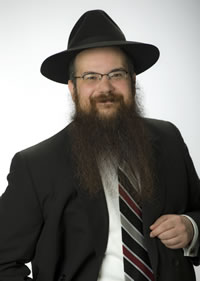
I'm impressed with R' Shais Taub's approach to addiction. I haven't read his book but I've see a number of his articles. In an Ami article he says that addictions are a person's attempt at a solution to his problems. Therefore, he sees no reason for a zero-tolerance policy against teenaged drinking, for it's not the alcohol that's the problem.
He points out that the government has spent billions on drug and alcohol education and he doesn't think it stopped a single person from becoming addicted. ""Awareness and prevention" campaigns make people feel good, and they're easy to get funding for, but do they help anyone?" he asks. He goes on to say, "If someone has the underlying issues that make them feel the need to self-medicate, then no amount of "awareness and prevention" will help. They will still have the same inner pain. I think we should focus far more on giving our children the spiritual tools to be emotionally healthy people."
The frum world has latched on to the "awareness" campaign in many areas as can be seen in the subjects of articles covered in frum magazines. You sense the self-congratulatory spirit in these magazines. They feel so virtuous for taking taboo topics out "from under the rug," and for attempting to "debunk stigmas." They feel even more justified when people write in letters lauding them for being "courageous" in "tackling these painful subjects." But is this awareness only making us feel good, as though we are helping anyone merely by talking about these problems publicly? If yes, let's see the evidence.
related posts:
here
here
Jul 1, 2012
Echoes of a Previous Post

In the Spring issue of Jewish Action magazine there was a symposium on the Orthodox Family of the 21st century. One of the respondents, Rivkah Rabinowitz, is a social worker who is a family therapist. I found it interesting that she wrote precisely what I wrote in a post of two and a half years ago: here, although she does not give any explanation as to the reasoning behind her wondering.
In her words:
"There are daily, weekly and monthly “kosher” newspapers and magazines published and distributed worldwide. Many of them publish well-written articles exposing important social issues and raising communal awareness. Formerly taboo subjects are often openly discussed ...
"And yet, while the proliferation of such frank discussions in frum media outlets clearly indicates revolutionary growth and thinking, perhaps there is a negative side to all of this as well.
The prevalence of divorce is one such example.
Divorce used to be a taboo topic. When I attended school in the Sixties and Seventies, I did not have a single classmate whose parents had divorced. Out of my high school graduating class of thirty-two girls, one of my classmates divorced early on, and a second after twenty years of marriage.
Out of my twenty-four-year-old daughter’s graduating class of thirty-eight, five classmates have parents who are divorced and there are already four divorces in the class itself. That’s a huge change from my day...
"I cannot help but wonder: were some vulnerable young people influenced by the constant flow of articles on divorce? Were they convinced that their marriages were so bad because they mirrored the stories in certain frum publications where the spouses divorced and then “lived happily ever after”? Did such articles provide a false sense of support and reassurance?
"These are tough questions. By bringing issues to the forefront, people are surely helped. But have we contributed to the creation of broken homes? Is all the frum media attention on the tough issues in our society a contributing factor? Does naming the pain, with titles such as “shidduch crisis,” “kids on the fringe,” “abusive spouse” and “Internet addiction,” somehow unleash a monster that feeds on itself? Is the media reporting on a particular phenomenon, or is it in fact helping to create it? This is an age-old dilemma, and the proliferation of frum newspapers, magazines, and other forms of media makes this question more relevant today than ever."
Aug 30, 2011
Author's Candid Observation

"I used to think that by writing about my various struggles and sharing them with others, I would end them, exorcise them forever. But I was wrong."
How refreshing! Someone in a frum publication who has not only discovered, but let us know, that talking or writing about something is not synonymous with eliminating the problem! We have been subject to numerous exposes on a wide range of ills, epidemics, and crises and have been patting ourselves on the back for our willingness to face our problems. Many people have "come clean," sharing very personal life stories with or even without pseudonyms. We have been told that this is the first step in dealing with our society's problems.
However, there is never any follow-up research done to inform us whether the ills, epidemics and crises have receded, been mitigated, or done away with as a result of airing our problems in public. What were the statistics before the exposure and what are they now. Nobody knows.
If this author's experience is any indication, I'm afraid that the results of our "tell all" approach are disappointing.
Aug 12, 2011
Choosing to Disconnect

Many people have commented that this is what Shabbos accomplishes, but I think this initiative serves another purpose. As shomer Shabbos individuals, using technology is not an option. I think what R' Wallerstein is seeking to accomplish is to get people to set aside their preoccupation with their gadgets even when it halachically permissible to use them. He sees the great detriment of people not connecting with people in a personal, face-to-face way, throughout the week. He described standing behind someone at the checkout counter who was yapping away on her phone while the clerk rang up her purchases. Upon moving away from the counter and examining her receipt, she had questions which prompted her to go back and question the cashier. Because she hadn't been paying attention when she was being checked out, she caused the people behind her on the line to be delayed and prompted a nasty remark from the cashier. This is an example of what R' Wallerstein is talking about. Unplugging. Shutting the cell phone. Greeting people. Paying attention to people.
Although there have been people who spent hours on the phone, at least, up until recently, they were confined to their homes and the only people who suffered were their immediate family. Now, with mobile phones, the interruptions and rudeness are everywhere. I've been to a shiur when various phones have rung and been answered several times over the course of an hour. That's inconsiderate to the speaker and other participants. Checking messages and ringing phones in shul, at the Kosel, at weddings and funerals are further invasions.
R' Wallerstein's point is "connection." I think an equally important goal is discipline. To ensure that our technology serves us and is not our master.
Nov 11, 2010
Dirty Laundry part 2

Where does the Torah NOT say to hang out our dirty laundry? Have you ever read Sefer Devarim? Even Parashas Bereishis? There is never any attempt in Judaism to hide ourselves from the truth of our condition and, if we are in need of repair, to change.
Yes, I have, baruch Hashem, seen payoffs from the issues that my stories have raised. Read this week's ... for a very poignant letter from a reader about how healing it is for her to read ...[name of book]
...[name of book] brought about actual social change, which is very gratifying. If you are, indeed, sincerely arguing in favor of NOT hanging out dirty laundry, how do you propose change? How do you suggest introducing healing and developing new paths?
And I'm sorry that you find the line, "If it helps just one person, it's worth it," tiring. Firstly, there's no such thing. People are so interconnected that if one person is helped, the effects can spread to thousands. Secondly, since we are so very much the same it is nearly impossible for something to resonate within one single person.
To which I said:
Let me get this straight - you are comparing a fictionalized serial to our G-d given Torah?! (insert shocked face emoticon)
You have learned from Torah that it is a worthy activity to point out our flaws. Hmmm. Yeshaya said, "And in the midst of an unclean nation I dwell," and he was punished. As the tzaddik and prophet he was, surely he wasn't ch'v gratuitously badmouthing the Jewish people, and still, he was punished.
A new chamber of zechus was created by Rabbi Levi Yitzchok of Berditchev for seeking the good in the Jewish people and highlighting it. As the tzaddik he was, he was well aware of the mitzva of rebuke and surely fulfilled the mitzva, and yet, he teaches us to look with a "good eye" and be sure to speak well of our fellow Jews.
The focus of many laws associated with Shemiras Ha'Lashon is to avoid any derogatory remarks about one another. So indeed, not only is it not recommended that we "air our dirty laundry in public" (defined as publicly discussing personal affairs that could cause embarrassment or distress), we are enjoined to do the opposite.
In today's climate, society finds it laudable when people "tell all." This immodest attitude has crept into frum society so that people address audiences and write articles telling quite personal stories about themselves, their marriages, their lives. It's extremely popular because we find it fascinating to hear about other people and their adventures, especially when they share (too) personal details. And some people become so immersed in even the made-up stories that incredibly, a woman wrote to Mishpacha saying that a particular installment ruined her Shabbos because she was so distressed by the conduct of fictional characters!
The exception to all the above is l'toeles (for positive benefit) as defined by the Torah: to fulfill the mitzva of rebuke, for example.
I have noticed that people seem to think that discussing a problem is practically synonymous with having done something concrete to solve it. Reading about a problem, whether in a fictional or non-fictional article might make people feel good if they are grappling with that problem. Is that a valid t'oeles? I can hear where it would be valid if this person went to consult with someone and part of what they are told is that they are not alone. But I'm not convinced that presenting our foibles (and worse) to a general audience is beneficial. What consideration, if any, is given to the possibility that it will pull people down, that it will expose them to ways of life that they never considered?
There is the chilul Hashem aspect too. Do we need the "outside world" hearing how we "beat our chests" and admit our sins?
I am disappointed that you delegitimize another point of view by denigrating it as "burying heads in the sand" rather than being open to hearing that this view has some merit even if you don't think the merits are sufficiently weighty. It sounds like you think that R' Levi Yitzchok was ch'v a Pollyana.
As to how to make positive changes in our society, what did we see done in the past, over the millenia? We saw great people addressing audiences, in person or in writing, and exhorting them to observe mitzvos and avoid sin, inspiring them to love and fear of G-d. We see movements like Daf Yomi and Shemiras Ha'Lashon promoted by individuals who had the siyata dishmaya to succeed, changing frum society. I know of no positive social change that has resulted from frum fictional serial stories. I'm sure you're convinced they have been the catalyst for change but until I hear what those changes are and am convinced that nothing negative resulted, I view fictional serials for what I think they are: entertainment, diversions and/or kosher soap operas. Some frum writers insert some Torah messages but I believe that the ikar is the story. When the ikar is the Torah message, the writing is usually not particularly entertaining like in the "older mentor-young seeker" literary technique which has been used a number of times, because the writer is focused on the Torah message and not as much (or at all) on developing the story and characters.
P.S. As for non-fictional articles about sensitive issues that are purportedly written for the public welfare, there is reason to be exceedingly cautious. There is evidence that bringing certain issues (anorexia, depression) to the fore has increased harmful behavior, not minimized it.
See a previous post of mine on this subject called "Increase the Light" from Dec. 6
http://bikores.blogspot.com/2009/12/increase-light.html
Subscribe to:
Posts (Atom)

 Posts
Posts

