Someone in a shiur quoted a hospital volunteer as saying that in heaven it is decreed how much time we will spend in hospitals. Either we can be in hospitals as a patient or as a visitor.
This is like what it says (Gemara Bava Basra 10): Rabbi Yehudah b'Rabbi Shalom says, Hashem's judgment on Rosh Hashanah decides losses as well as gains.
The story is told of Raban Yochanan ben Zakai, who dreamt one Motza'ei Rosh Hashanah that his nephews would lose seven hundred Zuz during the coming year. Throughout the year, he persuaded them to keep giving tzedaka (so as to fulfill the dream in the finest possible way). When, on the following Erev Yom-Kipur, they were still seventeen Zuzim short - the king's tax men came and claimed from them seventeen Zuz.
When Raban Yochanan ben Zakai reassured them that they were not destined to lose any more, and told them about his dream, they asked him why he did not inform them about the dream earlier, in which case they would have given all the money of their own free will. He told them he wanted them to give the money purely for the sake of the Mitzvah, and not for the least ulterior motive.
So we see this idea that we have a destiny that will be fulfilled in some form or another and we have a choice of how it will be done. See this post here for other examples.
Showing posts with label suffering. Show all posts
Showing posts with label suffering. Show all posts
Oct 31, 2015


Sep 10, 2015
Sharing the Burden
I read: Rav Chaim Shmulevitz had a son born in Eretz Yisroel in the middle of the War of Independence and the bris was held in the hospital. Since bombs and debris were falling every few moments, one had to run from building to building in the short moments between bombs. As Rav Chaim was running with a relative, he spotted an injured child who was almost completely bandaged. The great rosh yeshiva stopped running to look at the child and cry over his injuries. His relative begged the rosh yeshiva to run for cover, to no avail.
The rosh yeshiva later explained: “Foolish people think that being nosei b’ol im chaveiro (sharing your friend's burden) only means offering practical help when you can. No, the essence of this middah is to share his pain.
In case you wonder of what use is this sharing, you must know that sharing the pain diminishes it for the one who is injured” (Sefer Moach Veleiv).
***
The discussion comes up now and then, whether it's a war in Israel or some other distressing circumstance, does it help anyone if I forgo dessert because other people somewhere are suffering?
I recently read that Rabbi Weitzman of Brownsville, Brooklyn issued a psak during World War II which said, if a couple wanted to marry, there was a chuppa at his house, some cake and soda, and nothing more. No celebration, no dancing, because Jews were dying. Rabbi Teitz of Elizabeth, NJ had a similar rule at his shul at that time.
As for this sharing the pain diminishing it for the victim, I would like to hear more about that. How does that work? What's the source for that?
The rosh yeshiva later explained: “Foolish people think that being nosei b’ol im chaveiro (sharing your friend's burden) only means offering practical help when you can. No, the essence of this middah is to share his pain.
In case you wonder of what use is this sharing, you must know that sharing the pain diminishes it for the one who is injured” (Sefer Moach Veleiv).
***
The discussion comes up now and then, whether it's a war in Israel or some other distressing circumstance, does it help anyone if I forgo dessert because other people somewhere are suffering?
I recently read that Rabbi Weitzman of Brownsville, Brooklyn issued a psak during World War II which said, if a couple wanted to marry, there was a chuppa at his house, some cake and soda, and nothing more. No celebration, no dancing, because Jews were dying. Rabbi Teitz of Elizabeth, NJ had a similar rule at his shul at that time.
As for this sharing the pain diminishing it for the victim, I would like to hear more about that. How does that work? What's the source for that?
Feb 21, 2014
Who Are We Really?

I read a poignant story in an October issue of Hamodia's Inyan magazine, written by R' Avraham Y. Heschel. It begins with a story that the author tells of a man, we'll call him Shimon, who protested nearly every week in shul, complaining that he should get the second aliya.
The problem was, the rav of the shul was a Levi, but Shimon felt that as a Levi too, he should have a chance at that aliya. The rav even frequently told the gabbai to let Shimon have the aliya at least some of the time, but the gabbai refused, saying it was the rav's aliya and Shimon had to make do with occasionally getting maftir and only receiving Levi on the rare occasions that the rav was away.
This went on for years. Shimon remained a member of the shul but was always bothered about not receiving the Levi aliya.
One day, Shimon came to shul all excited about his older brother, we'll call him Yaakov, having received permission to leave Russia and come to America. The rav told the gabbai that he absolutely must give Shimon's brother the second aliya, Levi, on Shabbos, and the gabbai agreed, considering the special circumstances.
When Yaakov was called up he seemed puzzled. He asked why he had been given this aliya. The gabbai said, well, your brother is a Levi, so I assumed you are too.
Yaakov chuckled and said, "He thought he was a Levi? Shimon was a little kid when he had to run away during the war. He doesn't remember. We are not Leviyim."
R' Heschel says the story is true and he heard it from the rav of that shul. He goes on to write a powerful lesson from the story. For years, Shimon was upset because he thought he should be getting the second aliya. Actually, the second aliya was not his and he could have had any of the other aliyos. "Shimon's problem was that he didn't know who he really was."
Many people are stuck deep in negative feelings, struggling with painful memories or a difficult life. They are convinced, he says, that they are not capable of moving forward, that their problems are too great, their hurts too deep, their challenges too mighty for them to live a relaxed, happy life. But, this is only because they really don't know themselves!
to be continued
Apr 7, 2013
Spare Yourself
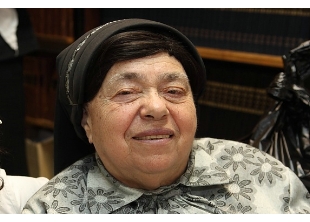
I'm almost finished reading the Artscroll book about Rebbetzin Kanievsky a'h. It has been a very enjoyable and inspirational read about a very special woman. Her outstanding midda was patience. She had patience for nudniks and mentally unbalanced people, as well as the hundreds who came to see her daily. Her heart overflowed with love and concern for others.
When her concerned family and friends wanted her to cut down on the number of visitors she received each day, her standard response was:
"Hashem has allotted each person a certain amount of agmas nefesh (aggravation) to suffer in this world. Every time you feel someone else's pain, you are sparing yourself personal pain. Hashem sees the anguish you are suffering with your friend, and if you undertake to actually help your friend, Hashem will most definitely minimize the personal pain you were slated to suffer."
This reminds me of this post.
Oct 13, 2012
There is No Outsmarting G-d

In Aleinu L'Shabei'ach Bereishis, there is a letter from the Steipler Gaon (R' Yaakov Yisrael Kanievsky, d. 1985) which sets out a fundamental outlook on life. It is written in connection to women and children, but the message applies to everyone.
He writes that women make a big mistake when they think that by choosing not to have many children their lives will be easier. All difficulties in life are decreed by Hashem on Rosh Hashana and there is no getting around them. If a person tries to escape from some burden that brings suffering with it, a different affliction will take its place so that his portion of suffering is neither more nor less than it would have been.
Hashem has many messengers: illnesses, financial woes, humiliations, controversies, quarrels between spouses or other family members, friends, neighbors or business partners, inexplicable mishaps, anxieties etc. No strategy in the world will add or detract from what was designated for us, both in pain and pleasure. If a person chooses to lighten his burden in one way, Hashem will provide an alternative.
This reminds me of this post: here and Rosie's comment about it is Hashem who enables mankind to make discoveries such as penicillin and vaccinations. Hashem has given us the way to eradicate many formerly fatal illnesses, but ... like it says in the Steipler's letter, whatever is meted out on Rosh Hashana is what we will experience, no matter the progress of modern medicine.
And what about the modern-day scourge of self-inflicted misery? People in western cultures are making themselves sick with all sorts of emotional problems due to unbalanced thinking.
I think it would be incorrect to say that if we were able to teach everyone healthy thought patterns, well, so Hashem would afflict us with other problems. Just as it's a mitzva to take care of our physical health and doing so is not a matter of attempting to get around any gezeira that may have been decreed, so too and even more so, it is our obligation to guard our minds.
On another note, on the words “And they[the Egyptians] embittered their lives with hard work, in mortar and in bricks…by which they made them serve with rigor” (Shmos 1:14). “And they embittered their lives” – the Zohar says this is the Torah (of which it is said [regarding words of Torah], “for they are our life”); “with hard work (b’avoda kasha)” – this refers to a quandary in learning (kushia); “in mortar (b’chomer)” – this is the kal v’chomer; “and in all work in the field” – this is a Braisa; “and in bricks (l’veinim)” – this is the clarification (libun) of Torah law.
We learn from this that it is possible to replace and exchange all the hardships of galus – making a living, other troubles, etc. – for spiritual matters.
Subscribe to:
Posts (Atom)

 Posts
Posts

