There was a chubby, frum lady lady on the subway with a chubby child, maybe 15 months old, in a stroller. The child was eating potato chips while mommy was busy with her phone. Some time later, the child's greasy hands were grasping a small chocolate bar.
Oy.
Food was used to occupy the child, keep her quiet, uncomplaining, not bothering anyone including mommy. Sad.
Sad because the mother doesn't know how to regard food properly and sad because she is teaching her baby bad habits that will stick with the child forever, most likely. It's sad to watch it happening.
Showing posts with label discipline. Show all posts
Showing posts with label discipline. Show all posts
Apr 14, 2015


Jan 19, 2015
Disciplined Thinking
Someone presented the following situation. She had married off her first child and due to an oversight, they had not given a bracha to an uncle.
After the chuppa, her mother told her that the uncle was upset and he and his wife were leaving. Of course, the baalas simcha was mortified to hear about this and she apologized and begged the uncle to stay. Naturally, this shterred (disturbed) the simcha.
Her question was, what should she have done? *
The answer given by the speaker was, the Satan intervenes at holy and special times and we cannot allow it. What she should have done was determined that she was not going to deal with this situation at the wedding; she would deal with it the next day. The wedding is a time for simcha and gratitude!
I liked this answer because it did not dismiss the situation. Rather, it gave it its due but at the right time, tomorrow, not today. We often get caught up in the issue of the moment, feeling outraged/sorry/defensive etc. but we need the discipline to assign the matter its due time. Shabbos, for example, is not the time. A simcha is not the time.
An added bonus, and no small thing, is that by dealing with it later, we will be able to approach it much more calmly and handle it better than in the moment.
* Obviously, I am appalled that someone 1) would be so zealous about his honor and would 2) shter someone's simcha over it, but what the uncle should have done is not the question here.
After the chuppa, her mother told her that the uncle was upset and he and his wife were leaving. Of course, the baalas simcha was mortified to hear about this and she apologized and begged the uncle to stay. Naturally, this shterred (disturbed) the simcha.
Her question was, what should she have done? *
The answer given by the speaker was, the Satan intervenes at holy and special times and we cannot allow it. What she should have done was determined that she was not going to deal with this situation at the wedding; she would deal with it the next day. The wedding is a time for simcha and gratitude!
I liked this answer because it did not dismiss the situation. Rather, it gave it its due but at the right time, tomorrow, not today. We often get caught up in the issue of the moment, feeling outraged/sorry/defensive etc. but we need the discipline to assign the matter its due time. Shabbos, for example, is not the time. A simcha is not the time.
An added bonus, and no small thing, is that by dealing with it later, we will be able to approach it much more calmly and handle it better than in the moment.
* Obviously, I am appalled that someone 1) would be so zealous about his honor and would 2) shter someone's simcha over it, but what the uncle should have done is not the question here.
Jun 28, 2014
Chinuch for Table Manners
Shabbos morning. In many homes, adults and children, or just children, eat cake. I happened to be in someone's home where little children, perhaps ages 3-6, were walking around the house holding cake (messy, chocolatey cake, no less).
It was harmless and the adults obviously don't have my squeamishness about food and crumbs all over and dirty hands and Pesach awareness. However, even allowing for variances in how to handle messes, I thought this was a chinuch problem. And this is probably not because I am in the middle of reading a book describing a frum home Czechoslovakia and the great emphasis on discipline and manners (along with plenty of love).
What's the chinuch problem? Not instilling and cultivating discipline in children from the youngest ages. Allowing them to go where they please with food in their hands. Not teaching them that we eat at the table. Sitting down. Then we finish eating and we wipe or wash our hands. And (if the child is old enough) we say a bracha achrona.
Our society's lack of discipline is at odds with a life of Torah and mitzvos; at odds with kabbolas ol malchus shomayim. Allowing children to do what they want, where they want, whenever they want or too often, cripples them later in life. It's the easier route for parents but it's not chinuch.
It was harmless and the adults obviously don't have my squeamishness about food and crumbs all over and dirty hands and Pesach awareness. However, even allowing for variances in how to handle messes, I thought this was a chinuch problem. And this is probably not because I am in the middle of reading a book describing a frum home Czechoslovakia and the great emphasis on discipline and manners (along with plenty of love).
What's the chinuch problem? Not instilling and cultivating discipline in children from the youngest ages. Allowing them to go where they please with food in their hands. Not teaching them that we eat at the table. Sitting down. Then we finish eating and we wipe or wash our hands. And (if the child is old enough) we say a bracha achrona.
Our society's lack of discipline is at odds with a life of Torah and mitzvos; at odds with kabbolas ol malchus shomayim. Allowing children to do what they want, where they want, whenever they want or too often, cripples them later in life. It's the easier route for parents but it's not chinuch.
Jan 14, 2014
It's Inherently Contradictory

That is a quote from a letter to the editor of a frum publication. The author goes on to say that he joined OA and since then he has maintained a 150 pound weight loss.
After reading contradictory statements like these time and again, I can't help but wonder. Is it possible that I am the only one who notices that he is not making any sense? He just said he has a G-d inflicted disease in which he lacks the ability to control food choices or portion size. In the next breath he extols an organization that he joined which has helped him control food choices and portion sizes. Nobody comes to his home and monitors his food intake. There are no cameras recording all his eating. No penalties if he makes the wrong choices.
What happens is, he decides to control is food intake. So does he have a disease or not? Can he control himself or not?
Aren't the answers obvious? I.e. He acquired terrible eating habits and is working to overcome them. That is commendable. I don't see why they have to falsify the facts. Why the need for the disease lie? Why the need for an illogical claim of lack of control when those who "work the steps" are controlling themselves?
He concludes the letter by saying, "There is a solution. It is not surgical. It is not in taking supplements. It is not counting points. It is not by tricking your body into burning its own fat. Rather, the solution is Overeaters Anonymous."
Why not this alternate conclusion: There is a solution. It is neither surgical nor does it involve supplements nor counting points nor tricking your body. It's about free will and acknowledging that as a human being we have free choice and can exercise this power. For ain davar ha'omed bifnei ha'ratzon - nothing stands in the way of one's will, as the author has shown.
Dec 8, 2012
I'm Grateful for My Gratitude List

I did it. For an entire year. Yay me.
One year ago, on December 8, 2011, I started writing down two things every day for which I feel grateful.
see my post here
726 entries later I've covered many sorts of things including childhood, schooling, family, modern conveniences, kindnesses, opportunities.
I did not repeat entries, so even though there were numerous gorgeous weather days, for which I was grateful, I only included that one time.
Some days' entries were easy to write, they were obvious. Other days, I had to struggle to come up with something new.
Some entries are items to be grateful for all the time, while other entries pertained to that day only like being grateful I caught the bus.
I'm thinking of printing out the list and reviewing it, maybe two a day again. Because I found that although the exercise of writing down two things a day was excellent, now I think I will benefit from going over the list and giving more thought to the items I wrote down.
Sep 23, 2012
You Need a D&C (Determination and Commitment)
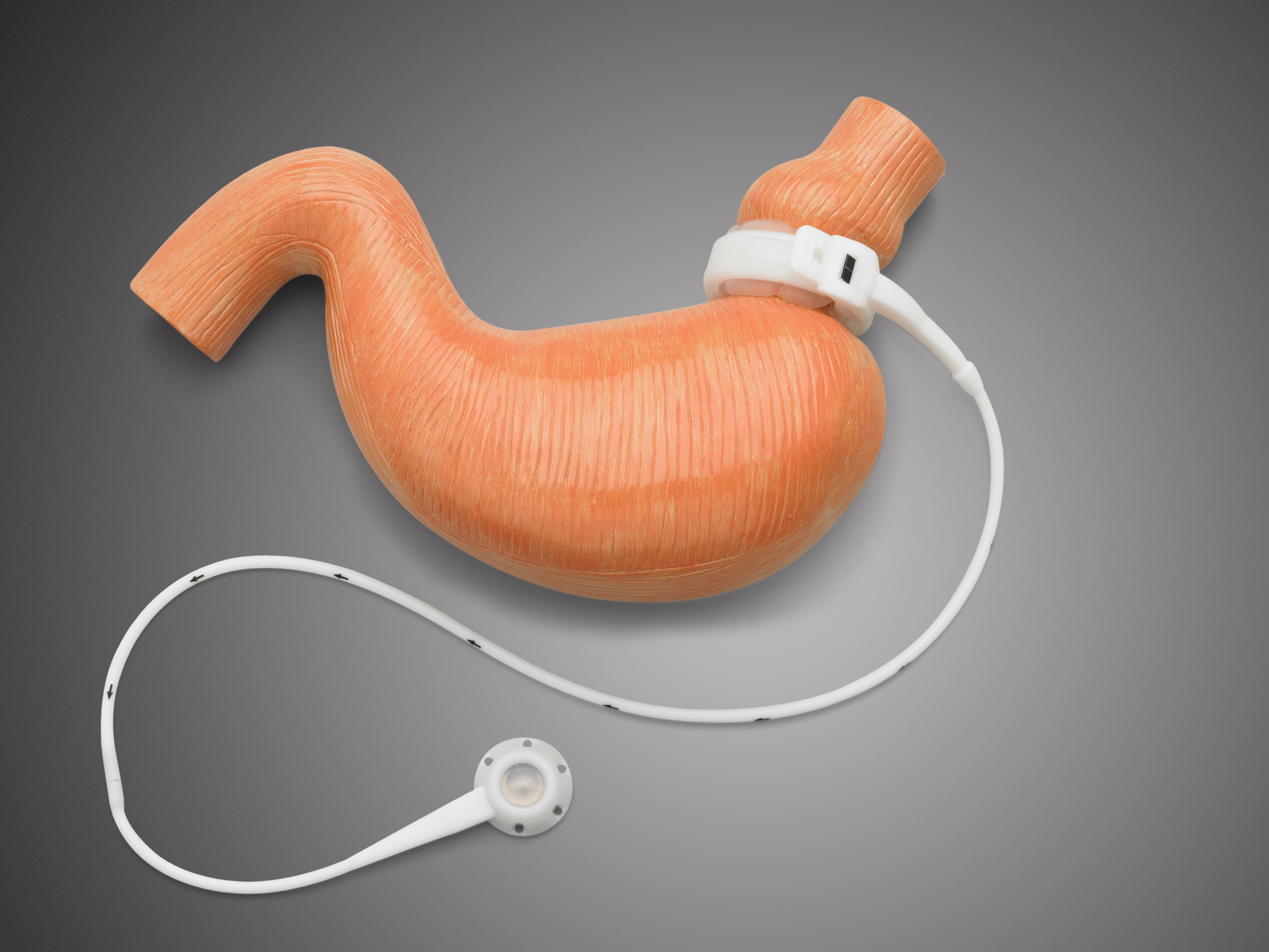
Surgical solutions to obesity are written about here and there in frum publications. After one such article, someone wrote a letter to the editor expressing her surprise that the woman in the article who had lap band surgery feels guilty for taking the easy way out:
"As someone who underwent the same procedure, I think it's basically the only way out and not so easy at all ... Actually, you need major determination if you want to be successful."
She repeats the warning, "If you want to be successful, you need to be extremely determined and committed."
I seem to be missing something here. If you need to be extremely determined and committed with the lapband surgery in order to be successful, why can't the identical determination and commitment be applied to proper eating without undergoing surgery? Can she muster that singlemindedness only upon going under the knife?
In an article about lap band surgery I read, "The most important aspect to the success of lap band surgery is its follow up care. Without suitable modifications in lifestyle, it is not possible to lose any weight through lap band surgery. It is not easy to lose excess weight; however with the right attitude and commitment, it is possible to change your life for the better." Hmmm. Again, wouldn't modifications in lifestyle and the right attitude and commitment make all the difference without surgery?
Blessed will be the person who can devise ways of helping people gain control and learn self-restraint with the power of their mind.
Oct 6, 2011
Spiritual Spontaneity

I listened to an intriguing shiur by Rabbi Doniel Katz (a teacher at Neve) on the subject of zerizus - alacrity. He said he had thought the chapter on zerizus in Mesillas Yesharim is for lazy people and he is the kind of person who is active. However, zrizus is not so much about physical laziness (though Ramchal says it's one of the things that impede zrizus) as it is about not wanting to cause discomfort to oneself. Here are some points that he made:
We are drawn to pleasure and flee from pain, with pain including such things as getting out of a warm bed. Pain is any subtle discomfort. Zrizus is about eliminating the obstacles in your way from A to B in avodas Hashem. The kveidus, heaviness, is coming from the nefesh ha'behamis, the animal soul within us, i.e. everything that gets in the way of my manifesting my spiritual potential.
Laziness is when we gravitate to the slightest pleasure and are repulsed by any discomfort.
Zrizus is to be morally/spiritually spontaneous, to be so identified with your soul that you take immediate action when it comes to mitzva opportunities.
In an interesting paradoz, to foster zrizus, you need to delay physical responses.
A Chassidic vort says everything spiritual should be done b'retzifus (continually) and everything physical should be disrupted. When you sit down to learn, commit to concentrate and not interrupt. When you sit down to eat, occasionally put down your fork and think about a dvar Torah.We are not living in a time in which tolerating discomfort is seen as a value anymore. Hence, the greater challenge.
Aug 12, 2011
Choosing to Disconnect

Many people have commented that this is what Shabbos accomplishes, but I think this initiative serves another purpose. As shomer Shabbos individuals, using technology is not an option. I think what R' Wallerstein is seeking to accomplish is to get people to set aside their preoccupation with their gadgets even when it halachically permissible to use them. He sees the great detriment of people not connecting with people in a personal, face-to-face way, throughout the week. He described standing behind someone at the checkout counter who was yapping away on her phone while the clerk rang up her purchases. Upon moving away from the counter and examining her receipt, she had questions which prompted her to go back and question the cashier. Because she hadn't been paying attention when she was being checked out, she caused the people behind her on the line to be delayed and prompted a nasty remark from the cashier. This is an example of what R' Wallerstein is talking about. Unplugging. Shutting the cell phone. Greeting people. Paying attention to people.
Although there have been people who spent hours on the phone, at least, up until recently, they were confined to their homes and the only people who suffered were their immediate family. Now, with mobile phones, the interruptions and rudeness are everywhere. I've been to a shiur when various phones have rung and been answered several times over the course of an hour. That's inconsiderate to the speaker and other participants. Checking messages and ringing phones in shul, at the Kosel, at weddings and funerals are further invasions.
R' Wallerstein's point is "connection." I think an equally important goal is discipline. To ensure that our technology serves us and is not our master.
May 30, 2011
Finger Pointing in the Wrong Direction

A rabbi is quoted as saying, "Cell phones have wrought devastation in people's lives. Before the advent of cell phones, we would never have believed that people could stoop to such levels of rudeness and worse."
He doesn't think people necessarily have to get rid of their phones (that would be a futile goal) but says, "If a person feels that his cell phone is beneficial or indispensable, he does not have to discard it, but he cannot become a slave to it. A cell phone does not have to be attached to him at all times. Nothing will happen if he leaves it at home when it is not absolutely necessary."
Seems to me that the problem is not the cell phone at all. For just as knives and fire and numerous other even more innocuous items can be used for the most beneficial purposes or in harmful ways, cell phones are no different.
The issue is one of discipline with which we, as a generation, are struggling. Lack of discipline is adversely affecting us in numerous areas of our lives and cell phone usage is yet another way we demonstrate our lack of control. So it's not the poor phone that should be vilified for wreaking destruction but we ourselves. It's not helpful to shift the blame. Let's confront ourselves and see where in our lives we need to "tighten up" the discipline and take responsibility for our actions.
Jan 20, 2011
Attenuated Discipline Disorder (ADD)

I listened to a lecture by Dr. Pelcovitz (a frum psychologist) in which he tells of a call he got two or three years ago from a principal, asking him to come and give a series of lectures on raising kids to be a mentch. The principal conveyed a sense of urgency and when asked what prompted the call he said, the preschool class was invited to a 5 year old's birthday party which took place at a Manhattan disco complete with DJ. Parents called to complain so the principal called the birthday child's mother and said, how can you make a disco party for a 5 year old?! Her answer was, "But he asked ..."
As Dr. Pelcovitz said, children can't thrive if love isn't balanced with limits and there is an erosion in parents' ability to say no.
Well, that certainly confirms what I've been thinking about, off and on, for the past long while, that the malady of our generation is not that we're not esteeming ourselves enough but that we lack discipline. I've come up with a catchy way to remember this disorder. It's the initials ADD (Attenuated Discipline Disorder), not coincidentally, the same acronym for another popular disorder.
When parents are finding it hard to say no to little children, is it any wonder that people are growing up and not saying "no more" when they've had enough to eat and "no" to behaviors unbecoming or worse for Torah Jews?
When how we feel about everything is given the utmost attention and respect and this is deemed more important than obedience/kabbolas ol to what parents, teachers and ultimately Hashem says, we are going to reach a point where all sorts of unacceptable behaviors are elevated to the category of "mental/emotional health disorders" and medication and various therapies are seen as the cure rather than improved middos. I'm afraid we've reached that point. It's unfortunate because disciplined living is best learned at very young ages when parents instill structure and values such as seder/routines. It's hard to retrain ourselves but we must! Here's hoping that we will start hearing lectures and reading articles about discipline and self control. It will be quite a refreshing and welcome change.
Oct 28, 2010
The Marshmallow Experiment

There is a well-known experiment which was conducted in the 1960's in which four year old children were offered a marshmallow and were told that they may eat it now. But if they wait 15 minutes until the person returns, they can have two marshmallows. Some ate the marshmallow right away while others waited and got two. The researchers then followed the progress of each child into adolescence and demonstrated that those with the ability to wait were better adjusted and more dependable (determined via surveys of their parents and teachers), and scored significantly higher on the Scholastic Aptitude Test years later. This showed that early self-discipline boded well for the future.
You can watch a recent reenactment here:
http://vimeo.com/5239013
It is very amusing!
If you were watching a child you loved being tested in this way, what would you want them to do?
Self-discipline is a vital trait indeed, but how about being content with what one has - is that not also a vital attitude in life, the source of happiness? Isn't waiting for two greedy? And maybe they don't like marshmallows enough to wait for a second one. Though the girl who ate it and left didn't seem to even consider the matter and that did not bode well for her future.
I noticed that not a single child turned their back on the marshmallow to avoid temptation. And they also listen and sit in the chair and don't get up!
What if they were allowed to do whatever they wanted in the room? What if there was a clock in the room and they were told she would be back when the big hand is on the 3 or if there was a timer they could watch. She didn't tell them when she would be back! And how informative is this test when they are told to sit inches away from it?
Comments anyone?
Subscribe to:
Posts (Atom)

 Posts
Posts

