Showing posts with label Health. Show all posts

Sep 26, 2016

The Mind-Body Connection

Ten months ago, I wrote about Dr Sarno here, about physical pain being a smokescreen that masks emotional issues; confront the emotional issue and the physical pain vanishes.
 
I have two recent examples of this.  I attended an exercise class and the instructor wasn't the usual one.  I didn't like the class and left shortly after it began.  Later that day I felt pain in my side and thought it might be from the unpleasant exercises the instructor had led.  I felt the pain for a week or two.  At some point I looked up sciatica online and thought that what I felt might be sciatica.  It did not stop me from doing my usual activities but I felt it.  When I mentioned sciatica to someone, he said, oh you know what Dr. Sarno thinks about that ... That set me thinking.
 
A week ago, I woke up Shabbos morning feeling dizzy, and that was before I even got out of bed.  No fever, just a disturbing feeling of dizziness.  Not a the room is spinning kind of feeling; I'm not sure how to describe it.  Anyway, I stayed home all day.  The next day I still felt it somewhat but decided to go about my day as usual, despite it.  By Monday it was mostly gone.
 
It occurred to me that in both cases there was something emotionally perturbing to me that I could link to the onset of the symptom.  I have no way of proving whether the symptoms would have gone away regardless, but I can't help but wonder whether consciously confronting the emotional disturbance is what made the physical symptoms go away.

Nov 23, 2015

Pain and What It is Telling Us


Dr. Oliver Sacks tells a remarkable story of seeing a patient who had headaches every Sunday.  From his description of the symptoms, the diagnosis was migraines.  Dr. Sacks prescribed medication for him to take as soon as he felt the onset of symptoms.

A week later, the patient called, all excited, to tell him that the medicine worked and he had no headache.

A week later, he called the patient to hear how he was doing.  Interestingly, the patient said the medicine worked but now he was bored.  "Every Sunday for the previous fifteen years had been devoted to migraines, his family would come, he was the center of attention, and now he missed all of that."

A week later, he got an emergency phone call from the man's sister about her brother having a severe asthma attack.  When he visited his patient, the man told him that he had had asthma attacks as a child but that they had been "replaced" by migraines.

When the doctor suggested giving him something for the asthma, the man wisely said, "No, I'll just get something else.  Do you think I need to be ill on Sundays?"

The doctor and patient spent two months discussing this and as they did, the man's migraines became fewer and fewer and disappeared.

This is a perfect illustration of Dr. Sarno's approach to a lot of pain symptoms.  Look him up online and you'll see his books and what people have to say about him.  His approach is that in the overwhelming majority of cases, "back pain is a symptom created by the unconscious mind as a distraction to aid in the repression of strong unconscious emotional issues." That means, the physical pain serves an emotional need.  If you confront the emotional need directly, the physical pain vanishes.  This works with other pain too like shoulder pain, etc. It should be noted that Dr. Sarno will physically examine a patient to determine that there is no real, physical problem.

It should be noted that last I heard, there is a R' Elya Katz in Boro Park who presents Dr. Sarno's approach for free, 718-232-2741, at certain times.

Oct 31, 2015

Volunteer or Patient

Someone in a shiur quoted a hospital volunteer as saying that in heaven it is decreed how much time we will spend in hospitals.  Either we can be in hospitals as a patient or as a visitor.

This is like what it says (Gemara Bava Basra 10):  Rabbi Yehudah b'Rabbi Shalom says, Hashem's judgment on Rosh Hashanah decides losses as well as gains.

The story is told of Raban Yochanan ben Zakai, who dreamt one Motza'ei Rosh Hashanah that his nephews would lose seven hundred Zuz during the coming year. Throughout the year, he persuaded them to keep giving tzedaka (so as to fulfill the dream in the finest possible way). When, on the following Erev Yom-Kipur, they were still seventeen Zuzim short - the king's tax men came and claimed from them seventeen Zuz.

When Raban Yochanan ben Zakai reassured them that they were not destined to lose any more, and told them about his dream, they asked him why he did not inform them about the dream earlier, in which case they would have given all the money of their own free will. He told them he wanted them to give the money purely for the sake of the Mitzvah, and not for the least ulterior motive.

So we see this idea that we have a destiny that will be fulfilled in some form or another and we have a choice of how it will be done.  See this post here for other examples.

Mar 31, 2015

Narrow Focus or Broad when it comes to Kashrus

In a panel Q and A session, the question was asked: Why is a hechsher given to unhealthy food? Meaning, if we are supposed to take care of our health (and that's a mitzvah) why would a kosher stamp of approval be given to products that are unhealthy just because the ingredients are kosher?

The response didn't answer the question; rather it was about a person having the choice of what to eat and making good choices.

So what is the answer? Is it that it's not the hechsher's function to make decisions about the nutritional content of food and if a company seeks certification and complies with requirements, the hechsher can provide the certification? That was basically the answer that was given, though the emphasis was not on what a certifying agency's function is.

But is that proper? If the item in question is marketed to children, some kind of candy which consists solely of sugar, food coloring and chemicals, should there be a hechsher on it?

This question has come up in the past in connection with certifying restaurants that have objectionable entertainment.  It's not a simple question.  By giving the hechsher to the food, is the hechsher also sanctioning the entertainment? On the one hand, of course not, a hechsher is just on food, but by certifying the food as kosher, people who might otherwise not partake of unsuitable entertainment would not be there.  On the other hand, those who go there will eat kosher, and they might not otherwise do so. 

Jan 18, 2015

Spooky and Sad

Someone told me that her extended family is shocked upon hearing that their cousin is very sick.  She had kept it a secret even from her own parents.

One Shabbos, the mother had a dream that her daughter was sick.  After Shabbos, she called her daughter's house and asked to speak to her.  She was told that her daughter was at the doctor.

This prompted the mother to call Memorial Sloane Kettering and ask to speak with her daughter.  She was given her daughter's room number.  Sadly, her dream was reality.

It's definitely spooky but I assume that the mother had her suspicions before the dream.  The dream reflected what was on her mind, whether consciously or unconsciously.  So I think that rather than the dream being a message from Beyond; it was an expression of her concerns which were based on things she had seen and heard.

Regardless, חיה גיטל בת שרה גולדה needs a refuah shleima.

May 21, 2014

More on Health and Hishtadlus

follow-up to previous post

I have read many times where someone in Eretz Yisrael, when asked about living in a dangerous place or during war time, responded with: If my time is up, it's up no matter where I am.

That sounds correct because we know that Dovid Ha'Melech, for example, was allotted a certain number of years, and so too, for all of us.

However, on Rosh Hashana we say, "You apportion a set time for all Your creatures ... who will live and who will die; mee b'kitzo u'mee lo b'kitzo - who will die at his predestined time and who before his time ..."

Oh, so there is such a thing as dying before your designated time.  How does that happen? By smoking? Not using a seatbelt? By consuming sugar and not enough vegetables? By being sedentary?

"Ein somchin al ha'neis" - we do not rely on miracles.  It is easy to explain this by saying, don't cross a major highway blindfold.  The problem is, when it comes to ordinary activities, we each decide what our definition of "reasonable" is.  For some people, it is not normal to do an activity just for the sake of exercise; they think that going about one's normal activities is enough.  Others regularly walk, swim, cycle, and take an exercise class for their health.  Some people think nutritional supplements are a must; others think it's enough to eat a balanced diet (and they decide what a balanced diet is).  Some think having an annual physical and screening tests are the norm while others don't visit a doctor unless a particular reason to do so arises. 

We pick what is comfortable for us, what we like doing, and if we are obedient and disciplined types we do as current medical knowledge advises (although doctors contradict one another), and it's usually a combination of these.  And then we think we are "balanced" and doing the right thing.  And we feel in control.  And we're not.

a related post: here

May 20, 2014

On Health and Hishtadlus

I've been pondering hishtadlus in health matters.  I know that taking care of one's health is a mitzva (Devarim 4:15) so I do many things in this regard.  At the same time, I know about numerous situations in which a person made efforts to take care of him or herself and they experienced illness or injury in that very area. 

For example, being careful on the steps, holding on to the bannister, and falling anyway.  Doing a screening test faithfully and getting that disease anyway.

Even as Hashem enjoins us to take care of ourselves, He lets us entertain no illusions that we are in control.  Because if we think we are, He reminds us that we're not. 

So where does that leave us? It leaves me feeling unsettled.  I know the proper outlook is to think I do my part and Hashem runs the show.  The Chovos Ha'Levavos talks about this. 

It can be hard to maintain this way of thinking because human nature is such that we either 1) go overboard in taking steps to maintain our health * or 2) we are more lackadaisical about it.  To get it just right, i.e. to take the right steps while believing nothing is up to me; it's all up to Hashem, is an avoda.

So sometimes, when I am careful about how I bend down, for example, holding on and bending carefully, I think how sensible I am; but then I think - who am I kidding? I've heard so many cases of "freak" accidents, of missteps, of unexpected and sudden falls and illnesses.  Do I think I can avoid injury because of my awareness and taking care? But we have to be aware and take care ... And so I keep pondering.

* the same goes for parnassa

Mar 16, 2014

Little Things Add Up


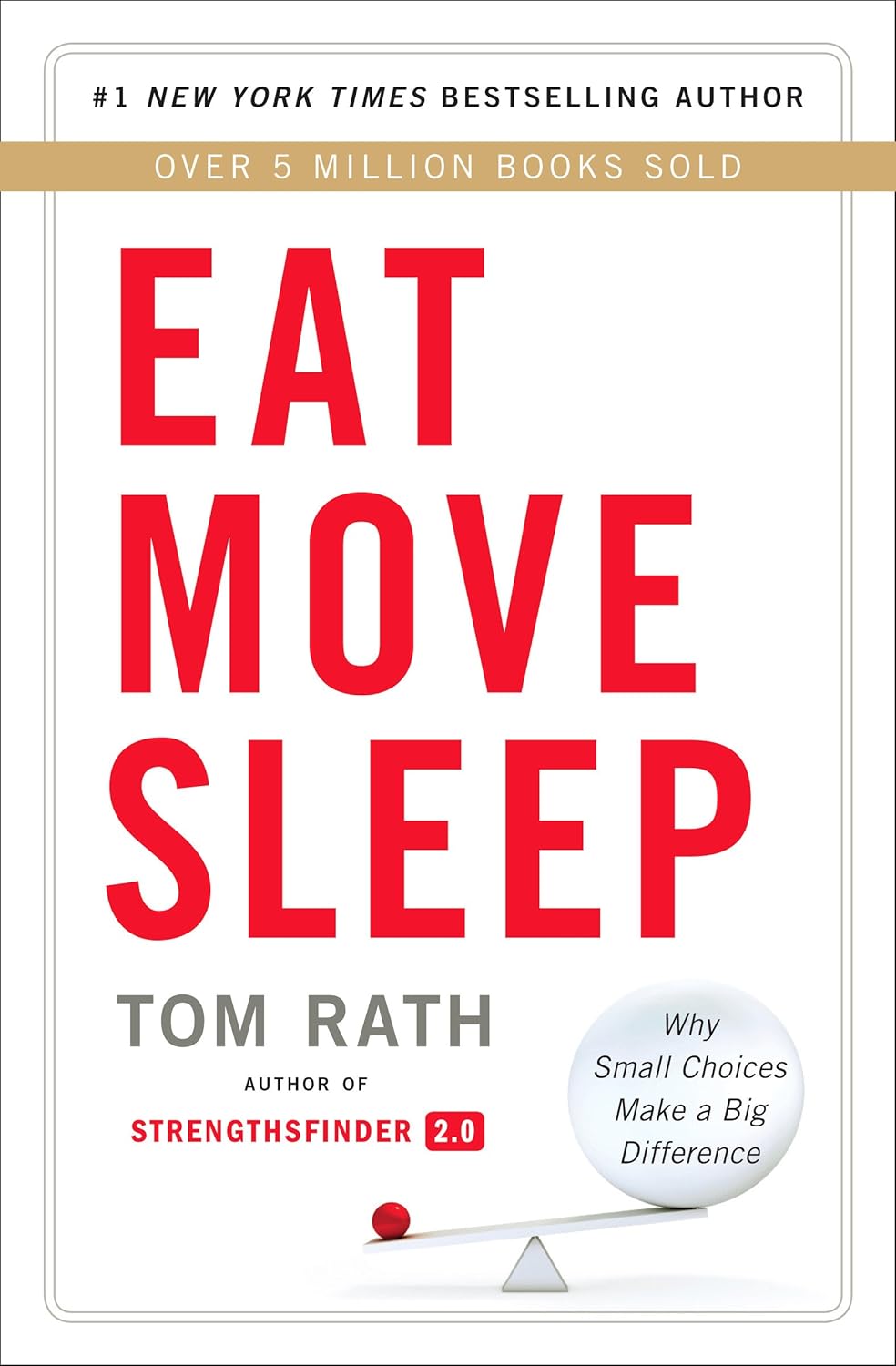
I enlarged the photo in this recent post about health here so the words "Why small choices make a big difference" would be clear.  Life is made up of small choices.  Every moment, whether we think about it or not, is a choice.  I am doing this; I could be doing that. 

There was an article by Leiby Burnham, who regularly writes for Binah magazine, which drove home the point of the importance of small decisions.  He described panicking when his street flooded.  He called a neighbor, the type who always knows what to do, and the neighbor came out with a long pole with a metal claw on the end.  He poked around with it while explaining that the sewer covers have holes that get stuffed with leaves.  When he pulled out the leaves, the water quickly drained away. 

Burnham noted that the clog that flooded his street was made up of small twigs and a few clumps of grass which were easily removed.  The removal of the blockage took two minutes.  Contemplating this he realized this is a good metaphor for life.  "It is usually not the big things that make the most dramatic changes in our life, but the little things.  The big things can be disruptive, but it is the little things that make the man."

He goes on to say that marriages are not made and broken by the big things, the big gifts or the angry scene.  They are made up of the daily little interactions, the greetings, the expressions of gratitude, the helping out.  And they are broken by the little things, the repeated actions and words that bother the other spouse.

He quotes a famous marriage counselor as telling him, "Divorces are almost never about the big things; they are always about the little things."  He goes on to clarify, that these little things accumulate and "clog" the relationship and eventually "flood" the marriage with resentment.

He says that at work the same principle applies.  "It is not the person who can pull impressive spreadsheets, give great presentations or the amount of overtime hours put in.  Rather, it is the person with the can-do attitude who responds with a simple 'yes' to as many requests as possible."

Of course he mentions health as well, the point emphasized in the book I reviewed in the post mentioned above.  "Good health doesn't come from big surgeries and expensive procedures" but from eating right, moving a lot, and sleeping enough and well, all on a regular basis.

I like the way he concludes on a spiritual note with the Rambam that says it is much better to give small amounts to tzedaka many times than the same amount one time, because by doing a mitzvah over and over again, we change ourselves for the better and become giving people.  Writing one check does not have that impact.

It is our frequent tefillos, our thinking of Hashem constantly, always looking for the hashgacha pratis and thanking Hashem, our constant mitzvos that add up.

"It may seem small, but those little twigs and leaves will soon gather together and change our entire lives, flooding us with a greater sensitivity in our observance in both mitzvos between us and Hashem and between us and our fellow Jews.  Sweat the small stuff."

As the Rambam also says, we need to see ourselves and the world in equal balance and just one deed can tip the scales.

Feb 24, 2014

"Eat, Move, Sleep"


I liked this book, Eat, Move, Sleep  - Why Small Choices Make a Big Difference.  In an easy to read format, the author presents research on what and how we should eat, the importance of exercise, and the significance of plenty of sleep.  Each chapter presents a different angle of these three areas and ends with a brief summary of the points that were made.

It can be gratifying to read about the many things you are doing right.  More importantly, it would be great if you picked up a few ideas that you would be willing to incorporate in your daily routine to improve your health. 

Although some reviewers complain that the author is not saying anything new, I found a mix of new and not-new ideas and liked the presentation enough that it didn't bother me.  Another complaint is the source for some of his recommendations.  He has a website where anyone can read the research and decide for themselves. 

These complaints seem picayune to me.  Take what is worthwhile to you, and move on. 

The main thing I took from the book is the importance of moving around, that even if you do regular exercise throughout the week, sitting for hours on end is no good.  Get up and move!

Jun 22, 2013

Help for Osteoporosis?


Yeshaya 66:14
"And you shall see, and your heart shall rejoice, and your bones shall bloom like grass ..."

Metzudas Dovid says that since worry and sadness dry up bones, the verse says at a time of simcha, the bones will be strengthened.

Do doctors recommend simcha and bitachon as ways to strengthen bones or only exercise and Vitamin D and calcium?

Jul 16, 2012

An End to Illness


I recently heard a speaker ask: Do you think that if they find a cure for cancer, that we will all be able to breathe a sigh of relief? If it's not cancer, it will be something else! Just as previously, it was tuberculosis and numerous other diseases that killed us. 

I've been thinking about that.  Radical changes have taken place in medicine.  It was once common for parents to lose numerous children to childhood illnesss* and now they don't.  Our life expectancy has gone up.** People in their 40's, 50's and 60's don't look and act old the way they once did.  Is it time to rejoice?

And yet, there is illness all around us.  People we know personally, including children, are or have been seriously sick and some have died.  There are so many ways that doctors can help people today that verge on the miraculous like heart transplants, but overall - are we burying fewer people and at older ages? Maybe this is a question for the chevra kadishas to answer.

If other forms of sickness have overtaken us, then does it make sense to be grateful for immunizations and other medical advances? Or should we not look at it that way and rather, thank G-d for the advances we have made while praying for the eradication of all illness and death with the coming of Moshiach?


* most recently, I read of a woman in the 1930's who lost five children and had five remaining children and this was not unusual

**  59-male, 63-female in 1930 to 75-male, 80 female in 2012 in the US

Jan 23, 2012

More Tzaros or the Same As Always?


One often hears discussions about whether there are more people dying young today, toddlers, children, teens, young adults, young marrieds, middle-aged marrieds who are diagnosed with cancer and other illnesses, in addition to "accidents" (car, fire, drowning), or not.

I am referring to the constant tzaros we hear and read about, the emails requesting Tehillim. The huge Tehillim lists. The ads and tzedaka requests for families that are suffering from tragedies. 


So first, we have to decide what period of time we're comparing our times to! To life in Europe? To life in America?

1900-1950?
1950-1980?
the past 30 years?

Of course life expectancy has gone up and today we expect all live births to result in live adults when long ago (though not SO long ago), before vaccinations, many babies and children died! It was common for a woman to have many live births, let's say 13, but only have 5 survive childhood!

So I'm not talking about comparing our days to back then.

I'm more interested in knowing whether things have changed since say, the 1950's. 
I'm inclined to believe that it's because communications today are so advanced that we hear more than we used to.  When a kalla was in a car accident or became seriously sick years ago, it was just a local issue, but now, people all over the world are hearing about many more tzaros through frum news websites and emails. 

May we soon know of no more sorrow.

Sep 15, 2011

Musing about Bike Helmets


I read an article in which the young author wrote how her father was saved from far worse injury, when he was on his bike and hit by a car, because he was wearing a helmet.

The next day, I saw a very little kid riding his bike in front of his house as he waited for his school bus.  He was wearing a helmet.

I may be wrong on this; I haven't arrived at my final conclusion, but I think the helmet "thing" has gotten out of hand.  I'm not the first to write about numerous restrictions and safety measures that are forced upon us today when we did just fine without them years ago.  One minute, you might say.  What about head injuries? How can I recklessly say we don't need helmets?

Well, I think that we can differentiate between someone riding a bike in traffic and a kid riding his bike on the sidewalk or on a bike path with no cars around.  I haven't studied the risks, but it makes sense to me that when we were kids growing up and riding our bikes up and down the sidewalk without wearing a helmet, that was a very low risk activity.  As opposed to being a courier riding a bike in Manhattan!

Maybe what's needed to settle this to my satisfaction is a study done to show just how many people are seriously injured because they were not wearing a helmet when they rode a bike in an area that is away from cars.  I don't remember hearing of any bike related head injury accidents in my growing up years.  I'd like the number of bike-head injuries compared to how many people get serious injuries when they are in car accidents.  Maybe we should wear helmets when we enter a car.  Is it really less risky than riding a bike on the sidewalk? My guess would be that being in a car is more of a risk for serious head injury.  But maybe I'm wrong on that.

For that matter, people trip and fall and injure themselves walking down the street.  Should we wear helmets when we go outdoors? I'd like to see a risk factor comparison with various activities.

Taking this from another angle, do we think that we can take the proper safety measures that will ensure that we will be healthy and that G-d can't or won't intervene? I tend to think that if Hashem has His reasons for afflicting someone with a head injury, it will happen regardless as to whether he wears a helmet when he bikes or not. 

So I remain undecided.  I think that yes, we need to take precautions in life and that's a mitzva, but I don't know which are considered normal precautions and which are annoyances that are not justified by the low risk of injury.  And to preempt anyone who thinks - just one person seriously injured is reason enough for all to wear a helmet - with that reasoning we should all wear helmets and elbow and knee pads all the time and nobody (yet) is saying we should.

Now don't get me started on the laws about car seats for kids!

Sep 2, 2011

Remission


I just heard another sad story of a patient who celebrated his supposed cure of cancer with a seudas hodaya, only to have the cancer come back two weeks later.  I don't know whether the people celebrating heard what they wanted to hear from the doctors or whether the doctors misled them, but I get majorly annoyed about celebrations made within days, weeks or months of aggressive treatment.

My peeve is not with those who make a seudas hodaya in advance, when the person is still sick, as an act of faith that the person will recover.  If they can truly muster that bitachon and not just go through the motions, that's marvelous. 

There is what is called cancer cure and cancer remission.  Doctors almost never use the term cure; rather, they usually talk about remission.  Complete remission means that there are no symptoms and no signs that can be identified to indicate the presence of cancer. However, even when there are no signs of cancer, there may be microscopic collections of cancer cells that cannot be identified.  In this story I just heard, the patient joyously said, "I am healthy!" How devastating for him to hear a mere two weeks later, that he was sicker than ever.

As I read in a doctor's article, "So can we ever really talk about a cancer cure? In general, the answer is no. Practically speaking, however, the odds of a recurrence may be so low that the person is essentially cured. To put it another way, depending on your age, the doctor may tell you that the odds of your dying of cancer are lower than are your odds of dying of something else." 

So it sounds like the time to make a seudas hodaya is when enough time has elapsed, that the doctor says the odds of a recurrence is so low that it is accurate to say the person is cured, or that he has as much a chance of having cancer again as someone who never had it. 

May all the cholei Yisrael be cured and this particular ugly illness be eliminated. 

Dec 1, 2009

Astonishing Reversal


In a recent news item it said, "Most women should wait until age 50 to get mammograms and then have one every two years, a government task force said Monday in a major reversal that conflicts with the American Cancer Society's long-standing recommendation of annual screening starting at 40.

Also, the task force said breast self-exams do no good and women shouldn't be taught to do them."

Unbelievable!

The Associated Press report said, "For nearly two decades, the cancer society has been recommending regular mammograms beginning at 40. But the government panel of doctors and scientists concluded that getting screened for breast cancer so early and so often is harmful, causing too many false alarms and unneeded biopsies without substantially improving women's odds of surviving the disease."

Someone commenting on this new item wrote:

Rigorous studies show that women screened die at the same rate as women who are not screened. The reasons are probably some combination of the fact that screening detects tumors that are less likely to be lethal and misses the fast growing lethal tumors, screening results in dangerous treatments that have life-threatening side effects, screening itself may cause tumors because of the radiation doses, still-ineffective treatments even after decades of research, or some other factor.

The ineffectiveness of cancer screening (not limited to mammography) is one of the most depressing things that I have dealt with in my career as a researcher. (I am a Biostatistics Professor at the Albert Einstein College of Medicine.)

He went on to say:

In the general population, mammography screening for breast cancer in the general population has been PROVEN not to reduce breast cancer mortality in women under the age of 50. A drug that is proven to be useless is pulled from the market!

This morning I had an email exchange with the (frum) chief of radiology at one of the major New York hospitals. She has been concerned for a long time that radiation from imaging may well be *causing* some of the cancers that are detected by mammography.

Alarmist and Unhelpful Approach to Postpartum Depression

The frum world is doing its best to publicize more and more articles about mental illnesses and disorders.  One topic that is quite popular is post-partum depression.  In an ad for a new book published for frum people on this topic, it is claimed that PPD affects 80% of women after childbirth.  Nitza - The Jerusalem Postpartum Support Network claims 85% of women have some PPD reactions for a few weeks.

What doesn't come across clearly, is that they are referring to feelings of mild depression, crying spells, anxiety, irritability, and mood swings which, if the truth be told, women occasionally feel even without giving birth.  It is quite normal when experiencing hormonal changes and sleep deprivation to feel this way.  This is not postpartum depression.

This is a letter that I wrote to a frum publication about their handling of this topic:

In your about postpartum depression a doctor is quoted as comparing postpartum depression to diabetes and says that just as a diabetic must take medication, a woman experiencing postpartum depression must take medication.

Yet later in the article, Michal Finkelstein RN CNM says, “A loving friend, neighbor, relative, or spouse can intervene with kindness and empathy … this along with some physical support (childcare, meal preparation, and housework assistance) may even be enough to help her overcome her postpartum depression.” In other words, the comparison to diabetes is fallacious, for even if a diabetic is offered the optimum in moral and physical support, this will not help their insulin problem!

I’ve noticed that lately, the diabetes analogy is used quite regularly for conditions that bear no resemblance to diabetes. For reasons peculiar to our culture today, people prefer hearing that their condition is medical and requiring medication, rather than something they can overcome with the proper emotional, physical, spiritual help and Torah guidance.

I feel for the woman in the article who was recommended hospitalization and Prozac and I believe her when she says, “I’m not sick. You don’t understand what I’m feeling. I don’t need that. I just want someone to talk to and hold my hand.”

I think that providing listening ears and physical help will go a long way towards alleviating and eliminating most postpartum depression.

***
Unfortunately, frum sources tend to push medication and even when they mention nipping the problem in the bud with proper physical and moral support, the latter is drowned out by the medical model.

The way I'd like to see it written is:

Postpartum depression may or may not require medical intervention. As a first resort, women should be strongly encouraged by their spouse, doctor, and anybody who is concerned for their welfare, to take it easy, accept help, not be a martyr, to value their health over their independently taking care of everything, and to postpone commitments to the community and to their family that jeopardize their state of well-being. If women have been given the moral and physical help they need and still experience depression, then they should seek out medical intervention, but in the vast majority of cases, moral support, physical help, and reduced demands, are what a woman needs.

The Impact of Stress on Our Health

More than half of all cases of heart disease are not related to the common risk factors of high cholesterol, smoking, or inactivity. (Integration of Physiology and Behavioral Scienc)

In a Mayo Clinic study of people with heart disease, emotional stress was the strongest single predictor of further problems, such as heart attack or cardiac arrest (Mayo Clinic Proceedings)

Three separate studies have shown that stress is more closely related to heart disease and to cancer than smoking is. (British Journal of Medical Psychology)

A study conducted at Harvard showed that men who experience elevated chronic anxiety are six times more likely than contented men to die from a sudden heart attack. (Circulation)

***
Living with the principles of Shaar Ha'Bitachon is not only a spiritual accomplishment; it has a tremendous effect on our physical health.

In R' Bachya ibn Pekuda's Chovos Ha'Levavos, shaar ha'bitachon, he writes:

If we knew we had a friend who:

1) never ceases worrying about us

2) is able to fulfill our wishes

3) knows our exact needs and what is good for us

4) controls all the people and powers in the world and does not allow any of them to harm or benefit us without his consent

5) is overflowing with kindness and compassion even if we are undeserving

we would totally relax and stop worrying about ANYTHING.

Hashem is merciful and gracious; He neither slumbers nor sleeps, He is your Father, He made you, Hashem is good to all and His mercy is on all His creations etc.