An 11 year old commented that she is not looking forward to being bas mitzva because then she will have the ol mitzvos (yoke-responsibility of mitzvos). And she is not looking forward to age 20 because then she will be chayav b'dinei shomayim (obligated by heavenly judgement).
This was presented as something quite negative, that there is no joy in her observance of Yiddishkeit. I countered with - she sounds mature, like a yirei shomayim, not someone fixated on her bas mitzva party and presents.
True, she should be told that Yiddishkeit is about serving Hashem with joy, and this should be emphasized in various ways, with halacha and stories. But how wonderful it is to hear that a child that age takes mitzva observance seriously.
The other extreme is a focus entirely on Hashem loves us no matter what. Although that is true, it seems to be producing people who think they can dress as they please, go where they want, and do what they want, because regardless of their actions, Hashem loves them.
We need to meet in the middle and teach both yiras shomayim which includes yiras cheit, and simcha shel mitzva.
Showing posts with label Judaism. Show all posts
Showing posts with label Judaism. Show all posts
Feb 15, 2017


May 25, 2016
A Time for Everything
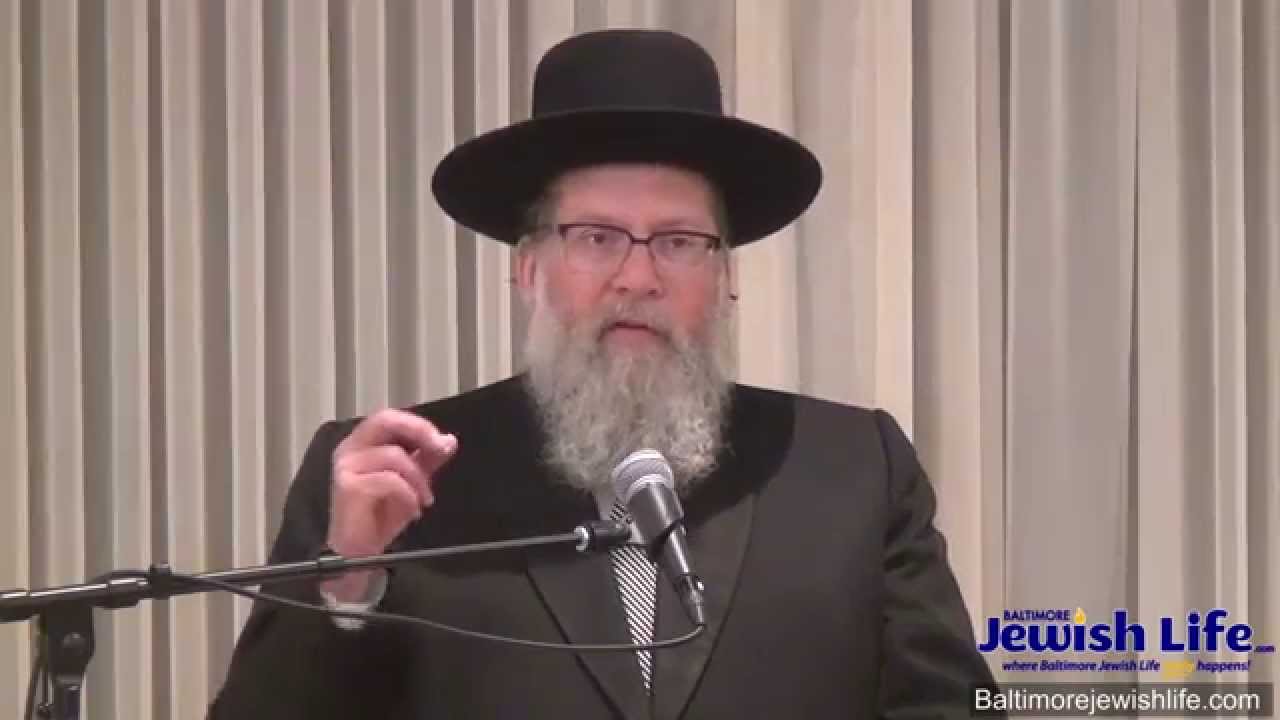
R' Moshe Tuvia Lieff said the following in a shiur this week that both surprised and delighted me. He said, the
highlight of kids' life is Purim.
There are boys who are given an opportunity to have fun, vehicles are rented to take them around to collect money for tzedaka and visit their rebbis' homes. However, recently there's been a trend by well meaning but misguided people who ask:
How much money do you raise with your group? $200 each? If you sit and learn for 10 hours on Purim, I'll give you $200!
Sounds good, kiymu v'kiblu, give up visiting the rebbi's house and raising money and learning Torah instead.
But, says R' Lieff, I think it's the most ludicrous thing we can do!
Why bother saying selichos on Yom Kippur? Just sit and learn! If learning is the most important thing in life.
Why do we bother saying Kinos till chatzos with explanations and hearing shiurim? Why not just daven the regular way and then sit and learn Kamtza and Bar Kamtza? Because we need to lament the churban!
Because we need to celebrate and dance with the Torah on Simchas Torah!
Learning for several hours on these days is commendable but it's Simchas Torah, it's Purim! This is sucking the marrow out of Yiddishkeit.
Jan 24, 2016
A Parent's Influence
In a passionate talk given by R' Meisels, he tells the story of someone who contacted him to learn with him. By now, this man he calls Barry, has learned through half of Shas, puts on tefillin daily, keeps Shabbos most of the time and kosher most of the time.
R' Meisels believes that to become frum nowadays is so outlandish that it can only happen with zechus avos and he usually finds out what it is.
In this case, this successful attorney Barry told him what happened. He was raised by communist-atheist parents who observed nothing, not Yom Kippur, not a Pesach seder. When he went to college, he met a girl he liked. When he told his parents about her, his mother said, that's not a Jewish name!Barry said, she isn't Jewish.
His mother said, you're not marrying a shiksa! He said, what's that? She explained and he said, who cares? We don't do anything Jewish anyway. His mother insisted it was out of the question. He thought she'd come around and he married the girl. His father attended the wedding and his mother did not.
He thought she'd come around when he produced grandchildren. When he had his first, he sent a picture of her to his mother. What grandma wouldn't melt? She sent it back to him torn up.
She did not answer the phone in her house. It was the days before caller ID and she did not want to pick up if her son called. He only spoke to her husband.
There was a simcha which they both attended and he heard someone say to his mother, "Marilyn, Barry is here!" She said, "He had better not say hello!"
They resumed contact when he divorced his wife twenty years later.
And this, R' Meisels thinks, is what made an impact on Barry so now he is taking an interest in Judaism.
I wonder what would have happened if the father would have been united with the mother on this and also did not attend the wedding and refused to speak to his son. Would Barry have married the girl? Would he have divorced sooner?
R' Meisels believes that to become frum nowadays is so outlandish that it can only happen with zechus avos and he usually finds out what it is.
In this case, this successful attorney Barry told him what happened. He was raised by communist-atheist parents who observed nothing, not Yom Kippur, not a Pesach seder. When he went to college, he met a girl he liked. When he told his parents about her, his mother said, that's not a Jewish name!Barry said, she isn't Jewish.
His mother said, you're not marrying a shiksa! He said, what's that? She explained and he said, who cares? We don't do anything Jewish anyway. His mother insisted it was out of the question. He thought she'd come around and he married the girl. His father attended the wedding and his mother did not.
He thought she'd come around when he produced grandchildren. When he had his first, he sent a picture of her to his mother. What grandma wouldn't melt? She sent it back to him torn up.
She did not answer the phone in her house. It was the days before caller ID and she did not want to pick up if her son called. He only spoke to her husband.
There was a simcha which they both attended and he heard someone say to his mother, "Marilyn, Barry is here!" She said, "He had better not say hello!"
They resumed contact when he divorced his wife twenty years later.
And this, R' Meisels thinks, is what made an impact on Barry so now he is taking an interest in Judaism.
I wonder what would have happened if the father would have been united with the mother on this and also did not attend the wedding and refused to speak to his son. Would Barry have married the girl? Would he have divorced sooner?
Jan 17, 2016
It's Just Too Hard
R' Daniel Gross spoke in Yiddish at the Keiravtuni Shabbaton. He said he saw a bunch of guys hanging out, drop-outs.
One of them said, it's a pity I was born a Jew.
If I was born a goy I would have only 7 mitzvos. Taryag mitzvos are a pressure for me, I always have a guilty conscience.
A goy gets olam haba for doing his seven.
***
So it's not the kid did not believe. He believed and wanted olam haba, but felt it was just too hard. A friend of mine thinks this comes from "affluenza," which includes the idea that life should be easy.
***
So it's not the kid did not believe. He believed and wanted olam haba, but felt it was just too hard. A friend of mine thinks this comes from "affluenza," which includes the idea that life should be easy.
R' Gross presented the issue to chassidishe bachurim, of why be a yid, what's good about it. The best answer they could come up with was olam haba. They viewed Torah and mitzvos as an ol (burden), and saw the point as just olam haba.
It's a great essay topic to assign 12th graders. Describe the scene, repeat what the guy said about it being a shame he was born a Jew and why, and ask them to write their response.
It's a great essay topic to assign 12th graders. Describe the scene, repeat what the guy said about it being a shame he was born a Jew and why, and ask them to write their response.
Nov 22, 2015
When Talk is Dangerous
Tehillim 73:15 אם אמרתי אספרה כמו הנה דור בניך בגדתי
"If I said, "I shall tell it as it is," behold I have made the generation of Your children into traitors."
Rashi: Said Asaph, “If I said in my heart to tell everything as it is, all that His people say about this, I would make them into traitors and wicked men."
Metzudas Dovid: If I say it the way it is, i.e. whatever it is that I think, then the talking will incite even those who are your children, i.e. those who believe in You, for when they hear what is thought, I will make them into traitors which is why I won't talk much.
I heard someone say, based on this verse, that the trend to discuss all our frum society's ills out in the open is the modern day version of "es iz shver tzu zayn a Yid" - it's hard to be a Jew. How many Jews are being turned off to frum life when they hear about all the crises and social ills we are suffering from?
Back in the early 1900's, when shomer Shabbos Jews sighed over the hardships of being religious, they lost their children who were not interested in living a hard, religious life. These days, why would someone want to belong to a society which has a shidduch crisis, tuition crisis, parnassa crisis, housing crisis, drop-outs, those who keep "half Shabbos," Kiddush clubs and alcoholism, drug addiction, mental illness, shalom bayis problems and molestation problems? Sounds quite unappealing!
Some editors and askanim pat themselves on the back for "breaking taboos" and (supposedly) dispelling stigmas by airing issues that used to be kept quiet. Are we gaining or losing thereby, that is the question. What would they say if they knew that just one person was turned off to Yiddishkeit because of this openness?
a related post
"If I said, "I shall tell it as it is," behold I have made the generation of Your children into traitors."
Rashi: Said Asaph, “If I said in my heart to tell everything as it is, all that His people say about this, I would make them into traitors and wicked men."
Metzudas Dovid: If I say it the way it is, i.e. whatever it is that I think, then the talking will incite even those who are your children, i.e. those who believe in You, for when they hear what is thought, I will make them into traitors which is why I won't talk much.
I heard someone say, based on this verse, that the trend to discuss all our frum society's ills out in the open is the modern day version of "es iz shver tzu zayn a Yid" - it's hard to be a Jew. How many Jews are being turned off to frum life when they hear about all the crises and social ills we are suffering from?
Back in the early 1900's, when shomer Shabbos Jews sighed over the hardships of being religious, they lost their children who were not interested in living a hard, religious life. These days, why would someone want to belong to a society which has a shidduch crisis, tuition crisis, parnassa crisis, housing crisis, drop-outs, those who keep "half Shabbos," Kiddush clubs and alcoholism, drug addiction, mental illness, shalom bayis problems and molestation problems? Sounds quite unappealing!
Some editors and askanim pat themselves on the back for "breaking taboos" and (supposedly) dispelling stigmas by airing issues that used to be kept quiet. Are we gaining or losing thereby, that is the question. What would they say if they knew that just one person was turned off to Yiddishkeit because of this openness?
a related post
Jul 14, 2014
Answering the Questioner

R' Dovid Orlofsky gives an excellent talk here on the topic of how to respond to questions about Yiddishkeit. He makes some excellent points about communication and does so with his trademark humor which can be the laugh-out-loud type at times and excellent examples.
You should really watch the talk but in case you don't, or you want a summary of his points even if you do, here are some notes I took:
You don't teach subjects, you teach people.
You need the right answer for that person.
Some people have dedicated their lives to a question, they are so invested in the question that there is no answer for them like a Holocaust survivor who wants an explanation for the Holocaust.
Others, only a few, are truly interested in hearing an answer.
The rest, 95%, don't want to know the answer to questions they ask!
Ask "what do you mean" to clarify matters because people don't even know what they're asking!
We love to share information but s'yag l'chochma shtika, the less you say the better.
The hardest question to answer is the question you haven't answered for yourself.
People make statements, acknowledge it; they are not questions and there is no point in arguing with statements.
Mar 30, 2014
Love-Timing-Details

Leiby Burnham was a guest lecturer for a retreat in Yosemite. There were three photographers on the trip who were eagerly after the best shots at all hours of the day and night.
He learned three major life lessons from them:
1) When you truly love something, nothing is too difficult.
There was no task too hard for them because they LOVE photography and were willing to work 200% harder for a shot that would be only 2% better.
Lesson: Instilling love for Hashem and mitzvos is the goal. Many of our frum society's "issues" would melt away if we were successful at this.
Lesson: Instilling love for Hashem and mitzvos is the goal. Many of our frum society's "issues" would melt away if we were successful at this.
2) They sat down each night to strategize the next day's photo shoots. They had only a limited amount of time and they wanted to make sure they got all the shots they needed.
Lesson: We only have a limited time here on Earth and need to maximize the time.
3) Many of us take pictures but these professionals were obsessed with the details.
Lesson: As Burnham put it, people often wonder, does Hashem really care about my kavana, about how I remove pits from cantaloupe on Shabbos? Isn't Yiddishkeit mainly about connecting to Hashem? Are we losing the feeling and passion in the details?
Lesson: As Burnham put it, people often wonder, does Hashem really care about my kavana, about how I remove pits from cantaloupe on Shabbos? Isn't Yiddishkeit mainly about connecting to Hashem? Are we losing the feeling and passion in the details?
The truth is, Hashem does care about the details, because He wants each of us to create a masterpiece. (And here's a point that Burnham makes so well:) Leonardo da Vinci didn't paint the Mona Lisa by just focusing on the "spirit" of the painting. Motzart did not create masterful music by just thinking about the feeling behind the music; he meticulously worked on every single note. L'havdil, Hashem gave us clear instructions for so many of the details because passion and love are great but mastery is in the details.
Mar 24, 2014
R' Meir Schuster z'l - part 2

I posted about R' Meir Schuster z"l a month ago here. Since then, I've read a number of articles about him which only reinforce what I wrote previously.
Dedication
Since I've written recently about little things adding up, I was struck by this point made by R' Edelstein who was executive director of R' Schuster's Heritage House for 20 years. He said, "There are many unusual stories about this man and about the people he affected for life. But his daily routine wasn't about the exotic. R' Meir's greatness lay in the smallest deeds; in the consistency and daily pursuit of his cumulative acts of sensitivity and profound commitment to each neshama. There was nothing complicated about what he did. He just did it every moment of his life."
And that is greatness.
The Power of Will
Another point. Some people think that to be successful in kiruv, in order to attract the unaffiliated, you need to be "cool," i.e. have a certain modern look, sound like you can relate to today's generation, and be knowledgeable about what's going on in the world. R' Schuster was far from hip. He dressed in a suit, hat and tie as though he was just on his way to or from yeshiva or shul. He did not possess charisma in the conventional sense. He had ratzon, and there is nothing that stands in the way of ratzon - will, persistence, determination. As Rabbi Yehuda Silver, a kiruv professional, put it, "He was living proof that we all have latent potential that can be actualized when we choose to tap into it and together, with Hashem's help, we can overcome any limitation."
No Calculations; No Discouragement
Some lines from R' Yonoson Rosenblum's column:
"His own ego played no role. He never asked himself whether he was well-suited to approach hundreds of complete strangers every day for nearly 40 years or whether he was likely to be successful in getting them to taste Torah for the first time. For if he had asked the question, the answer would have been a resounding no. But in his calculations, only Hashem's purposes counted.
"I would guess that the percentage of those who responded positively to his entreaties to hear a class on Jewish philosophy or to meet a wise man (Rabbi Noah Weinberg) was less than 20% and that of those who did agree to a class, only a small fraction remained in yeshiva for more than a few hours. Yet he could not be deterred by rejection."
Feb 19, 2014
R' Meir Schuster z'l

R' Meir Schuster, who just passed away after a terrible illness, is a hero. I admire him tremendously for his idealism and passion which overrode his innate introverted personality, enabling him to be mekarev tens of thousands of Jews to Yiddishkeit. As one mekurav put it,
“I have never met anyone in my life with such a passion for something, such a love. I had to find out what this guy was so excited about.”
Since I cannot do him justice, I refer you to articles about him:
here
and lots of stories at the website: here
May 7, 2013
Halacha and Women

As I finished the Artscroll book about Rebbetzin Kanievsky ( previous post ), I saw two pictures that caught my attention. One shows her husband and sons sitting shiva. The other shows her brothers sitting shiva.
So what struck me about the photos?
We recently read parshas Emor which says that a kohen hedyot must impurify himself for his parents, wife, siblings (including unmarried sisters), sons and daughters.
What struck me is how chashuva people, distinguished rabbis, men who don't waste time but spend it learning and teaching Torah, had to stop their learning (and avoda in the Mikdash) in order to mourn for ... a woman. In Jewish law, men go through the identical mourning rites for their mother, sister, wife and daughter as women do for men.
For those who question women's role in Judaism and how halacha regards women, this could be a powerful way to convey the Torah's respect for women.
Sep 4, 2012
What Moves You May Not Move Me

Back in April, I wrote: here about people who are moved by different things, and what appeals to one in his mitzva observance or in not violating a prohibition, may not speak to someone else.
I was reminded of this today as I was reading about a former Mirrer talmid who said there were countless times that he was tempted to enter a business deal that wasn't perfectly honest, but then he thought, "How can I do this? Rav Nosson Tzvi [the rosh yeshiva] respects me!"
It's like when Yosef Ha'Tzaddik was on the verge of sinning and he saw the image of his father Yaakov which prevented him from sinning. In both cases, the motivation was not the prohibition involved, that G-d said, "do not commit adultery," "do not steal," but an image of someone respected whom they could not let down.
Our minds work in interesting ways, don't they?
Apr 28, 2012
It's All In the Presentation

This is a response to Rosie's comment to the previous post.
I don't see a problem in presenting mitzvos in an appealing way. The problem is when the purpose of the mitzva is distorted such as when side benefits are highlighted, or when promises are made or implied and cannot be guaranteed.
So although Shabbos is usually "family time" and a time to disengage from the electronic stimuli and tools around us, that is not what Shabbos is about. A presentation about Shabbos without mentioning or emphasizing G-d's creation of the universe and His taking us out of Egypt, is sorely lacking.
How about "Do a mitzva for the _____" (fill in the name of the sports team)?
Vulgar, is it not?
How about "Do a mitzva in memory of/in honor of the Holtzbergs?"
Trying to guilt-trip me into doing mitzvos?
Do we look at the bottom line which is it gets people to do mitzvos, or do we say that is not the proper way to encourage people to do mitzvos?
I found it perplexing when we were asked "to do a mitzva for Leiby." Why does Leiby Kletzky need my mitzvos? And what does that mean anyway - to do it for him? I don't get the zechus, but he does?
Too bad I don't just accept these lines as they are. Life is complicated when you question what everybody else accepts!
Apr 25, 2012
Emotional Ties

R' Grylak of Mishpacha magazine tells the story about how, after the Holocaust, a community of survivors including his father-in-law formed in Milan. There was a Polish survivor from a chassidishe family who had given up religion after being in Auschwitz. One day, he announced that he was going to marry an Italian non-Jewish woman. The religious members of the community were appalled but none of their arguments were effective to dissuade him.
Then someone said, "How can you do such a thing?! Have you forgotten that you are the only living descendent of a beautiful family of Gerer Chassidim from Lodz?"
Now, what kind of reasoning was that when the man had dropped Yiddishkeit? And yet, this is what convinced him and he cancelled his marriage plans. It's like all those Jews who are not religious who are proud to let you know about their rabbinic ancestors. Why are they proud when they themselves aren't religious? Apparently there is something in their neshama that lets them know that this is worthy of admiration.
The lesson R' Grylak learns from this is that a person is kept from sin (and I would add - is inspired) only by what is relevant to him personally, what he is tied to emotionally. It's hard to capitalize on this insight because what is meaningful to one person is not to another. There are many ways people have been convinced not to marry out, and what worked for one is not a guaranteed approach for someone else. Likewise, for religious people, some love the structure of halacha, others love the mystical approach. There is a way to speak to every child and adult. One needs wisdom and siyata dishmaya to find it.
Feb 29, 2012
Gutta - A Memoir

I read Gutta - Memories of a Vanished World (Feldheim 2005) by Gutta Sternbuch and David Kranzler and found the first part poignant and fascinating. She grew up in a Chassidic home in Warsaw in the 1920's and she describes her beautiful family and what frum life was like in those days, providing snapshots of the ordinary though special people (contradictory but true) she knew.
Although I was familiar with the devastation wreaked by the many ideologies of the time: secular Zionism, socialism, communism, etc. it was so interesting to read about these enticements from the perspective of an intelligent, teenaged, Chassidic girl.
She attended Bais Yaakov from the age of 11-13 and it wasn't a positive experience for her. She then went to a religious high school with high secular scholastic standards on the condition that she would attend Beis Yaakov seminary afterward. Rabbi Orlean radically transformed her way of thinking and she describes the spiritual journey she made (she was frum throughout).
The book has appendices, one which provide a historical overview of Poland between the two world wars and another one on secular Jewish ideologies for those who want more information on this period of our history and there is also a section on Warsaw.
Rather than painting only a nostalgic picture of Jewish life before the war, Gutta provides a more balanced view in which she shares her struggles and ultimately, her firm commitment to Yiddishkeit.
Jan 14, 2011
Which Mitzvos Do You Love to Do?

I would hope that those who devote themselves to Torah study would say they love learning Torah!
I am sure that many, if not most, people would refer to some holiday or Shabbos as something they look forward to.
My answers are: keeping Shabbos, learning and teaching Torah, sitting in the succa, giving tzedaka to worthy causes ...
Apr 25, 2010
Combining Different Pathways

At Rabbi Y's shul they integrate different derachim (pathways) in avodas Hashem.
That sefer combines the fervor of ... the intellectualism of ... and the warmth of ...
Whether it's a biography about a Torah great, a description of a shul with a rabbi who has a great appeal to different kinds of people, or an advertisment to raise money for a yeshiva, you often see words like "synthesis" and "integrate" in praise of someone or some place that "combines the best of all worlds."
Sounds good.
"The best of ..."
If you can take the best of what each approach has to offer, presumably you will end up with a superior product.
But is there not a touch of condescension there?
The one with the fire lacked analytical acuity, and the one with the rationalistic approach lacked simcha, did they not? For if their approach wasn't lacking, why combine them and describe it as gleaning the best from each?
Subscribe to:
Posts (Atom)

 Posts
Posts

