Showing posts with label kabbolas ol. Show all posts
Sep 20, 2012
When Pointing Fingers is a Good Thing
In a letter to the editor of a frum publication, a parent writes, "I have often wondered about the emphasis rebbeim place on having students keep their finger on the place. Several years ago, my son was a third grader who had a difficult time with this practice.... He was a good student who knew the material and was not disruptive in class. Yet somehow, keeping his finger on the place and chanting the pesukim in unison with the class was just 'not his thing.'"
I'm not going to discuss the merits of finger-pointing here. What concerns me about the letter is that this is a third grader who doesn't do what his rebbi says to do. The rebbi is the authority in the classroom, just as the parents are the authorities at home. When the rebbi says to keep your finger on the place, this is not optional, to be done if a child feels like it or not! Whether or not the child knows the material is not as significant as the child obeying the authorities in his life. If a child feels that he can decide to do his "own thing" when it comes to his third grade rebbi, what will stop him from deciding that certain mitzvos are just not his thing?
This leads me to the topic of choices. It is very popular nowadays for parents to give choices to children as young as toddlers. Do you want the Rice Crispies or the Corn Flakes? The red shirt or the green shirt? The idea is that if a child is able to make choices from the youngest age, this will train them to make choices when they are older, and if a child is able to make choices this will make him feel empowered and wonderful about himself.
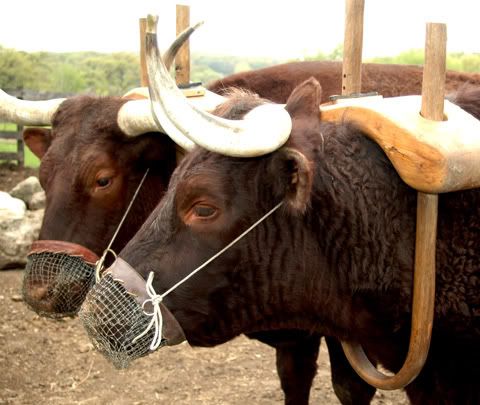
Rabbi Aaron Dovid Gancz, a mechanech, says offering these choices to children undermines the foundation of kabbolas ol we want to instill in them. Giving many opportunities to choose ruins the child for life, he says. Why? Because it is not training him to be a soldier in the army of Hashem. Because the child's feelings and preferences have been given so much importance. A child who has been trained all his life to think, "What do I like? What do I want?" never to learns ask himself, "What does Hashem want from me." R' Gancz concludes, "Chinuch is based on mesorah from G-d Himself. It is absolute truth and there are no choices."
Back to the third grader for whom pointing at the place is not "his thing," that's the problem right there. Who asked him whether it's his thing or not? His rebbi said everyone should point, and everyone should point. The parent thinks the issue is the value in finger-pointing. The actual issue is kabbolas ol.
Jan 22, 2012
Simple Faith
There has been a great push in recent years to teach frum kids and adults the material that is taught to those who are new to Judaism. Many a letter to the editor of frum publications and many an article espouse explaining everything we do in Yiddishkeit and providing a foundation for our beliefs. Many consider doing things because "that is what I was taught to do", or "that is what my parents do", an inferior motivation.
This came to mind when I read that the Baal Shem Tov told his disciples, "After all that I have achieved in understanding the supernal secrets of the Torah and the sources of the mitzvos, I put aside all of this and strengthen myself with simple faith in Hashem. Ich bein a naar un ich gloib - I'm a fool and I believe.
In the teachings of the Rebbe Tzvi Elimelech of Dinov it says, "I have heard from people who are well-known for relating stories correctly that R' Meshulam Zishe of Anapoli said, "I am not expecting a reward in the world to come for the avodas Hashem that I did after I understood the true greatness of Hashem. I am only waiting for the reward for the avodas Hashem that I did when I served Him with simple faith, because it was what I had received as a tradition.
This is what is meant when the pasuk says, "I am the G-d of your fathers."
There is a place for teaching and learning taamei ha'mitzvos (reasons for the mitzvos) but this must be predicated on kabbolas ol, on serving Hashem because that is what we are here to do, whether we understand or not, whether we like the reasons or not. And this service of Hashem with kabbolas ol is not meant to be begrudging, with teeth gritted, or as we hum "Tradition." We need to find role models who do this b'simcha!
Labels:
chinuch,
faith,
in-reach,
kabbolas ol,
obedience
Jan 20, 2011
Attenuated Discipline Disorder (ADD)
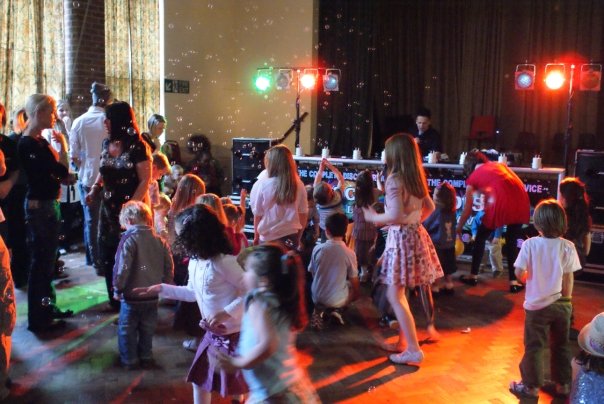
I listened to a lecture by Dr. Pelcovitz (a frum psychologist) in which he tells of a call he got two or three years ago from a principal, asking him to come and give a series of lectures on raising kids to be a mentch. The principal conveyed a sense of urgency and when asked what prompted the call he said, the preschool class was invited to a 5 year old's birthday party which took place at a Manhattan disco complete with DJ. Parents called to complain so the principal called the birthday child's mother and said, how can you make a disco party for a 5 year old?! Her answer was, "But he asked ..."
As Dr. Pelcovitz said, children can't thrive if love isn't balanced with limits and there is an erosion in parents' ability to say no.
Well, that certainly confirms what I've been thinking about, off and on, for the past long while, that the malady of our generation is not that we're not esteeming ourselves enough but that we lack discipline. I've come up with a catchy way to remember this disorder. It's the initials ADD (Attenuated Discipline Disorder), not coincidentally, the same acronym for another popular disorder.
When parents are finding it hard to say no to little children, is it any wonder that people are growing up and not saying "no more" when they've had enough to eat and "no" to behaviors unbecoming or worse for Torah Jews?
When how we feel about everything is given the utmost attention and respect and this is deemed more important than obedience/kabbolas ol to what parents, teachers and ultimately Hashem says, we are going to reach a point where all sorts of unacceptable behaviors are elevated to the category of "mental/emotional health disorders" and medication and various therapies are seen as the cure rather than improved middos. I'm afraid we've reached that point. It's unfortunate because disciplined living is best learned at very young ages when parents instill structure and values such as seder/routines. It's hard to retrain ourselves but we must! Here's hoping that we will start hearing lectures and reading articles about discipline and self control. It will be quite a refreshing and welcome change.
Nov 25, 2009
Chinuch for Kabbolas Ol - Obedience
Obedience isn't a popular term these days. How many parents have obedience as a child-rearing goal?
How many parents tell their child to do something and then qualify it by saying, "okay?" Yes, I know, it's a way of eliciting a response to make sure the child heard but parents of previous generations didn't find it necessary to say, "okay?" when they told their children to do something.
The Jewish people were highly praised for first saying "naaseh" (we will do), and then "nishma" (we will hear). Our relationship with our parents mirrors our relationship with G-d.
How's that for a chinuch principle - our kids have to know that regardless as to whether they hear a reason from us, or like the reason (if they get one), they have to do it! The home is not a democracy. Instructions are not up for negotiations.
How many parents tell their child to do something and then qualify it by saying, "okay?" Yes, I know, it's a way of eliciting a response to make sure the child heard but parents of previous generations didn't find it necessary to say, "okay?" when they told their children to do something.
The Jewish people were highly praised for first saying "naaseh" (we will do), and then "nishma" (we will hear). Our relationship with our parents mirrors our relationship with G-d.
How's that for a chinuch principle - our kids have to know that regardless as to whether they hear a reason from us, or like the reason (if they get one), they have to do it! The home is not a democracy. Instructions are not up for negotiations.
Subscribe to:
Posts (Atom)