Feb 26, 2013

Can Kiruv be Quantified?


Dr. Rosmarin, a psychology researcher, therapist and teacher was invited to deliver the keynote address at the AJOP convention.  His presentation is about taking the guesswork out of kiruv. 

For decades now, those in kiruv have been winging it, trying different things, having more and less success. Dr. Rosmarin maintains that social science research can be used to analyze what makes for successful kiruv outcomes.  After all, if we are spending so much money on kiruv, shouldn't we have a way of defining success and doing our best to maximizing it? He says (as reported in Hamodia magazine), "We have no clue what is and is not working because no one has ever tested a set kiruv curriculum or program of any sort, ever."

(Though I thought that the Aish Ha'Torah Discovery seminar gives participants a survey to fill out after they attend the program based on which Aish says that a high percentage of attendees say they will marry a Jew.)

On the one hand, the idea of systematically examining what does and doesn't work in kiruv sounds wonderful.  On the other hand, I wonder whether it can all be quantified.  A program and curriculum can be tested, but not the effects of a Shabbos table, Purim party or Pesach seder experience.

Feb 25, 2013

Focus on Over-Consumption


I give Benzion Klatzko credit for his unpopular remarks in a recent talk entitled "The Grinch that Stole Purim."  For those not up on their Dr. Seuss, it's a take-off on a story about a grumpy creature that makes plans to deprive the Whos of their holiday presents, dinners, and decorations.

Klatzko laments the wet-rag attitude towards Purim by those who seek to minimize (or eliminate) noise-making at the mention of Haman's name, minimize shalach-manos giving, minimize (or eliminate) drinking, and say you're too old to dress up.  He thinks they're a bunch of spoil-sports and are taking Purim away from us, and he's got a good point!

Does drinking get out of hand? Sometimes.  Does shalach manos giving get out of hand? Sometimes.  But when we hear too much about things getting out of hand, then the mussar-giving is out of hand!

Actually, I think year round eating and enticements to eat with increasingly lurid advertisements and cookbooks has gotten out of hand in the frum world.  This affects us every day of the year, not just one, and it affects the health of men, women and children, not just men.  So rather than harping on  excessive Purim mitzva and minhag observance, I'd like to hear more from our leaders about excessive non-mitzva and minhag eating indulging.

Feb 19, 2013

Jumping the Line


The scene (as related by Dr. Wikler to whom this happened): A long line in a take-out store erev Shabbos. 

A woman comes in and says, "I am double parked and need two chickens etc." She ignores the line of people and expects to be served. 

The person behind the counter was not sure how to proceed (you may ask, why didn't he simply tell her to get on line, I don't know, maybe she was a frequent customer he didn't want to alienate, maybe her manner was intimidating).  He asked the person he was serving whether he minded if he took her first.  The person said okay.  The other people on line were not asked whether they minded even though each one should have been asked before the woman was served.

Question: If you were on line, what would you have done? Kept quiet but seethed? Loudly told the woman to get on line like everyone else? Loudly tell the counter man that there's a line and first come is first served? Loudly say: Everyone on line must be asked whether they mind if she goes ahead?

I found it interesting when someone said to me: The way we treat others is the way G-d treats us.  How would we want G-d to treat us?

I understood this to mean that we also make unreasonable requests of G-d and are rude sometimes.  Do we want Him to be forgiving or to take a hard line with us?

Another point the person made was something to the effect of - if the person is asking, and it's important to them, why be a stickler? It's not our job to teach others.  Why not accede to their request?

Feb 14, 2013

Sticking Up for our Fellow Jew

The scene: You are in a store and see someone shoplifting.  What do you do? Tell the manager/owner? Confront the person? Look away?

The discussion:

A says: It's not for us to judge anyone.  There's too much judging going on.  We are not G-d's policeman!

B says: So, just let the perpetrator get away with stealing?

A has, on previous occasions, expressed dismay over how Jews don't stand by one another.  Snitching?! Out of the question! So A is adamantly opposed to informing on the shoplifter.  A also gives examples of situations in which a store owner was aware that someone was shoplifting and chose to let it go.

B says: Well, that's the owner's prerogative! An owner can choose to let someone take merchandise without paying for it! But if you see it happening, how do you have the right to allow them to steal?

A maintains their non-condemnatory stance until B says: The halacha is that you are not permitted to buy stolen goods because that makes you an accessory to the thief.  If you look away from a shoplifter, you are an accessory to the crime! Why do you have more Ahavas Yisrael for the shoplifter than for the store owner?

At that, A's position was modified to say see whether you can say something to the shoplifter (as opposed to reporting to the manager/owner), having realized that by protecting the shoplifter we are hurting someone else.

Feb 13, 2013

History in the Flesh


I have the privilege of knowing Mrs. Pearl Benisch.  By my reckoning, she is in her 90's since she describes knowing Sarah Schenirer who died in 1935 and she was a teenager, about 14 at the time.  Mrs. Benisch is the author of To Vanquish the Dragon which is about Beis Yaakov girls during World War II and and Carry Me in your Heart about Sarah Schenirer. 

Mrs. Benisch addresses group of high school girls and the main message she seeks to convey is: You are great.  You don't know what greatness you possess.

She is a very warm and positive woman who has been known, when speaking to young people, to say that she and they are the same age for they are all young.   

When I see her, I feel that I am looking at an extraordinary sight; a woman who helped Sarah Schenirer raise tzedaka funds, a woman who went through the war whose wish was not for bread or a sip of water but, "v'taher libeinu l'ovdecha b'emes" (Purify our heart to serve You in truth).

An interview with Pearl Benisch is here.
 In this excellent video: here which I recommend be watched in its entirety, Mrs. Benisch speaks at 31:26 minutes and 37:24 and 40:45 among other snippets.


Feb 12, 2013

I Will Build a Mishkan in my Heart

In honor of this week's parsha, Teruma, in which the Jewish people are told to contribute towards the building of the Mishkan and which provides detailed descriptions of how the Mishkan and the keilim are to be constructed, here is a classic song from the 70's composed by Shmuel Brazil that you can listen to: Bilvavi

בלבבי משכן אבנה להדר כבודו, ובמשכן מזבח אשים לקרני הודו, ולנר תמיד אקח לי את אש העקידה, ולקרבן אקריב לו את נפשי, את נפשי היחידה(Sefer Charedim)

English Translation:

In my heart i will erect a Mishkan
to glorify His honor
In the Mishkan i will place an alter
to acknowledge His splendor
And as the eternal light i will take to me
the fire of the Akaidah
And as a sacrifice i will bring forth my soul
my soul the Yechidah (the highest level of the soul)

Feb 3, 2013

Not Quite Kosher Indulgence


An ad in a frum magazine:

GOT CRAVINGS?
chocolate + caramel

and it showed a bag of chocolates.

I translate this ad into:

GOT TAAVOS? Indulge in chocolate

***

In the same magazine an ad for a liquor store says:

Expanding your palate with select international wines

I translate this ad into:

Don't have enough taavos? Let us help you expand your repertoire.

***
I suspect that one of the reasons we say on Yom Kippur:

al cheit she'chatanu lifanecha b'maachal u'v'mishteh - for the sin that we sinned before You with eating and drinking, is because we indulged our cravings and expanded our palates and G-d wasn't in the picture.

Feb 2, 2013

Where's the Krechtz?


I'm reading an interesting book called "In One Era, Out the Other" by Kaufman (Mekor Press).  In one section he describes the thought process that led him to make aliya.  In short, he saw no justification to live elsewhere.  I've written on this subject here.

There was a line that caught my attention.  He writes about the explanations people provide as to why they still live outside of Eretz Yisrael and then says, "What has perplexed me, though, is that I have never heard a krechtz, a sigh, an air of genuine wistfulness, a deeply felt yearning to be living in Eretz Yisrael."

I knew what he means since I don't recall hearing that sentiment either and this is even though I had close relatives living there.  Our life was here and Eretz Yisrael was the stuff of news items, stories, school subjects, and songs.  I think it was like Rosie wrote in a comment to that earlier post, we expected that all Jews would go to Eretz Yisrael with the coming of Moshiach.  And sadly, I must say in retrospect, it wasn't something for which we were plotzing, apparently, since it wasn't something we spoke about with a sigh, with a wistfulness, with a yearning.

Feb 1, 2013

Why I am Opposed to Whole Wheat Challa


Let me say from the outset, if someone needs to eat whole wheat or spelt challa for medical reasons, I am not addressing that.  I am talking about those who feel virtuous serving a healthier challa made out of whole wheat rather than white flour. 

In the Beis Ha'Mikdash, solles was fine flour that had the coarser, darker flour sifted away.  The gentiles in Europe knew that although they always ate black bread, and so did the Jews, on the Sabbath, Jews ate bread made out of white flour.  Black bread was for the lower classes and white bread was for the wealthy. 

Challa made out of white flour was a way of honoring the Shabbos and it wasn't only in Eastern Europe.  There was no challa in Syria, says Victoria Dwek, food columnist.  "Whole wheat pita was eaten during the week, and white pita on Shabbat."

The Shabbos zemiros refers to meat and fish v'chol matamim - all delicacies.  There is no mitzva to make ourselves ill, but there is a mitzva to honor the Shabbos with culinary delights.  The food doesn't have to be dripping with oil and full of sugar, but it needs to be special.  There should be foods that we don't eat during the week, but save for Shabbos.  Shabbos is a time for holy indulgence, l'kavod Shabbos kodesh.

Jan 30, 2013

Climbing towards Kabbolas Ha'Torah


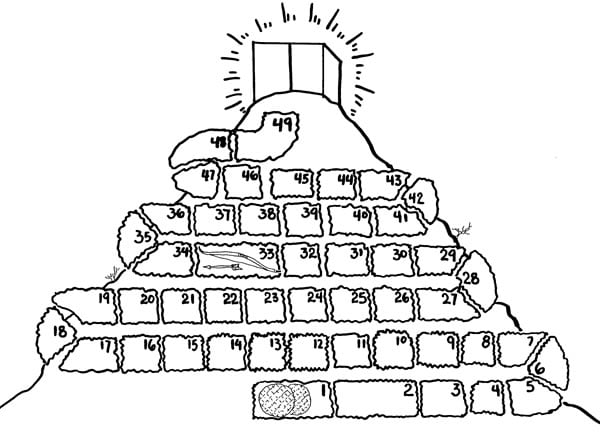
The Jewish people were on the 49th level of impurity in Egypt.  Then they were taken out of Egypt and they prepared for 49 days in order to receive the Torah.  We commemorate this by counting the 49 day period between Pesach and Shavuos.

So the question I have this year, on the parsha, is - what about those days when they complained about the manna, about not having water, about bitter water? Those were part of the 49 days.  Did they elevate themselves out of impurity on the very days that the provoked Hashem?

I've asked this question here and there and the answers I've heard haven't been satisfying.  One said, it was the eirav rav.  Another one said that it is the nature of a nisayon to elevate a person as a nes-flag waves on high.  Still another said that is how we grow, we move forward and slip backward.  But these were 49 days of continuous growth! True, Rashi says they did teshuva when they left Refidim, but what about their other complaints? And if it was just the eirav rav, I don't think the mishna in Avos would refer to the ten times we tested G-d. 

So if you have anything to offer, go ahead and post a comment.

Jan 29, 2013

Lilmod U'l'lamed


In an article by R' Mordechai Kamenetzky about R' Aharon Kotler, he states that it was R' Aharon's trailblazing commitment to the ideal of instilling Torah lishma that completely changed the face of Jewish life in America.   

He defines this as learning Torah without any aspirations to be a rabbi or even a teacher, but only for the sake of learning.  This is despite the fact that in Europe, the talmidim of the Lithuanian yeshivos invariably went on to take rabbinic positions.  There was one famous contemporary of R' Aharon who never took a position and that was the Chazon Ish, but who else did the same? The rest became rabbonim, magidei shiur or roshei yeshiva.   R' Aharon invented something new which hadn't been the goal of the roshei yeshiva back in Europe.

In fact, in bulletins published by Beth Medrash Govoha in the 1970's it states, "The perpetuation of Jewish peoplehood depends on the development and growth of authentic Torah scholars ... In the absence of Torah scholars, Jewry lacks the great teachers who are the links in the great chain of tradition spanning the ages.  It lacks the educators to instruct the coming generations  ..."

So apparently, according to the Lakewood yeshiva manifesto, the goal is to produce Torah teachers! In fact, aren't there hundreds (thousands?) of men in Lakewood who would be thrilled to get a shteller?  Does that mean they have dropped the "lishma" goal in which someone continues to sit and learn for himself without teaching others? And is that what learning Torah lishma actually means?


Jan 28, 2013

Mastery or Mystery


I'm reading Mastery by Greene, which illustrates how to become a master of a subject or field of interest with examples of people famous and obscure.  The claim is that mastery lies within each of us, should we choose to develop it.  And you develop it with years of hard work as an apprentice under a mentor.

As I'm reading this, I read an article in a recent Mishpacha magazine about a frum English fellow who is considered the "king of comedy" in the mainstream media.  This is rather extraordinary, of course, since the mainstream media and its comic productions aren't quite the environment we would expect a frum Jew to thrive in.  In any case, he had no intentions of becoming a producer or having anything at all to do with the entertainment industry.  He was an intellectual who was studying, of all things, 17th century Christian theology, in Cambridge (not that he believed this theology).  So how does someone doing graduate work in an obscure academic subject become king of comedy?

He was looking for a job and a friend suggested he look at the want ads in a certain paper.  He saw that the BBC was looking for a comedy producer and he applied and was accepted.  His first week on the job he met an old childhood friend and they did a show together which made his friend a star and made him a star producer.  Just like that! No years of study, no apprenticing under a mentor, no honing his skills and being faced with failure and having to persevere.  Simply a completely new field that he stumbled across in which he was and is wildly successful.  He has found his passion.

So what the moral of the story is, I don't know.  Who needs a book on mastery and years of perseverance when a fabulous job one never dreamed of, could fall into your lap? Ah, but who says it will ...

For those who have always had a interest in a particular field, the guidelines of how to become a master are pertinent. 

The Chovos Ha'Levavos says to choose a profession by what you are attracted to and for which you have a natural talent.  But then there are the life stories which I periodically come across in which a person ends up with a job or hobby which was completely unexpected and delightful nonetheless.

Jan 27, 2013

Extreme Bitachon


In continuation of two posts ago about bitachon, my favorite bitachon story is about the talmidim of the Baal Shem Tov who were sent by the Besht to a man to learn about bitachon. As they visit with him, a man comes in and pounds on the table and then leaves. Their host explains that this is the first warning from the poritz (squire) that he must pay the rent. He seemed relaxed about it, and when the man came in a second and a third time and banged on the table, he still seemed calm. The talmidim said: So you have the money? and to their surprise he said he didn't.

The talmidim watched in great curiosity as the man set off to the poritz's mansion to pay the rent, with no money in his pocket. They wondered how it would play out.

In the distance they saw a wagon approaching the host, stopping, and then travelling on, then stopping again, turning around and going back to their host. Then their host continued on to the mansion.

When he returned, the talmidim were eager to hear what had happened. So, did you pay the rent?!

Of course, he said. How did you do that if you had no money? they wondered.

He explained that the farmer in the wagon that approached him had offered to buy the produce that would eventually grow on his land. He made an offer but the amount was not enough to pay his rent, and so he DECLINED. That's why the wagon drove on.

But then the farmer changed his mind and drove back. I know you to be an honest person, and if that's what you think you should get, I'll pay you. And the farmer gave him the full amount, whereupon the man could pay his rent!

***
The certainty, the equanimity, that he was apparently an ordinary man, not a tzaddik.  Gevaldig!


Jan 23, 2013

Where is the Emes?


What can we do about truthfulness when it comes to timing?

I spent time today, talking with someone about an event, the speakers, the performer, and above all else - the timing.  What time should the event start? How much time should the speakers be allowed to speak? What time should they aim to end the event? 

The main problem is that when a time is stated on an invitation or orally, people will most often not show up at that time. Why? Because they want to arrive when things are underway, not just beginning.  They don't want to sit around.  And in their experience, if an event is called for 8:00, nothing will be happening before 8:30. 

People who have tried showing up at a wedding reception for the time stated on the invitation have found that they have the waiters to talk to, no guests and no wedding party.  So those who don't want to waste their time hanging around, add a half an hour, an hour, or more, depending on the event.

In my recent experience, the times stated for the chuppa have been fairly accurate, so I don't see weddings as the major problem here.  If you can't or don't want to stay from the beginning to the end of a wedding, you choose the event (badeken, chuppa, meal, simchas chosson v'kalla) you want to attend and show up for that.

Also in my experience, if the event is a shiur, it is likely to start 15 minutes after the stated time.  The clue is, the shiur is called for 8:15.  That means, they want to start the actual shiur at 8:30 but want people to have a chance to settle down, eat, socialize a bit.

The problem lies mostly with events which are combinations of guest speakers and entertainment,  maybe an auction drawing too.  What happens is, those running it don't want to start until they have a decent crowd.  The decent crowd appears late.  Those who showed up on time or only moderately late (having known that of course they won't start on time) are kept waiting.  So those who are on time are penalized, i.e. made to wait, and the late-comers are the ones who are accommodated. 

We have role models of what we may consider "extreme" emes such as when Rabbi Yaakov Kamenetzky said he did not eat gebrokst (when that was his practice up until that time) in order to get out of a sticky situation on Pesach.  Not only did he not eat gebrokst that Pesach, but he kept up this practice from then on.  Why? Because if he said he did not eat gebrokst, he meant it.

If he was running an event, or guiding those who were, I can guess what he would say to do.  The problem is, nobody wants to be the first.  It can ruin my event if I actually start at the designated time, so I'd rather someone else be the one to start being punctual ...

Perhaps the only solution is to write, "Doors Open" at whatever time you choose.  Open the doors then, so you were truthful, and then give no further times.  People will show up "whenever," and you start your program when you want to.

Jan 14, 2013

Financial Strategies from the People at Mesila


In response to the question in the comment posted to the previous post, what they can do is read the book, Your Money and Your Life: Mesila’s down-to-earth, Torah-based strategies for managing your finances. This book is a compilation of Mesila’s financial advice columns that ran in Hamodia.

Shmuli Margulies, Mesila’s chairman, said “The material in this book is very different from the material you will find in other books on financial management. Our goal in writing this book, like our goal in all of our activities, was to combine Torah hashkafah, professional knowledge, and the experience we have amassed in our years of experience working with families and businesses, in a way that will help people to successfully navigate contemporary financial challenges and achieve financial stability.”

Mesila's stated mission is to empower families and businesses to seek, achieve and maintain financial stability.
Mesila is dedicated to combating poverty by:
  • Raising public awareness of the importance of financial stability and independence
  • Promoting the development of attitudes and habits that lead to financial stability
  • Giving business owners the professional tools to manage their businesses correctly
  • Guiding people to create and implement sustainable, long-term solutions to the economic challenges they face
Contact information for Mesila is here

I read the book and overall, it sounds sensible.  It bothers me a little that although they talk about bitachon, they place such an emphasis on hishtadlus that I don't see where bitachon really comes into the picture.  For example, they believe in constantly upgrading your skills and marketability.  Why is that necessary if a person did reasonable hishtadlus? They will say that upgrading your skills is part of reasonable hishtadlus. 

I also wonder about their seeming belief that everyone can attain financial stability.  That seems to come from the mindset that if you put in the effort and handle your finances right, you will succeed.  Where is Hashem in this picture?