I was reading an old Binah magazine which has an extensive tznius section, highlighting various tznius initiatives.
They interviewed a woman who started a tznius hospital gown gemach in memory of her daughter. The typical hospital gown is immodest, while the gowns she provides are simultaneously modest while allowing hospital personnel to do their work (like insert an IV).
What struck me about the article is where the woman says she is always looking for ways to expand the gemach and since there is an overwhelming demand for these gowns, they need more money for fabric, and they want to set up a website.
A website? Hmmm. But if the conservative, quite frum readership of Binah follows the tznius guidelines promoted in the magazine, they won't have Internet in their homes! Who would the website be for?
I know that with filters and other measures and guidance from their rabbis, upstanding people have Internet, but the official line is: no Internet. The tznius stories promoted lately (see next post) include the message of not even using filtered Internet, and as far as business needs are concerned, some stories will tell how they use it under rabbinic guidance while other stories will convey the message that Hashem can send you parnassa without your using the Internet.
So it seems ironic and downright confusing that a tznius initiative wants a website!
May 31, 2015


May 30, 2015
Investing Our Energy
We often read or hear about fulfilling our tafkid, our life's mission. Aside from learning Torah and doing mitzvos, which is incumbent on us all, we might wonder: what is my particular life's mission?
Ideas for direction include 1) that which you are drawn to and 2) that which you find difficult. True, if you are drawn to something, it could be because that is where your tafkid lies. At the same time, if some area of mitzvos is difficult for you, that could very well be where your tafkid lies, although there is something contradictory about that, isn't there ...
I came across this line which I liked, which relates to figuring out where to put one's energies. It goes like this: "It is not something that I believe I should do; it's something that I cannot help but do."
Ideas for direction include 1) that which you are drawn to and 2) that which you find difficult. True, if you are drawn to something, it could be because that is where your tafkid lies. At the same time, if some area of mitzvos is difficult for you, that could very well be where your tafkid lies, although there is something contradictory about that, isn't there ...
I came across this line which I liked, which relates to figuring out where to put one's energies. It goes like this: "It is not something that I believe I should do; it's something that I cannot help but do."
May 29, 2015
Two Views on Family Time
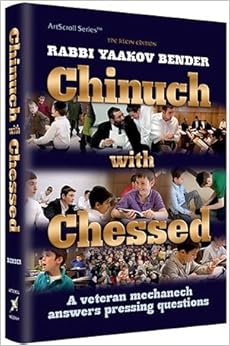
Rabbi Bender, rosh yeshiva of Darchei Torah in Far Rockaway, and renowned mechanech, strongly promotes spending time with family. He writes, "Keeping a close kesher with relatives is very important. Chazal emphasize to us how we should value our relationships even with distant relatives. Hashem found fault with Avrohom Avinu for abandoning Lot."
Regarding children attending family simchos, for example, a son coming from yeshiva in Eretz Yisrael and parents wondering whether he should stay through the Shabbos sheva brachos or immediately return to yeshiva [note, the question is not whether he should fly in for the wedding; that's a given], R' Bender wrote, "It is my feeling and very strongly so, that parents are entitled to have all their children at each and every family simcha. All members of a family belong at the simcha of an immediate member of the family. It is simply the right thing.
"Boruch Hashem, we are living in a time when we have grandparents and great-grandparents. Why shouldn't your son from Eretz Yisrael spend time with them, be meshamesh them, gain from their elder wisdom, hear about past simchos, and just be in the atmosphere of mishpacha? ... There is so much to be gained from interacting with all parts of the family, even distant cousins. I am forever grateful to my mother for teaching us the importance of keeping a very close connection with all our relatives. I will never forget how she was determined to travel very long distances when she was elderly and frail, to attend family simchos."
Rabbi Avigdor Miller z'l, on the other hand, thinks spending time with family is mostly a waste of time and takes away from Torah study. Here's a quote:
"Motzoai Shabbos is an opportunity, don't just run around visiting relatives; forget about relatives. You have one relative you have to visit, that's yourself. It's not selfish, because life is only for the purpose of making something out of yourself. So you have Friday night, all day Shabbos; remember Shabbos morning before davening should be utilized. Shabbos afternoon, Motzoai Shabbos. If you don't work on Sundays, be a kollel man on Sundays. "Oh!" your wife will say, "at least one day a week you have to be home!" Answer is, say, "My dear, I am not in the yeshiva now, yeshiva people are going full speed ahead every day of the week, I have one day and that one day I should waste?" So Sunday morning say good bye to your family, take along lunch and you spend the day someplace else, don't go home until nighttime."
Rabbi Miller certainly did not "waste time" attending simchas and rarely attended them.
May 28, 2015
Not Doing the Best He Can!
Years ago, when I read the line, "S/he's doing the best s/he can with the tools s/he has," to put a positive spin on a negative situation, I didn't buy it. Who said he's doing his best? I know I'm not doing my best, so why would I think others are?
I recently read an article by R' Fishel Schachter in which he describes preparing a shiur on a daf of Gemara with a Rashi that contains a lengthy mathematical calculation. He wanted to avoid it altogether but was forced to tackle it. He spent days on it until he finally mastered it.
He asks, what if he did not have to prepare the shiur? If he had been learning that Rashi with a chavrusa, he would have read it through superficially and moved on. His thinking would have been, these mathematical calculations are not for me. He would have believed that he could never understand it and forget about teaching it to others.
So he asks, what do we mean when we say we can't do something? He answers:
"Perhaps we mean: Given my current level of motivation, I can't.
Or, given the amount of resources and time I am willing to invest in whatever it is, I can't.
Or, given my existing level of emuna as to whether the success at the end will justify the effort, I can't.
Or, I am so concerned with failing that I am not willing to really apply myself properly.
Or, I don't fully understand that for all practical purposes I can't do anything without siyata dishmaya."
He concludes, "Let's stop thinking whether we can or can't. Let's just engage and wait for help to come from Above. The next time you hear yourself saying, 'I just can't do it,' take a moment to reflect on what you really mean. The greatest opportunity of your life may be at hand. Don't miss the call."
I recently read an article by R' Fishel Schachter in which he describes preparing a shiur on a daf of Gemara with a Rashi that contains a lengthy mathematical calculation. He wanted to avoid it altogether but was forced to tackle it. He spent days on it until he finally mastered it.
He asks, what if he did not have to prepare the shiur? If he had been learning that Rashi with a chavrusa, he would have read it through superficially and moved on. His thinking would have been, these mathematical calculations are not for me. He would have believed that he could never understand it and forget about teaching it to others.
So he asks, what do we mean when we say we can't do something? He answers:
"Perhaps we mean: Given my current level of motivation, I can't.
Or, given the amount of resources and time I am willing to invest in whatever it is, I can't.
Or, given my existing level of emuna as to whether the success at the end will justify the effort, I can't.
Or, I am so concerned with failing that I am not willing to really apply myself properly.
Or, I don't fully understand that for all practical purposes I can't do anything without siyata dishmaya."
He concludes, "Let's stop thinking whether we can or can't. Let's just engage and wait for help to come from Above. The next time you hear yourself saying, 'I just can't do it,' take a moment to reflect on what you really mean. The greatest opportunity of your life may be at hand. Don't miss the call."
May 26, 2015
Statistics and Us
Rabbi L. of Flatbush has a granddaughter in a coma (may she have a refuah shleima). He reported that the doctor was asked what her prognosis is.
The answer wasn't positive but the doctor added: You never know, with you people things are different.
***
It's one thing for us to hear that in a shiur or read it, and another thing when someone in the field, apparently not Jewish, says it!
The answer wasn't positive but the doctor added: You never know, with you people things are different.
***
It's one thing for us to hear that in a shiur or read it, and another thing when someone in the field, apparently not Jewish, says it!
May 11, 2015
A Thought-Provoking Letter
The following letter was printed in Binah magazine in March 2015:
"I live in a community where boxes are getting smaller and smaller, and the only way to get the contents to stay in the box is to sit on the cover and squash it so it fits.
I have been forced to send my daughter to an out-of-town high school because no school in town could accommodate her. She is a girl who is tzniusdik, respectful, and bright. She is also very talented and creative, and would love to have a career as an artist or fashion designer. She voiced that once in a personal essay at school and it set off a flurry of conferences as to where this heimishe girl was getting such aspirations from.
Once that red flag was raised, it all went downhill. She was called in and asked pointed questions such as, "Do you read fashion magazines?" When she answered in the negative, they asked her, "So how will you be a fashion designer? Do you understand why it's the wrong career choice?" And then, I kid you not, she was asked to re-write the essay with a more preferable career choice for a frum girl.
She came home broken and confused. "Why is it okay for Mrs. X (a parent on the PTA committee) and Rebbetzin L to design tzniusdik fashionable robes and children's clothes, but I can't? Why do I need to write an essay that is a lie?"
She is respectful, my daughter, so she wrote a beautiful essay on why she would shift careers and become an accountant instead. She called my neighbor, a mechaneches, and told her the story and asked her to read it to ensure that not a hint of cynicism was in there. My neighbor read it, praised her, and then called me, insisting, "You must talk to your rav. This girl is going to learn a new habit: lie about who she is and say everything right to satisfy those around her. She must get out of the school and learn that it's not a way of life."
She scared me (this is my oldest child and I would not have stepped out of the box and made a fuss had she not pushed me) and I did call our rav, who advised us. He explained it all, in person, to our daughter, and encouraged her to become the best frum fashion designer there is and raise the kedusha level of Klal Yisrael with her creations. He encouraged us to find a high school that would nurture her passion for art and allow more self-expression.
Prior to this, I too was a very "in the box" type. Now, I worry about its far-reaching effects."
"I live in a community where boxes are getting smaller and smaller, and the only way to get the contents to stay in the box is to sit on the cover and squash it so it fits.
I have been forced to send my daughter to an out-of-town high school because no school in town could accommodate her. She is a girl who is tzniusdik, respectful, and bright. She is also very talented and creative, and would love to have a career as an artist or fashion designer. She voiced that once in a personal essay at school and it set off a flurry of conferences as to where this heimishe girl was getting such aspirations from.
Once that red flag was raised, it all went downhill. She was called in and asked pointed questions such as, "Do you read fashion magazines?" When she answered in the negative, they asked her, "So how will you be a fashion designer? Do you understand why it's the wrong career choice?" And then, I kid you not, she was asked to re-write the essay with a more preferable career choice for a frum girl.
She came home broken and confused. "Why is it okay for Mrs. X (a parent on the PTA committee) and Rebbetzin L to design tzniusdik fashionable robes and children's clothes, but I can't? Why do I need to write an essay that is a lie?"
She is respectful, my daughter, so she wrote a beautiful essay on why she would shift careers and become an accountant instead. She called my neighbor, a mechaneches, and told her the story and asked her to read it to ensure that not a hint of cynicism was in there. My neighbor read it, praised her, and then called me, insisting, "You must talk to your rav. This girl is going to learn a new habit: lie about who she is and say everything right to satisfy those around her. She must get out of the school and learn that it's not a way of life."
She scared me (this is my oldest child and I would not have stepped out of the box and made a fuss had she not pushed me) and I did call our rav, who advised us. He explained it all, in person, to our daughter, and encouraged her to become the best frum fashion designer there is and raise the kedusha level of Klal Yisrael with her creations. He encouraged us to find a high school that would nurture her passion for art and allow more self-expression.
Prior to this, I too was a very "in the box" type. Now, I worry about its far-reaching effects."
May 4, 2015
How Are We Different 3
As a follow-up to previous posts on the topic of "Mi K'Amcha Yisrael"
here and here
I read (Mishpacha magazine) that a Cleveland benefactor came up with a fantastic chesed idea for families traveling on the afternoon and evening of bedikas chometz, when their car is chometz-free and everyone is hungry. He, together with others, picked a location between Lakewood and Cleveland on the side of the highway and set up a huge roadside barbeque where travelers going in either direction could stop for a hot meal.
There was no cost for the meals; rather, donations were made to Cleveland's Matan B'Sayser fund. This year, there was also a food stop located on the route between Toronto and Detroit.
The news item says 1100 people enjoyed hot meals between 1 and 10 pm, there were minyanim for mincha and then maariv, and when rain threatened, two bachurim hurried to the nearest Walmart and bought tents.
Quite impressive!
here and here
I read (Mishpacha magazine) that a Cleveland benefactor came up with a fantastic chesed idea for families traveling on the afternoon and evening of bedikas chometz, when their car is chometz-free and everyone is hungry. He, together with others, picked a location between Lakewood and Cleveland on the side of the highway and set up a huge roadside barbeque where travelers going in either direction could stop for a hot meal.
There was no cost for the meals; rather, donations were made to Cleveland's Matan B'Sayser fund. This year, there was also a food stop located on the route between Toronto and Detroit.
The news item says 1100 people enjoyed hot meals between 1 and 10 pm, there were minyanim for mincha and then maariv, and when rain threatened, two bachurim hurried to the nearest Walmart and bought tents.
Quite impressive!
May 3, 2015
Feeling Content
A 9th grade class of frum girls was asked to complete the sentence: "I am happy when ..."
Here are some of the answers:
I am not worried about anything.
I am in the company of people I enjoy.
I find something that was missing.
I do a job well.
I overcome a challenge.
I am able to help someone.
I do something satisfyingly creative.
I do something meaningful.
What is the difference between happiness and contentment? One writer (B Myndi) posits that happiness is a single state of pleasure, a momentary feeling which is dependent on externals. An example would be, getting a phone call with exciting mazal tov news or finding just the thing we need when shopping or getting a compliment. The joy wears off after a while
While contentment is a long-term state of being that comes from our attitudes and values, not from something outside of us. It's about acceptance and finding the good in what exists right now. Babies are great at this.
R' Zushe of Anipoli said you can learn three things from a baby:
1) always be busy
2) when you need something, cry out for it
3) when your needs are satisfied, be content
Here are some of the answers:
I am not worried about anything.
I am in the company of people I enjoy.
I find something that was missing.
I do a job well.
I overcome a challenge.
I am able to help someone.
I do something satisfyingly creative.
I do something meaningful.
What is the difference between happiness and contentment? One writer (B Myndi) posits that happiness is a single state of pleasure, a momentary feeling which is dependent on externals. An example would be, getting a phone call with exciting mazal tov news or finding just the thing we need when shopping or getting a compliment. The joy wears off after a while
While contentment is a long-term state of being that comes from our attitudes and values, not from something outside of us. It's about acceptance and finding the good in what exists right now. Babies are great at this.
R' Zushe of Anipoli said you can learn three things from a baby:
1) always be busy
2) when you need something, cry out for it
3) when your needs are satisfied, be content
Apr 30, 2015
As a Zechus
In an article about challa baking, one woman who was interviewed said she started making challa when her son was sick. She wanted to bake challa as a zechus for his refuah shleima. Sadly, her son passed away but she felt that the mitzvah of challa had to be taught and she began giving classes.
Later in the article, in a sidebar, it describes gemachs for challa. They are variations on the idea of women being given names to daven for when they make challa. The woman I referred to above is quoted as saying that when her son was sick, women gathered in groups of 40 to take challa as a zechus. She has set up a hotline to continue this idea, in which women call for names to daven for.
It struck me, and the article makes no mention of this, that being asked to daven for a sick person while taking challa, by someone who did just that for her son, and her son died, is not very inspirational. I thought better of writing this to the publication since it's tragic and I don't want to hurt anyone.
I know that we don't always see the results that we wanted, and that the Gemara talks about giving tzedaka "so that my son lives" and that it doesn't always result in good news. But somehow this strikes me differently. Maybe because it's not brought in the Gemara. Some other reason?
related posts: here
Later in the article, in a sidebar, it describes gemachs for challa. They are variations on the idea of women being given names to daven for when they make challa. The woman I referred to above is quoted as saying that when her son was sick, women gathered in groups of 40 to take challa as a zechus. She has set up a hotline to continue this idea, in which women call for names to daven for.
It struck me, and the article makes no mention of this, that being asked to daven for a sick person while taking challa, by someone who did just that for her son, and her son died, is not very inspirational. I thought better of writing this to the publication since it's tragic and I don't want to hurt anyone.
I know that we don't always see the results that we wanted, and that the Gemara talks about giving tzedaka "so that my son lives" and that it doesn't always result in good news. But somehow this strikes me differently. Maybe because it's not brought in the Gemara. Some other reason?
related posts: here
Apr 29, 2015
Just Say No
Overheard today:
A mother says to her little boy, about 4 years old, "Your behavior was unacceptable ... right?"
Sigh.
It's like the parent who says, "Come inside for supper, okay?"
You want the child's approval? agreement?
Then I came across this, b
"It happened in a seforim store. A prominent cheder menahel was browsing the aisles when a young man timidly approached.
"Rabbi K," he ventured. "Would it be possible to ask you a question.
"Certainly," Rabbi K replied.
A mother says to her little boy, about 4 years old, "Your behavior was unacceptable ... right?"
Sigh.
It's like the parent who says, "Come inside for supper, okay?"
You want the child's approval? agreement?
Then I came across this, b
"It happened in a seforim store. A prominent cheder menahel was browsing the aisles when a young man timidly approached.
"Rabbi K," he ventured. "Would it be possible to ask you a question.
"Certainly," Rabbi K replied.
“My five-year-old son over there wants me to buy him a pair of those fake tefillin,” said the man. “I am not sure if having ‘play tefillin’ sends a good chinuch message. Somehow, I feel that to a child, tefillin should be a hallowed mitzvah that he will merit to fulfill when he becomes bar mitzvah and not used as a toy.”
Rabbi K. thought about it and agreed with the father.
“Okay. Thanks so much!” the father said, promptly returning to his son.
A few minutes later, Rabbi K. again heard someone behind him.
“Rabbi K., can I ask you another question?”
It was the same father.
“Sure,” Rabbi K. answered.
“My son really wants the tefillin. What should I tell him?” asked the father.
Rabbi K., looking directly at the father, said, “Tell him, ‘No.’”
The father looked at Rabbi K. startled. Then, as if a light bulb had gone off in his head, he responded, “Ohhh.” And he walked away."
Apr 26, 2015
Natural Disasters and Our Response
In 1923, Japan experienced a devastating earthquake. In addition, or as a result of the earthquake, there were a typhoon, landslides and a tsunami. Altogether, the earthquake and typhoon killed an estimated 99,300 people, and another 43,500 were missing.
Japanese commentators interpreted the disaster as an act of divine punishment to admonish the Japanese people for their self-centered, immoral, and extravagant lifestyles.
R' Chatzkel Levenstein recalled the Chofetz Chaim’s comments at the time of an earthquake in Japan, which resulted in thousands of deaths. “I remember that he said it had happened because there were no Torah scholars in Japan.” (Or Yechezkel, Middos)
Two years later, when a powerful earthquake hit Russia, destroying entire cities and causing many fatalities, the Chofetz Chaim wrote a powerful letter about it.
"Several weeks ago I publicized an essay concerning the great earthquake that happened in our land. In that essay I encouraged Klal Yisrael to do teshuva and that the earthquake was a warning to the entire world that they should repent of their evil ways and believe in Hashem Who controls all. Not for naught did all these terrifying and frightening things of this year come upon us. And now, we hear new and terrifying information about the great flood that took place in our land and the great earthquake that took place in Russia in which were killed and injured thousands of men, women and children and many livestock; many of them were buried alive. Even in our land we experienced some tremors of this earthquake. Certainly any thinking person should be gripped by fear and trembling as to what Hashem has done to us. The One who is good and does good to all and is merciful on all of His creations, and does not even desire the death of the wicked, as it says 'By My life, says Hashem, I do not desire the death of the wicked one, but rather that he repent and live'(Yechezkel 33).The understanding person will realize that Hashem is urging us to do teshuva and is showing us all that He has the power to as He pleases, and none of His creations of above or below can tell Him what to do. And it is clear to me that if we had prophets sent from Hashem, they would without doubt be standing guard to urge Jews to do teshuva to our Father in heaven. Because, with our evil deeds we have no prophets or divine messengers in our times, He is urging us through other messengers to do teshuva, as it says 'He makes winds-his messengers; burning fire-his servants."'
Japanese commentators interpreted the disaster as an act of divine punishment to admonish the Japanese people for their self-centered, immoral, and extravagant lifestyles.
R' Chatzkel Levenstein recalled the Chofetz Chaim’s comments at the time of an earthquake in Japan, which resulted in thousands of deaths. “I remember that he said it had happened because there were no Torah scholars in Japan.” (Or Yechezkel, Middos)
Two years later, when a powerful earthquake hit Russia, destroying entire cities and causing many fatalities, the Chofetz Chaim wrote a powerful letter about it.
"Several weeks ago I publicized an essay concerning the great earthquake that happened in our land. In that essay I encouraged Klal Yisrael to do teshuva and that the earthquake was a warning to the entire world that they should repent of their evil ways and believe in Hashem Who controls all. Not for naught did all these terrifying and frightening things of this year come upon us. And now, we hear new and terrifying information about the great flood that took place in our land and the great earthquake that took place in Russia in which were killed and injured thousands of men, women and children and many livestock; many of them were buried alive. Even in our land we experienced some tremors of this earthquake. Certainly any thinking person should be gripped by fear and trembling as to what Hashem has done to us. The One who is good and does good to all and is merciful on all of His creations, and does not even desire the death of the wicked, as it says 'By My life, says Hashem, I do not desire the death of the wicked one, but rather that he repent and live'(Yechezkel 33).The understanding person will realize that Hashem is urging us to do teshuva and is showing us all that He has the power to as He pleases, and none of His creations of above or below can tell Him what to do. And it is clear to me that if we had prophets sent from Hashem, they would without doubt be standing guard to urge Jews to do teshuva to our Father in heaven. Because, with our evil deeds we have no prophets or divine messengers in our times, He is urging us through other messengers to do teshuva, as it says 'He makes winds-his messengers; burning fire-his servants."'
Apr 24, 2015
Shabbos versus Theft
I heard a lecture in which Yossi Mizrachi asks why Madoff became a headline for fraud when stealing, in the halachic hierarchy, is a far lesser sin than chilul Shabbos. For chilul Shabbos you are chayav missa (deserve the death penalty)!
Well, of course, as far as secular headlines go, secular media are not interested in chilul Shabbos. Not to steal, on the other hand, is one of the Seven Noahide Laws which everyone is obligated to observe.
There is also the fact that chilul Shabbos doesn't hurt others while stealing does.
Nevertheless, it was intriguing to hear R' Mizrachi pose the question. We recoil when someone Jewish is caught stealing but we don't recoil when we hear of Jews who don't keep Shabbos, even when they are our own relatives or neighbors.
Theft is also a most serious sin since, as it says in many machzorim before the Neila prayer, if a person has stolen anything he had better resolve to take care of it immediately after Yom Kippur. It does not say shemiras Shabbos or kashrus or Talmud Torah, but gezel.
And of course, not stealing is in the category of mishpatim, rational mitzvos that any just society upholds, while the myriad laws of Shabbos are not obviously logical.
Well, of course, as far as secular headlines go, secular media are not interested in chilul Shabbos. Not to steal, on the other hand, is one of the Seven Noahide Laws which everyone is obligated to observe.
There is also the fact that chilul Shabbos doesn't hurt others while stealing does.
Nevertheless, it was intriguing to hear R' Mizrachi pose the question. We recoil when someone Jewish is caught stealing but we don't recoil when we hear of Jews who don't keep Shabbos, even when they are our own relatives or neighbors.
Theft is also a most serious sin since, as it says in many machzorim before the Neila prayer, if a person has stolen anything he had better resolve to take care of it immediately after Yom Kippur. It does not say shemiras Shabbos or kashrus or Talmud Torah, but gezel.
And of course, not stealing is in the category of mishpatim, rational mitzvos that any just society upholds, while the myriad laws of Shabbos are not obviously logical.
Apr 22, 2015
Anniversary of Previous Shul Attack
On April 11, 1956, Rosh Chodesh Iyar, fedayeen terrorists entered a shul in Kfar Chabad during maariv and started shooting. Five children and one teacher were murdered, another ten injured.
I don't recall reading any mention of it after the Har Nof shul massacre. Articles following the recent shul slaughter made it sound like the terrorist attack in the Har Nof shul was a new outrage, in that people praying in a house of worship had been attacked, when it had been done before. Here is a link to the tragedy of 1956: here
I don't recall reading any mention of it after the Har Nof shul massacre. Articles following the recent shul slaughter made it sound like the terrorist attack in the Har Nof shul was a new outrage, in that people praying in a house of worship had been attacked, when it had been done before. Here is a link to the tragedy of 1956: here
Apr 14, 2015
Sad Subway Scene
There was a chubby, frum lady lady on the subway with a chubby child, maybe 15 months old, in a stroller. The child was eating potato chips while mommy was busy with her phone. Some time later, the child's greasy hands were grasping a small chocolate bar.
Oy.
Food was used to occupy the child, keep her quiet, uncomplaining, not bothering anyone including mommy. Sad.
Sad because the mother doesn't know how to regard food properly and sad because she is teaching her baby bad habits that will stick with the child forever, most likely. It's sad to watch it happening.
Oy.
Food was used to occupy the child, keep her quiet, uncomplaining, not bothering anyone including mommy. Sad.
Sad because the mother doesn't know how to regard food properly and sad because she is teaching her baby bad habits that will stick with the child forever, most likely. It's sad to watch it happening.
Apr 5, 2015
Attitude Toward Chol Ha'Moed

Rabbi Bergstein (a Bobover Chassid who lectures for Aish HaTorah, Discovery, Gateway and other organizations) points out:
If the Chol Ha'Moed trip is more exciting than the Pesach seder or sitting in the succa, it's a problem!
Speaking of chol ha'mo'ed and trips, many people are unaware that chol ha'moed must be treated as the holy time it is. Yes, we can use the phone, our computers, and cars, but bigdei Yom Tov are a must. If you can't wear bigdei Yom Tov while playing paintball, then ... paintball is not a chol ha'moed activity. If you can't wear bigdei Yom Tov while riding the roller coaster or boating or skating, then those aren't chol ha'moed activities.
Subscribe to:
Posts (Atom)

 Posts
Posts

