Some people think it's crazy to spend $35, $75, $150 ... on an esrog. The problem is they are thinking it's a fruit when it's actually a mitzva and of course it's crazy to spend that kind of money on a fruit like a peach, apple, pear. But this isn't a fruit. It's an esrog.
I just read an anecdote that illustrates this difference in mindset:
By Rabbi Pinchos Lipschutz
Last year, a friend was flying to New York from Israel for Sukkos. Like so many other passengers on the packed plane, he was bringing esrogim with him. Six of them to be exact. When he arrived at customs control, he handed in the requisite form, which he had filled out to the best of his ability. The customs agent looked at the form and asked him, “Do you have any fruit with you?”
“No,” he answered.
“Do you have an esrog?” the agent asked.
“Yes. In fact, I have six of them,” my friend said.
“So why,” asked the agent, “when I asked if you were carrying fruit, did you say no?”
“I never thought of an esrog as a fruit,” my friend responded in all honesty. “An esrog is an esrog!”
The agent, recognizing the man’s sincerity, proceeded to examine one of the esrogim. Upon ascertaining that it was clean of fruit flies, he allowed the gentleman through with his esrogim.
Sep 28, 2010
Sep 27, 2010
The Power of Chinuch
I was reading an account of a baalas teshuva and the woman said that she was amazed when a little Jewish child checked with his father regarding the kashrus of some treat before eating it. She couldn't get over the child's will power.
When I read this I thought - she doesn't understand chinuch. To a child who is raised not being allowed to do certain things on Shabbos and to wait between meat and milk, these mitzvos become second nature. Passing a McDonalds is no temptation to me. Domino's Pizza is a non-issue.
As R' AJ Twerski puts it, "Every person has things which are essentially alien to him, which he would never do. For example, I do not have to struggle with the issue of whether or not I will have a cheeseburger. My commitment to eating kosher is such that the very thought is an absurdity, and if I were to pass by a treife food stand, even if I was extremely hungry, it would never occur to me to eat treife. It is simply not within the realm of possibility that I would do so."
That's not to say that every religious child will avoid items of questionable kashrus. I think what it does tell us is that if chinuch is done right there will be numerous areas of halacha and hashkafa that will be treated as a "given" such as not putting food into one's mouth without a bracha, not going to sleep without saying Shema. Something to aim for in chinuch.
When I read this I thought - she doesn't understand chinuch. To a child who is raised not being allowed to do certain things on Shabbos and to wait between meat and milk, these mitzvos become second nature. Passing a McDonalds is no temptation to me. Domino's Pizza is a non-issue.
As R' AJ Twerski puts it, "Every person has things which are essentially alien to him, which he would never do. For example, I do not have to struggle with the issue of whether or not I will have a cheeseburger. My commitment to eating kosher is such that the very thought is an absurdity, and if I were to pass by a treife food stand, even if I was extremely hungry, it would never occur to me to eat treife. It is simply not within the realm of possibility that I would do so."
That's not to say that every religious child will avoid items of questionable kashrus. I think what it does tell us is that if chinuch is done right there will be numerous areas of halacha and hashkafa that will be treated as a "given" such as not putting food into one's mouth without a bracha, not going to sleep without saying Shema. Something to aim for in chinuch.
Aug 20, 2010
Where are you drawing the line?
I heard a story the other day whose message is echoed in an article I read a few minutes ago. The story is about a rabbi who moved to Baltimore in the early part of the 20th century. Someone questioned him about his yarmulke which he wore sticking out of the back of his hat which was not the rabbi's practice all the years and was not the practice of the group to which he belonged.
The rabbi answered - when I came to America I knew that I'd face struggles with my yetzer hara over matters of religious observance. So now, even if the yetzer hara should win, what would he accomplish? That I would move my yarmulke back under my hat ...
In other words, getting back to the topic of the three previous posts, what issues in chinuch do we want to deal with? To a great extent, we can choose which ones. As an example, if children attend schools with peers who have lavish parties for their bar (or bas) mitzva or peers who include sports activities in their bar mitzva celebration, their parents will have to contend with issues such as: will we do the same as the others? is it right to make our son different than his peers? should we compromise on how we would like to celebrate a bar mitzva? and so on. But if the children attend schools where the schools set the rules on where a bar mitzva can be held and what is acceptable, and that is the school you choose, then how to celebrate is a non-issue.
As Emuna Braverman wrote in her Aish article called "The Makeup Wars": "Once we choose a school whose values we embrace then we have to allow our children to be in step with their peers – obviously within reason. At the same time that we were having this struggle with our daughter [about make-up], a friend of ours (whose daughter was clearly at a different school) was struggling with her over whether she could sleep out in the woods with her boyfriend. Suddenly makeup didn’t seem like such a big deal! We have to choose an environment that matches our values and then work within its parameters."
Which is why I think R' Twerski's unqualified call to warn our children about drugs because "drugs are everywhere, even in our Torah institutions" and "we live in a society that is awash in drug use" is misplaced. Would he also say we should tell all teenagers in frum schools and yeshivos about what can happen if a boyfriend-girlfriend relationship goes too far? About out-of-wedlock babies? After all, by his reasoning in every school "there are marginal youngsters" ... Or would he agree that talks about sexual relationships are out of place in yeshivos?
The rabbi answered - when I came to America I knew that I'd face struggles with my yetzer hara over matters of religious observance. So now, even if the yetzer hara should win, what would he accomplish? That I would move my yarmulke back under my hat ...
In other words, getting back to the topic of the three previous posts, what issues in chinuch do we want to deal with? To a great extent, we can choose which ones. As an example, if children attend schools with peers who have lavish parties for their bar (or bas) mitzva or peers who include sports activities in their bar mitzva celebration, their parents will have to contend with issues such as: will we do the same as the others? is it right to make our son different than his peers? should we compromise on how we would like to celebrate a bar mitzva? and so on. But if the children attend schools where the schools set the rules on where a bar mitzva can be held and what is acceptable, and that is the school you choose, then how to celebrate is a non-issue.
As Emuna Braverman wrote in her Aish article called "The Makeup Wars": "Once we choose a school whose values we embrace then we have to allow our children to be in step with their peers – obviously within reason. At the same time that we were having this struggle with our daughter [about make-up], a friend of ours (whose daughter was clearly at a different school) was struggling with her over whether she could sleep out in the woods with her boyfriend. Suddenly makeup didn’t seem like such a big deal! We have to choose an environment that matches our values and then work within its parameters."
Which is why I think R' Twerski's unqualified call to warn our children about drugs because "drugs are everywhere, even in our Torah institutions" and "we live in a society that is awash in drug use" is misplaced. Would he also say we should tell all teenagers in frum schools and yeshivos about what can happen if a boyfriend-girlfriend relationship goes too far? About out-of-wedlock babies? After all, by his reasoning in every school "there are marginal youngsters" ... Or would he agree that talks about sexual relationships are out of place in yeshivos?
Aug 18, 2010
Another follow-up post
I'd like to know how far is R' Twerski willing to go with this line: "The greatest danger is not being aware that one exists." There are all sorts of dangers out there and is it really necessary for us to know about them all? I am not convinced. I think we ought to protect children and even ourselves from unnecessary exposure to the seamier sides of life.
And more important, I think, than informing children of lurking dangers is to inform young marrieds that they must devote themselves to raising their children, heart and soul. Both parents need to give their children quality and quantity time. Nothing can replace sitting around with kids on Shabbos or any other time and just shmoozing, sharing ideas, stories. Singing together. Going on outings together. Nothing. I don't care how many speeches kids get about drugs - predators - eating disorders - smoking - moods and depresssion - it's worth hardly anything at all if they don't have a loving and respectful relationship with their parents. When children want to emulate their parents and don't want to hurt them, then self-destructive and secretive behavior is rendered unnecessary. We need to work to increase family loyalty and decrease the kind of peer pressure that makes parents bystanders in kids' lives.
Recommended reading: Hold On to Your Kids: Why Parents Need to Matter More Than Peers
by Gordon Neufeld and Gabor Mate M.D.
Follow-up to previous post
What issues must we deal with or do we choose to deal with? It depends on where we are raising our children and what kind of school and camp they attend. If they live in a mostly sheltered environment and attend a school with children coming from a similar background, in which drug use is quite remote, not only would I think raising the issue would be pointless I think it would be harmful. However, if smoking is something they see, that might warrant a talk from an authority figure like a doctor who tells them of the dangers, followed up by a talk by the rebbi or mashgiach about the halachic reasons not to smoke.
"How do you teach a child not to touch fire without telling them it's hot?"
Items that are hot naturally come up in a toddler's life. There is hot food, a hot oven not to touch, hot water in a tub or sink and a parent will comment about waiting until it cools off, about being careful not to touch it, ouch. It's part of life. Just as we teach children how to cross the street and warn them to look around carefully. Or have a fire drill.
"Would you say the same in regards to talking to them about child predators?"
It is appropriate and advisable to tell a child about the importance of never going anywhere with anyone without permission from home, even with someone he/she knows well. No need to inform them of molesters and what they do. Little talks with a parent about tznius, about not going off with a counselor or someone alone is fine. The emphasis could and should be on 1) permission from parents 2) modesty 3) impressing on them that if anyone ever tells them to keep a secret from their parents the first thing they should do is tell their parents.
"How do you teach a child not to touch fire without telling them it's hot?"
Items that are hot naturally come up in a toddler's life. There is hot food, a hot oven not to touch, hot water in a tub or sink and a parent will comment about waiting until it cools off, about being careful not to touch it, ouch. It's part of life. Just as we teach children how to cross the street and warn them to look around carefully. Or have a fire drill.
"Would you say the same in regards to talking to them about child predators?"
It is appropriate and advisable to tell a child about the importance of never going anywhere with anyone without permission from home, even with someone he/she knows well. No need to inform them of molesters and what they do. Little talks with a parent about tznius, about not going off with a counselor or someone alone is fine. The emphasis could and should be on 1) permission from parents 2) modesty 3) impressing on them that if anyone ever tells them to keep a secret from their parents the first thing they should do is tell their parents.
Aug 17, 2010
Imprinting the Positive
R' Abraham J. Twerski wrote an article called "Speaking about the Unspeakable" in which he says we should talk to our children about drugs. He asks, "how will our children learn about the evils of drug use if we don’t talk to them about it?" As for those whose children are sheltered he says, "The greatest danger is not being aware that one exists."
“Li'Shichno sidrishu u’vasa shama” - seek His Presence and come there (Re’eh 12:5). The Ponevezher Rov asked why is it that when the Torah tells us to build a Bais HaMikdash, the location is not clearly stated, i.e. the pasuk never refers to Yerushalayim?
He contrasts this to the Arei Miklat (Cities of Refuge) where the Torah tells us “tachin lecha ha'derech”, and Chazal explain that the roads should have signs at every junction pointing in the direction of the Arei Miklat. The reason for this, he explains, is that the accidental murderer, in his flight to safety, should not need to stop and ask directions because we don’t want everyone to know that a murder took place since it will desensitize the people to murder. Sins, even unintentional ones, should not be discussed. On the other hand when a person is going to the Bais HaMikdash we want him to stop everyone along the way to ask for directions to awaken in them the desire to go to the Bais HaMikdash too.
The Chinuch Malchusi says that we learn from here that you should not teach your children through negative examples. Do not point out the wrongdoings and teach them its evils and how they must avoid it. In a sense this will open up their thoughts and teach them all sorts of bad things that they would have surely avoided had they come upon it themselves.
A distinguished mechanech once related that when he was a young boy many years ago (before drugs were a huge problem) in school in the Bronx, they brought in an officer from the Drug Enforcement Agency who brought in many kinds of drugs and gave them a lecture about avoiding each one. This mechanech said that it was very educational to the bulk of his class who ended up on drugs!
Good education means monopolizing the mind with positive lessons, examples, and stories. Just like the questions on the way to the Bais HaMikdash, this attitude will help the children find the Shechina after a longer but very successful journey.
As a community, online or otherwise, we should speak about all the good that Jews do and there is so much good! It is very demoralizing and a spiritual downer to read and hear, time and again, about sins and crimes that are committed. Highlight the positive!
“Li'Shichno sidrishu u’vasa shama” - seek His Presence and come there (Re’eh 12:5). The Ponevezher Rov asked why is it that when the Torah tells us to build a Bais HaMikdash, the location is not clearly stated, i.e. the pasuk never refers to Yerushalayim?
He contrasts this to the Arei Miklat (Cities of Refuge) where the Torah tells us “tachin lecha ha'derech”, and Chazal explain that the roads should have signs at every junction pointing in the direction of the Arei Miklat. The reason for this, he explains, is that the accidental murderer, in his flight to safety, should not need to stop and ask directions because we don’t want everyone to know that a murder took place since it will desensitize the people to murder. Sins, even unintentional ones, should not be discussed. On the other hand when a person is going to the Bais HaMikdash we want him to stop everyone along the way to ask for directions to awaken in them the desire to go to the Bais HaMikdash too.
The Chinuch Malchusi says that we learn from here that you should not teach your children through negative examples. Do not point out the wrongdoings and teach them its evils and how they must avoid it. In a sense this will open up their thoughts and teach them all sorts of bad things that they would have surely avoided had they come upon it themselves.
A distinguished mechanech once related that when he was a young boy many years ago (before drugs were a huge problem) in school in the Bronx, they brought in an officer from the Drug Enforcement Agency who brought in many kinds of drugs and gave them a lecture about avoiding each one. This mechanech said that it was very educational to the bulk of his class who ended up on drugs!
Good education means monopolizing the mind with positive lessons, examples, and stories. Just like the questions on the way to the Bais HaMikdash, this attitude will help the children find the Shechina after a longer but very successful journey.
As a community, online or otherwise, we should speak about all the good that Jews do and there is so much good! It is very demoralizing and a spiritual downer to read and hear, time and again, about sins and crimes that are committed. Highlight the positive!
Aug 16, 2010
What Life Should Be
"My son is having a BLAST!!! Learning and having FUN!!! That's what summer and life, for that matter should be!"
Hmmm. That got me thinking.
I take note of which words are in capital letters followed by exclamation marks: BLAST and FUN, and which is not in capital letters: learning.
I observe a parent's understanding of what not only a summer vacation but what life should be.
I wonder, did I miss a critical lesson (or two or three) when we were taught what life is about? I simply do not recall learning, reading or hearing that life is about having a BLAST and FUN.
I thought it's about Love and Fear of G-d. About Torah, Avoda, Gemilus Chasadim. About Ahavas Yisrael, Olam Haba, Yemos Ha'Moshiach.
What kind of students and children do we produce when we think that life should be about fun as opposed to Serving G-d?
***
Now I'll take the other side. What the parent meant is that a Jewish life should be full of exuberance and simcha. That is true!
But in the statement, learning and fun are separate. It's not that the learning is geshmak (though perhaps it is). It sounds like they do their learning (get it over with?) and then move on to what they're really interested in: having A BLAST and FUN.
E-mail Notification
Sorry for the long delay in responding to your query about e-mail notification. To the right of the screen you should see where you can now subscribe to e-mail notification.
This is an experiment and I hope it works!
Jul 28, 2010
I've got to stop speculating!
When am I going to learn?
Not to speculate. Definition: To engage in a course of reasoning often based on inconclusive evidence.
What a waste of time. But it's easy to get drawn in:
- Maybe he/she meant ...
- Probably what happened was ...
- I think it means ...
We (I) do it when someone doesn't return our call, when we wonder about some news item and come up with theories about this and that, when we assume motives.
I'm not talking here about "dan l'chaf zechus" (judging favorably). It's more about coming up with explanations for things we read and hear about. It's usually a waste of energy because a) we don't have all the information and b) we simply can't read other people's minds.
In some cases, just by waiting things become clear. In other cases, we can take the initiative and ask questions. Otherwise, no speculating!
Not to speculate. Definition: To engage in a course of reasoning often based on inconclusive evidence.
What a waste of time. But it's easy to get drawn in:
- Maybe he/she meant ...
- Probably what happened was ...
- I think it means ...
We (I) do it when someone doesn't return our call, when we wonder about some news item and come up with theories about this and that, when we assume motives.
I'm not talking here about "dan l'chaf zechus" (judging favorably). It's more about coming up with explanations for things we read and hear about. It's usually a waste of energy because a) we don't have all the information and b) we simply can't read other people's minds.
In some cases, just by waiting things become clear. In other cases, we can take the initiative and ask questions. Otherwise, no speculating!
Jul 21, 2010
The State of Israel Acts as our Stepmother
I am reading Eretz Yisrael in the Parashah by Rabbi Litchtman which contains divrei Torah that highlight the centrality of Eretz Yisrael in the Torah. The author, a modern Orthodox rabbi, made aliya in 1991 and urges all Jews to do the same.
I have no argument with his divrei Torah (at least the ones I've read so far) for he quotes from reputable sources. However, his conclusions are another story.
What particularly aroused my ire this week is a section called "Foreign Labor" that begins on p. 326. He refers to the Chazal which says, "Jews [who live] outside the Land worship avoda zara in purity." Elsewhere in the Gemara it says that the term "avoda zara" can mean "work that is foreign to him." Based on this idea, R' Shalom of Belz explains, "Jews who live outside Eretz Yisrael do foreign work in purity." Meaning, they work for the sake of others. All the effort they put into building up the lands of galus is foreign to them because whatever they build or produce there eventually falls into the hands of others.
The Zionist author of the book learns a lesson from this that we should leave the diaspora for Eretz Yisrael. He quotes Eim Ha'Banim Semeichah where the author urges us to return to our "true mother," Eretz Yisrael. He bemoans the money we invested in other lands which he calls our "stepmother." How did our stepmother treat us? "She took a staff and hit us cruelly and mercilessly .. She also banished us completely and took our money from us. We were forced to leave her house ... Now should we put our faith in her for the future and return to her once again? How can we be so sure that after a few decades she will not do this to us again?"
The author of Eim Ha'Banim Semeichah was murdered in 1945. Not in his wildest dreams would he have imagined what took place during the summer of 2005. Five years ago, the State of Israel destroyed Gush Katif and settlements in Northern Shomron. 1700 families were forced to leave their homes where some had been living for 30 years. Jews bulldozed homes, 33 kindergartens, 6 elementary schools, 3 high schools, 6 yeshivos, 3 kollelim and 21 settlements. They abandoned hothouses that were estimated to be worth over $80 million. The agricultural produce of Gush Katif represented some 10% of all agricultural produce raised in Israel. They dismanted 38 shuls which were later desecrated by the Arabs. 47 bodies were exhumed from the cemetery.
And yet R' Lichtman urges us to make aliya! My questions to him are:
If our "true mother" [his beloved State of Israel] acts like a "stepmother," why should we go to her? How did Jews in Israel treat us? "She [Jews in Israel] took a staff and hit us cruelly and mercilessly .. She also banished us completely and took our money from us. We were forced to leave her house ..." The chilul Hashem picture of Jews in riot gear throwing the Jews in Amona out of their homes, won the Pulitzer Prize.
I quote R' Teichtel and ask R' Lichtman: Should we put our faith in her [the State of Israel] for the future and return to her once again? How can we be so sure that after a few decades she will not do this to us again?" when this calamity was not even the first of its kind. Israel gave the Sinai and its oil fields to Egypt and destroyed the settlement of Yamit. In fact, some residents of destroyed Yamit resettled in Gush Katif only to have their homes destroyed yet again, by Jews who act as our "stepmother."
When will the religious-Zionists open their eyes?
I have no argument with his divrei Torah (at least the ones I've read so far) for he quotes from reputable sources. However, his conclusions are another story.
What particularly aroused my ire this week is a section called "Foreign Labor" that begins on p. 326. He refers to the Chazal which says, "Jews [who live] outside the Land worship avoda zara in purity." Elsewhere in the Gemara it says that the term "avoda zara" can mean "work that is foreign to him." Based on this idea, R' Shalom of Belz explains, "Jews who live outside Eretz Yisrael do foreign work in purity." Meaning, they work for the sake of others. All the effort they put into building up the lands of galus is foreign to them because whatever they build or produce there eventually falls into the hands of others.
The Zionist author of the book learns a lesson from this that we should leave the diaspora for Eretz Yisrael. He quotes Eim Ha'Banim Semeichah where the author urges us to return to our "true mother," Eretz Yisrael. He bemoans the money we invested in other lands which he calls our "stepmother." How did our stepmother treat us? "She took a staff and hit us cruelly and mercilessly .. She also banished us completely and took our money from us. We were forced to leave her house ... Now should we put our faith in her for the future and return to her once again? How can we be so sure that after a few decades she will not do this to us again?"
The author of Eim Ha'Banim Semeichah was murdered in 1945. Not in his wildest dreams would he have imagined what took place during the summer of 2005. Five years ago, the State of Israel destroyed Gush Katif and settlements in Northern Shomron. 1700 families were forced to leave their homes where some had been living for 30 years. Jews bulldozed homes, 33 kindergartens, 6 elementary schools, 3 high schools, 6 yeshivos, 3 kollelim and 21 settlements. They abandoned hothouses that were estimated to be worth over $80 million. The agricultural produce of Gush Katif represented some 10% of all agricultural produce raised in Israel. They dismanted 38 shuls which were later desecrated by the Arabs. 47 bodies were exhumed from the cemetery.
And yet R' Lichtman urges us to make aliya! My questions to him are:
If our "true mother" [his beloved State of Israel] acts like a "stepmother," why should we go to her? How did Jews in Israel treat us? "She [Jews in Israel] took a staff and hit us cruelly and mercilessly .. She also banished us completely and took our money from us. We were forced to leave her house ..." The chilul Hashem picture of Jews in riot gear throwing the Jews in Amona out of their homes, won the Pulitzer Prize.
I quote R' Teichtel and ask R' Lichtman: Should we put our faith in her [the State of Israel] for the future and return to her once again? How can we be so sure that after a few decades she will not do this to us again?" when this calamity was not even the first of its kind. Israel gave the Sinai and its oil fields to Egypt and destroyed the settlement of Yamit. In fact, some residents of destroyed Yamit resettled in Gush Katif only to have their homes destroyed yet again, by Jews who act as our "stepmother."
When will the religious-Zionists open their eyes?
Labels:
Eretz Yisrael,
Gush Katif,
religious-Zionists,
State of Israel
Jul 11, 2010
Campers' Expectations
In an article about summer camps in the Catskills, the director of Camp Aguda-Bnos and the director of Camp Hedvah both said that they must adjust to new expectations from their campers. Meir Frischman said, "Our learning groups have been held in these gazebos for decades. Nowadays, the campers expect air conditioning in their gazebos. Each of the past three years we've enclosed a few gazebos; this year, we're enclosing three more."
I would like to know where these expectations came from. Surely it was hot in camp for all those decades. Presumably some campers moaned about the heat all along. So what made him decide to accede to the campers' wishes for air conditioning? Was it the campers who exerted the pressure or their parents? Did parents say, "We are paying plenty of money and we would like our children to be able to learn comfortably"? What would happen if he said, "We have never had air conditioning and what worked in the past will continue to work"? Would he lose many campers to other camps?
R' Levi: "Comfortable accomodations and standard on-site activities just don't do it anymore. Girls expect many more trips and special days. My wife and the head counselor hold weekly meetings beginning in December to organize a fun schedule."
Going away to camp is not good enough. You have to go off camp grounds in order to have fun. Having activities on camp grounds is booooring. The change of scenery from city to camp is not enough. Why do the girls expect many more trips and special days? Is this about spoiled kids or is it about competition between camps - if one camp puts in a go-kart track, then other camps do the same. If one camp takes its campers to Hershey Park, ice skating, bowling etc. then other camps follow because otherwise their camp won't be patronized.
Day camps are joining the manic activity frenzy. Someone told me she wanted to keep her 7 yr. old home from a day camp trip, a full day trip to a big amusement park followed by a BBQ. There was an extra charge involved though this wasn't the main or only reason to be opposed to it. If this is what is provided a 7 year old, what will you give a jaded 10 year old who has been everywhere and done everything? And how should parents handle it when they are opposed to these extravagant outings for chinuch and other reasons? Should they complain to the director (who will tell them they have the option of not sending their child on the trip)? How should they explain their views to their child?
According to an article in Mishpacha's Family First women's section about sending nosh to kids in camp, "Today's campers aren't as easily impressed as we were when we were kids." The article goes on to describe just how to overcome this challenge with package themes etc. rather than DECRY the situation and offer suggestions on how to properly mechanech children.
Seems to me like a topic that ought to be discussed at conventions and addressed by mechanchim. Perhaps we need to put forth our chinuch expectations so that there is another message being heard by camp directors.
I would like to know where these expectations came from. Surely it was hot in camp for all those decades. Presumably some campers moaned about the heat all along. So what made him decide to accede to the campers' wishes for air conditioning? Was it the campers who exerted the pressure or their parents? Did parents say, "We are paying plenty of money and we would like our children to be able to learn comfortably"? What would happen if he said, "We have never had air conditioning and what worked in the past will continue to work"? Would he lose many campers to other camps?
R' Levi: "Comfortable accomodations and standard on-site activities just don't do it anymore. Girls expect many more trips and special days. My wife and the head counselor hold weekly meetings beginning in December to organize a fun schedule."
Going away to camp is not good enough. You have to go off camp grounds in order to have fun. Having activities on camp grounds is booooring. The change of scenery from city to camp is not enough. Why do the girls expect many more trips and special days? Is this about spoiled kids or is it about competition between camps - if one camp puts in a go-kart track, then other camps do the same. If one camp takes its campers to Hershey Park, ice skating, bowling etc. then other camps follow because otherwise their camp won't be patronized.
Day camps are joining the manic activity frenzy. Someone told me she wanted to keep her 7 yr. old home from a day camp trip, a full day trip to a big amusement park followed by a BBQ. There was an extra charge involved though this wasn't the main or only reason to be opposed to it. If this is what is provided a 7 year old, what will you give a jaded 10 year old who has been everywhere and done everything? And how should parents handle it when they are opposed to these extravagant outings for chinuch and other reasons? Should they complain to the director (who will tell them they have the option of not sending their child on the trip)? How should they explain their views to their child?
According to an article in Mishpacha's Family First women's section about sending nosh to kids in camp, "Today's campers aren't as easily impressed as we were when we were kids." The article goes on to describe just how to overcome this challenge with package themes etc. rather than DECRY the situation and offer suggestions on how to properly mechanech children.
Seems to me like a topic that ought to be discussed at conventions and addressed by mechanchim. Perhaps we need to put forth our chinuch expectations so that there is another message being heard by camp directors.
Jul 8, 2010
Jews are Great
I read a Chizuk message that said:
We are far from perfect. We sin, we fall, we fail.
And we come to Hashem with requests for life, health, zivugim, etc. and when we are ready to show what we are giving in exchange, we open our palm and discover - nothing!
What do we have to 'pay' for these gifts?
Our palm lies open, and empty.
We lower our eyes in embarrassment. We are asking for a free handout.
Not only do I not deserve the kings good, but quite the opposite; I deserve to be punished for all the times I accidentally failed you! Yet you treat me with kindness anyway. I have no way to ever repay you for all you give me, king. But I can promise to always try."
We can't ever deserve Hakadosh Baruch Hu's chesed.
Hashem doesn't expect us to, as He knows it's impossible.
It's probably because I have fallen prey to the Entitlement Generation's sentiments but I don't relate very well to the ideas presented above. I find it amazing that after all G-d put us through we, the Jewish people, are still hanging in there, doing mitzvos.
Over the past 250 years or so, Hashem inflicted us with pogroms, government persecution such as unfair debilitating taxes, abduction of Jewish children to serve in the Czar's army, abduction of Jewish children in Moslem countries when they were orphaned or unmarried, socialism, communism, the development of modern scientific thought, World Wars, the Blue Laws in America and on and on. And when it comes Pesach and I think of all the Jews, all over the world, with and without a Jewish education, who are celebrating a seder, and come September, all the Jews who attend shul, who fast on Yom Kippur. Those who light Chanuka Menorahs, who support Jewish education when they themselves are not even religious. The newly religious who may be the first in their family for several generations to be shomer Shabbos. Those who kasher their kitchens. The Jews who have received a proper Jewish education who stick proudly to Jewish observance despite the fact that the outside world is very tempting and they are a tiny minority within the Jewish people.
Hilchos Shabbos. Hilchos Shemiras Ha'Lashon. Hilchos Talmud Torah. Love and Fear of Hashem. Do not stray after your hearts and eyes. Eliminate anger. Be exceedingly humble. Fargin others. The chesed that is done. Opening up homes, hearts, wallets. Attending shiurim. Listening to shiurim in cars, on phones, on mp3 players. All the obligations. The exhortations to grow spiritually. To cultivate good middos. To be grateful. To make good use of our time. To love every Jew. It's a very, very tall order.
I like Rabbi Levi Yitzchok of Berditchev's approach. He addressed G-d and said: If You placed Olam Haba and Gan Eden and (l'havdil) Gehinnom right in front of us, and You put the enticements of the world into a sefer, then surely no Jew would sin. But now that You put all the enticements of the world right in front of us and You put Gan Eden etc. in a sefer, well, it's not surprising ....
We are far from perfect. We sin, we fall, we fail.
And we come to Hashem with requests for life, health, zivugim, etc. and when we are ready to show what we are giving in exchange, we open our palm and discover - nothing!
What do we have to 'pay' for these gifts?
Our palm lies open, and empty.
We lower our eyes in embarrassment. We are asking for a free handout.
Not only do I not deserve the kings good, but quite the opposite; I deserve to be punished for all the times I accidentally failed you! Yet you treat me with kindness anyway. I have no way to ever repay you for all you give me, king. But I can promise to always try."
We can't ever deserve Hakadosh Baruch Hu's chesed.
Hashem doesn't expect us to, as He knows it's impossible.
It's probably because I have fallen prey to the Entitlement Generation's sentiments but I don't relate very well to the ideas presented above. I find it amazing that after all G-d put us through we, the Jewish people, are still hanging in there, doing mitzvos.
Over the past 250 years or so, Hashem inflicted us with pogroms, government persecution such as unfair debilitating taxes, abduction of Jewish children to serve in the Czar's army, abduction of Jewish children in Moslem countries when they were orphaned or unmarried, socialism, communism, the development of modern scientific thought, World Wars, the Blue Laws in America and on and on. And when it comes Pesach and I think of all the Jews, all over the world, with and without a Jewish education, who are celebrating a seder, and come September, all the Jews who attend shul, who fast on Yom Kippur. Those who light Chanuka Menorahs, who support Jewish education when they themselves are not even religious. The newly religious who may be the first in their family for several generations to be shomer Shabbos. Those who kasher their kitchens. The Jews who have received a proper Jewish education who stick proudly to Jewish observance despite the fact that the outside world is very tempting and they are a tiny minority within the Jewish people.
Hilchos Shabbos. Hilchos Shemiras Ha'Lashon. Hilchos Talmud Torah. Love and Fear of Hashem. Do not stray after your hearts and eyes. Eliminate anger. Be exceedingly humble. Fargin others. The chesed that is done. Opening up homes, hearts, wallets. Attending shiurim. Listening to shiurim in cars, on phones, on mp3 players. All the obligations. The exhortations to grow spiritually. To cultivate good middos. To be grateful. To make good use of our time. To love every Jew. It's a very, very tall order.
I like Rabbi Levi Yitzchok of Berditchev's approach. He addressed G-d and said: If You placed Olam Haba and Gan Eden and (l'havdil) Gehinnom right in front of us, and You put the enticements of the world into a sefer, then surely no Jew would sin. But now that You put all the enticements of the world right in front of us and You put Gan Eden etc. in a sefer, well, it's not surprising ....
Jul 7, 2010
Feeling Good
Fox News reported:
NASA Administrator Charles Bolden said in a recent interview that his "foremost" mission as the head of America's space exploration agency is to improve relations with the Muslim world. Please tell me he isn't serious!
Though international diplomacy would seem well outside NASA's orbit, Bolden said in an interview with Al Jazeera that strengthening those ties was among the top tasks President Obama assigned him. He said better interaction with the Muslim world would ultimately advance space travel. No explanations as to how this will happen when Moslems get zero credit for any advances in space travel made to date.
"When I became the NASA administrator -- or before I became the NASA administrator -- he charged me with three things. One was he wanted me to help re-inspire children to want to get into science and math, he wanted me to expand our international relationships, and third, and perhaps foremost, he wanted me to find a way to reach out to the Muslim world and engage much more with dominantly Muslim nations to help them feel good about their historic contribution to science ... and math and engineering ," Bolden said in the interview. Now this is post-worthy!
***
Never mind that Moslem contributions in recent centuries are negligible and the claims made about inventions associated with Moslem countries are so far in the past that many of them have no reliable confirmation. Let's put aside, for the moment, the extremely alarming attitude our president has towards the nations of the world and his groveling before our enemies and focus on just how far the self esteem movement has gone.
All those books, articles, and speeches on self-esteem that we have been subjected to, in and out of the frum world, are not just about positivity and confidence. It goes much, much further than that. It's all about "feeling good about yourself" just l'sheim feeling good. Can you imagine people in the shtetl or wherever Jews lived throughout the ages, being asked: Tell me, do you feel good about yourself? For that matter, l'havdil, any non-Jew past a certain age finds this sort of talk odd for this is very, very new talk.
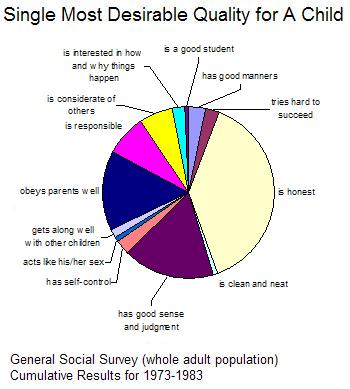
In days gone by though not so long ago (1973-1983), heading the list of qualities that American parents said they most valued in children were:
honesty
obeys parents well
has good sense and judgment
followed by being responsible, considerate and other similar values.
My guess as to what today's American parents would say as their #1 priority for their children is a toss-up between "their being happy" and "having self esteem." And how are children faring today as compared to a few decades ago? In the frum world we seem to be suffering from a multitude of problems that no, I don't think were merely hidden before and were there along to the extent we have them today. I think we are experiencing an explosion of destructive, counter-productive, undisciplined, un-Jewish behavior. I don't attribute all our problems to the promotion of self-esteem as opposed to G-d-esteem, but it definitely ranks up there as a major contributor to our lack of well-being
The focus in Avodas Hashem is, or ought to be, Hashem, not self. It's not about feeling good about yourself, but about whether Hashem is happy with you. Time to get back to basics.
NASA Administrator Charles Bolden said in a recent interview that his "foremost" mission as the head of America's space exploration agency is to improve relations with the Muslim world. Please tell me he isn't serious!
Though international diplomacy would seem well outside NASA's orbit, Bolden said in an interview with Al Jazeera that strengthening those ties was among the top tasks President Obama assigned him. He said better interaction with the Muslim world would ultimately advance space travel. No explanations as to how this will happen when Moslems get zero credit for any advances in space travel made to date.
"When I became the NASA administrator -- or before I became the NASA administrator -- he charged me with three things. One was he wanted me to help re-inspire children to want to get into science and math, he wanted me to expand our international relationships, and third, and perhaps foremost, he wanted me to find a way to reach out to the Muslim world and engage much more with dominantly Muslim nations to help them feel good about their historic contribution to science ... and math and engineering ," Bolden said in the interview. Now this is post-worthy!
***
Never mind that Moslem contributions in recent centuries are negligible and the claims made about inventions associated with Moslem countries are so far in the past that many of them have no reliable confirmation. Let's put aside, for the moment, the extremely alarming attitude our president has towards the nations of the world and his groveling before our enemies and focus on just how far the self esteem movement has gone.
All those books, articles, and speeches on self-esteem that we have been subjected to, in and out of the frum world, are not just about positivity and confidence. It goes much, much further than that. It's all about "feeling good about yourself" just l'sheim feeling good. Can you imagine people in the shtetl or wherever Jews lived throughout the ages, being asked: Tell me, do you feel good about yourself? For that matter, l'havdil, any non-Jew past a certain age finds this sort of talk odd for this is very, very new talk.
In days gone by though not so long ago (1973-1983), heading the list of qualities that American parents said they most valued in children were:
honesty
obeys parents well
has good sense and judgment
followed by being responsible, considerate and other similar values.
My guess as to what today's American parents would say as their #1 priority for their children is a toss-up between "their being happy" and "having self esteem." And how are children faring today as compared to a few decades ago? In the frum world we seem to be suffering from a multitude of problems that no, I don't think were merely hidden before and were there along to the extent we have them today. I think we are experiencing an explosion of destructive, counter-productive, undisciplined, un-Jewish behavior. I don't attribute all our problems to the promotion of self-esteem as opposed to G-d-esteem, but it definitely ranks up there as a major contributor to our lack of well-being
The focus in Avodas Hashem is, or ought to be, Hashem, not self. It's not about feeling good about yourself, but about whether Hashem is happy with you. Time to get back to basics.
Jul 6, 2010
Follow-up post about Judging
Previously, I wrote (see here) about the tension between the injunction to judge others favorably while not fudging on what's right and wrong and rebuking others when the halacha says to do so. Note - When it says in Pirkei Avos to judge others favorably it is telling us: Yes, judge them! How? Favorably.
I am astonished and amused time and again when in conversation, someone piously repeats the popular mantra of our times, "I'm not judging anyone ..." while proceeding to do just that! See for yourself. The next time someone tells you, "Far be it for me to judge," or "Who am I to judge?" see if they actually do judge nevertheless.
I don't think it's because they mean to be hypocritical, espousing a standard but not living up to it. I think it's because they are mindlessly repeating a line without acknowledging that our human intellect is constantly observing and sorting the information it takes in. It is dishonest (and they don't seem to realize it) to eschew judging when our critical faculties judge as automatically as we breathe and quite silly to disdain judging while judging! Aren't they judging others negatively when they say, "You are being judgmental"? They might say, no, I am simply observing that you are judging, but where does that get us ... Anybody can claim they were just making an observation and not, G-d forbid, judging anyone.
Bottom line:
The human condition is that we are discerning and this is good as it says, "Im ein daas, havdala minayin?" (If there is no daas-understanding, how can you differentiate between things?).
Actions can and should be judged as right or wrong, according to halacha.
There are times to judge favorably, times we can be neutral, times to judge negatively (see previous post on the subject). There are times to rebuke others.
As for the statement, "Do not judge your fellow until you reach his place," that means we can never fully understand another person since they grew up differently than us (even within the same family) and were given a unique set of genes, drives, Yetzer Hara, understanding and circumstances and therefore we cannot come to conclusions about their motivations. Hashem can.
Jul 5, 2010
Most Often Repeated Stories
Here is my list of most often repeated Jewish stories (post Gemara era) told in books and lectures. If you have additional suggestions, please let me know!
1) R’ Aryeh Levine and his wife at the doctor: “Our foot hurts us.”
2) R’ S.Z. Auerbach at wife’s funeral, nothing to ask mechila for
3) R’ Zushe – they won’t ask me why I wasn’t like Moshe Rabeinu
4) Told about the Maggid of Mezritch and the Chofetz Chaim – “Where is your furniture?”
5) Maggid sends poor man to R’ Zushe to find out how to deal with troubles. R’ Zushe said, “I don't know why he sent you to me. I haven't had troubles in my life."
6) In the time of the Baal Shem Tov a community was threatened with severe Divine punishment. Aware of this, the Baal Shem Tov davened unusually long that Rosh Hashana and Yom Kippur. A Jewish shepherd boy, illiterate, expert at imitating animal sounds and seeing the excitement in the shul and the hearing the weeping loudly cried out, “Cock-a-doodle-do, Hashem have rachmanus!” The Baal Shem Tov later said that it was this boy’s sincere prayer that cancelled the heavenly decree.
7) Wife of R’ Michel of Zlotchov smashes his esrog's pitem, upset that he sold the precious tefillin, he keeps quiet, he lost the esrog, should he also lose his shalom bayis?
8) R’ Yisrael Salanter – learns lesson from the shoemaker: “As long as the candle burns, it is still possible to repair”
9) R’ Akiva Eiger, man spills wine at the seder, R’ Akiva shakes the table to spill wine too and says the table seems to be shaky
10) Man who escorts R’ S.Z. Auerbach home notices him straightening his clothes at the entrance to the house and asks whether he is expecting an important guest. He says yes, the Shechina. When husband and wife live together in peace, the Shechina dwells there.
11) Man complains to the Steipler that his wife is disorganized erev Shabbos. The Steipler yelled, “Nem a bezzem” – take a broom! Help her out!
12) R’ Moshe – ink spills over his new Gemara and rather than be upset he says it looks better that way
13) R’ Moshe – someone who drove him accidentally slammed the door on his fingers but he didn’t utter a sound. Later, those who observed it asked him why he restrained himself and R’ Moshe said, he was kind enough to drive me. Did I have to make him feel bad?
14) The Chofetz Chaim once testified in a Polish court as a character witness on behalf of a student who was accused of a crime. After he did so, the student’s lawyer told the judge, “I would like to tell the court the greatness of this rabbi. A thief once stole something from him and he pursued him shouting, “I forgive you! It’s yours!” so that the thief wouldn’t be guilt of sinning because of him. Skeptical, the judge said, “You believe that?” Said the lawyer, “I didn’t personally witness it but people aren’t relating these stories about you and me!”
15) The Satmar Rebbe gives a tzedaka donation to someone who asks for one and afterwards is told the man is a phony to which he says, “Boruch Hashem, I’m glad to hear he’s not in need.
16) R’ Aharon Kotler would say to use the manned toll booth because it’s not kavod ha’briyos to pass up a man for a machine
17) Story about nasty neighbor in Yerushalayim who cut down the woman’s laundry and yet she kept quiet. The nasty neighbor’s child became sick and she came running to her to ask for forgiveness. The woman forgave her and she merited giving birth to a special child who grew up to be a tzaddik. (Story erroneously attributed to the mother of R’ Elyashiv but he was born in Europe and came to Israel when he was 12)
1) R’ Aryeh Levine and his wife at the doctor: “Our foot hurts us.”
2) R’ S.Z. Auerbach at wife’s funeral, nothing to ask mechila for
3) R’ Zushe – they won’t ask me why I wasn’t like Moshe Rabeinu
4) Told about the Maggid of Mezritch and the Chofetz Chaim – “Where is your furniture?”
5) Maggid sends poor man to R’ Zushe to find out how to deal with troubles. R’ Zushe said, “I don't know why he sent you to me. I haven't had troubles in my life."
6) In the time of the Baal Shem Tov a community was threatened with severe Divine punishment. Aware of this, the Baal Shem Tov davened unusually long that Rosh Hashana and Yom Kippur. A Jewish shepherd boy, illiterate, expert at imitating animal sounds and seeing the excitement in the shul and the hearing the weeping loudly cried out, “Cock-a-doodle-do, Hashem have rachmanus!” The Baal Shem Tov later said that it was this boy’s sincere prayer that cancelled the heavenly decree.
7) Wife of R’ Michel of Zlotchov smashes his esrog's pitem, upset that he sold the precious tefillin, he keeps quiet, he lost the esrog, should he also lose his shalom bayis?
8) R’ Yisrael Salanter – learns lesson from the shoemaker: “As long as the candle burns, it is still possible to repair”
9) R’ Akiva Eiger, man spills wine at the seder, R’ Akiva shakes the table to spill wine too and says the table seems to be shaky
10) Man who escorts R’ S.Z. Auerbach home notices him straightening his clothes at the entrance to the house and asks whether he is expecting an important guest. He says yes, the Shechina. When husband and wife live together in peace, the Shechina dwells there.
11) Man complains to the Steipler that his wife is disorganized erev Shabbos. The Steipler yelled, “Nem a bezzem” – take a broom! Help her out!
12) R’ Moshe – ink spills over his new Gemara and rather than be upset he says it looks better that way
13) R’ Moshe – someone who drove him accidentally slammed the door on his fingers but he didn’t utter a sound. Later, those who observed it asked him why he restrained himself and R’ Moshe said, he was kind enough to drive me. Did I have to make him feel bad?
14) The Chofetz Chaim once testified in a Polish court as a character witness on behalf of a student who was accused of a crime. After he did so, the student’s lawyer told the judge, “I would like to tell the court the greatness of this rabbi. A thief once stole something from him and he pursued him shouting, “I forgive you! It’s yours!” so that the thief wouldn’t be guilt of sinning because of him. Skeptical, the judge said, “You believe that?” Said the lawyer, “I didn’t personally witness it but people aren’t relating these stories about you and me!”
15) The Satmar Rebbe gives a tzedaka donation to someone who asks for one and afterwards is told the man is a phony to which he says, “Boruch Hashem, I’m glad to hear he’s not in need.
16) R’ Aharon Kotler would say to use the manned toll booth because it’s not kavod ha’briyos to pass up a man for a machine
17) Story about nasty neighbor in Yerushalayim who cut down the woman’s laundry and yet she kept quiet. The nasty neighbor’s child became sick and she came running to her to ask for forgiveness. The woman forgave her and she merited giving birth to a special child who grew up to be a tzaddik. (Story erroneously attributed to the mother of R’ Elyashiv but he was born in Europe and came to Israel when he was 12)
Subscribe to:
Comments (Atom)