Yisroel Besser in a Mishpacha article asks the question, what does your family stand for. Answers might include: chesed, Torah study, hospitality, kiruv etc.
I think the question is an interesting one. I hadn't thought of that idea before, that a family might stand for anything. Aren't we all trying to be good Jews, doing mitzvos, learning Torah, celebrating Shabbos and Yom Tov?
But just like a person who is shomer mitzvos might have a particular mitzva that is dear to him, that he excels in (Gemara Shabbos 118b - Avuch bameh havah zahir tfei? What was your father punctilious in observing?), so too, a family can collectively have their specialty. Maybe it's Shabbos, Rosh Chodesh, being friendly to whoever we meet.
If I had to say what it was in the family I grew up in, I would say an inquiring mind, learning, asking questions, thinking for yourself.
Showing posts with label mitzvos. Show all posts
Showing posts with label mitzvos. Show all posts
May 22, 2017


Oct 14, 2016
To Listen to Doctors or Not
There are health situations that impact on mitzvah observance, such as fasting. The halacha is that what the doctor says, goes. This is adhered to by all Torah observant Jews, whether Litvish or Chassidish.
For example, there's the famous story about an epidemic in Lithuania and doctors said that nobody was allowed to fast. Most people were inclined to ignore this, since how could one eat on Yom Kippur? Realizing this, Rabbi Yisrael Salanter (founder of the Mussar movement) ate in shul in public on Yom Kippur. Seeing him eat on Yom Kippur, the masses went home to eat too.
As for a Chassidic proponent, the Lubavitcher Rebbe wrote to someone, "I object to your not meticulously obeying the doctor’s orders, as “Permission was granted the healer to heal.”
For example, there's the famous story about an epidemic in Lithuania and doctors said that nobody was allowed to fast. Most people were inclined to ignore this, since how could one eat on Yom Kippur? Realizing this, Rabbi Yisrael Salanter (founder of the Mussar movement) ate in shul in public on Yom Kippur. Seeing him eat on Yom Kippur, the masses went home to eat too.
As for a Chassidic proponent, the Lubavitcher Rebbe wrote to someone, "I object to your not meticulously obeying the doctor’s orders, as “Permission was granted the healer to heal.”
By granting this permission, healing becomes a mitzva on the part of the healer, as well as a notable and great mitzvah on the part of the individual being healed, [i.e.,] “You shall scrupulously guard your health”; “It is part of the service of G‑d to insure that one’s body is healthy and whole.”
With that introduction, I came across yet another example of a woman who disobeyed doctors' orders and went on to have a child or children. In this case, the woman died and was regarded admirably in her circles for having mesirus nefesh to bring children into the world.
I understand that sometimes, doctors tell a woman not to have more children only because, in their view, no women should have children after the age of 35. This is because it puts her into what the medical world considers a "high risk" category. If the woman has no health problems, then a medical directive like this is not one we would regard as a mitzvah to obey, and if there are any concerns, they are discussed with a rav.
But in a case where there is a specific reason for the doctor to be concerned about the mother's health, and she goes on to have children regardless, then even if she doesn't die as a result, is she a role model of mesirus nefesh for us? Or is she an example of someone who has transgressed the mitzvah of guarding her health?
Jul 8, 2015
Heavenly Accounts
From an article by Mrs. Krohn:
An elderly man who had kept Shabbos in the early 20th century was interviewed by his grandchildren about the challenges he faced.
"Zeidy, it must have been so hard for you to keep Shabbos in those years," said a grandson.
The grandfather smiled and said, "It wasn't difficult to keep Shabbos; it was difficult to earn a parnassa."
Since the grandfather did not view Shabbos as a hardship, this enabled him to merit to raise generations of frum descendents, for as R' Moshe Feinstein would say, the reason earlier generations lost their children even though they were shomer Shabbos was because the parents would complain, "It's hard to be a Jew," when they lost their jobs yet again in order to keep Shabbos.
Interestingly, in the same article, R' Chaim Pinchas Scheinberg z'l is quoted as saying that the money a person spends on any mitzvah will not be deducted from the amount that is granted to him for his yearly expenses (source: Ritva, Shita Mekubetzes Beitza 16a).
An elderly man who had kept Shabbos in the early 20th century was interviewed by his grandchildren about the challenges he faced.
"Zeidy, it must have been so hard for you to keep Shabbos in those years," said a grandson.
The grandfather smiled and said, "It wasn't difficult to keep Shabbos; it was difficult to earn a parnassa."
Since the grandfather did not view Shabbos as a hardship, this enabled him to merit to raise generations of frum descendents, for as R' Moshe Feinstein would say, the reason earlier generations lost their children even though they were shomer Shabbos was because the parents would complain, "It's hard to be a Jew," when they lost their jobs yet again in order to keep Shabbos.
Interestingly, in the same article, R' Chaim Pinchas Scheinberg z'l is quoted as saying that the money a person spends on any mitzvah will not be deducted from the amount that is granted to him for his yearly expenses (source: Ritva, Shita Mekubetzes Beitza 16a).
Apr 24, 2015
Shabbos versus Theft
I heard a lecture in which Yossi Mizrachi asks why Madoff became a headline for fraud when stealing, in the halachic hierarchy, is a far lesser sin than chilul Shabbos. For chilul Shabbos you are chayav missa (deserve the death penalty)!
Well, of course, as far as secular headlines go, secular media are not interested in chilul Shabbos. Not to steal, on the other hand, is one of the Seven Noahide Laws which everyone is obligated to observe.
There is also the fact that chilul Shabbos doesn't hurt others while stealing does.
Nevertheless, it was intriguing to hear R' Mizrachi pose the question. We recoil when someone Jewish is caught stealing but we don't recoil when we hear of Jews who don't keep Shabbos, even when they are our own relatives or neighbors.
Theft is also a most serious sin since, as it says in many machzorim before the Neila prayer, if a person has stolen anything he had better resolve to take care of it immediately after Yom Kippur. It does not say shemiras Shabbos or kashrus or Talmud Torah, but gezel.
And of course, not stealing is in the category of mishpatim, rational mitzvos that any just society upholds, while the myriad laws of Shabbos are not obviously logical.
Well, of course, as far as secular headlines go, secular media are not interested in chilul Shabbos. Not to steal, on the other hand, is one of the Seven Noahide Laws which everyone is obligated to observe.
There is also the fact that chilul Shabbos doesn't hurt others while stealing does.
Nevertheless, it was intriguing to hear R' Mizrachi pose the question. We recoil when someone Jewish is caught stealing but we don't recoil when we hear of Jews who don't keep Shabbos, even when they are our own relatives or neighbors.
Theft is also a most serious sin since, as it says in many machzorim before the Neila prayer, if a person has stolen anything he had better resolve to take care of it immediately after Yom Kippur. It does not say shemiras Shabbos or kashrus or Talmud Torah, but gezel.
And of course, not stealing is in the category of mishpatim, rational mitzvos that any just society upholds, while the myriad laws of Shabbos are not obviously logical.
Nov 23, 2014
What Does it Mean to Serve Hashem?
R' Manis Friedman, a popular Lubavitcher public speaker, likes to tell of his
night-long dialogue with a non-Chassidic kollel guy about whether Hashem needs us,
whether we need to have rachmanus on Him for making Himself
vulnerable to our freedom of choice. The kollel guy says Hashem is
perfect, how He can need anything?!
In it (in the edition with R' Avigdor Miller's commentary, p. 66, 72), it says the definition of avoda is the feeling of humility of someone who receives a benefit.
What can we do for Hashem? Nothing, because Hashem does not need anything. But one thing we can do for Him is make something out of ourselves. How do we do this? By working to show our gratitude for what He does for us. Avoda is the service of Hashem that comes from a feeling of gratitude.
We contemplate His greatness, His wisdom, and everything He has done for us. It includes thinking of all the things He does in the world that reveal His presence. All the mitzvos of the Torah are only an introduction to this career of avoda.
MF says, needing a mitzva is not an imperfection. But let's say it is.
What would you prefer that Hashem is perfect or that Hashem needs
you?
Kollel
guy said, that He's perfect.
MF
asks, why do you need Him to be perfect?
Kollel
guy says, because if He's not perfect, I won't serve him.
MF says,
if you're right that Hashem doesn't need anything, what does it mean
ivdu es Hashem – what kind of service can you do?
Kollel
guy said that's the one thing I never understood ... By
telling me that Hashem needs my mitzva, you're turning me off. If He
needs it, let Him do it!
Mf: If
you did not need anything, you wouldn't be a human being. To say
that Hashem needs, makes people uncomfortable because our needs are
seen as weaknesses.
Yes,
there are needs that are weaknesses like eating and sleeping, but a
need like friendship makes us human. If Hashem needs something, that
makes Him a living G-d.
*****
Just because the Kollel guy never came up with an answer for what it means to serve Hashem, doesn't mean there isn't an answer that doesn't require G-d needing something. In Chovos Ha'Levavos, written by a Rishon, there is an entire section on the Service of G-d - Shaar Avodas Ha'Elokim. In it (in the edition with R' Avigdor Miller's commentary, p. 66, 72), it says the definition of avoda is the feeling of humility of someone who receives a benefit.
What can we do for Hashem? Nothing, because Hashem does not need anything. But one thing we can do for Him is make something out of ourselves. How do we do this? By working to show our gratitude for what He does for us. Avoda is the service of Hashem that comes from a feeling of gratitude.
We contemplate His greatness, His wisdom, and everything He has done for us. It includes thinking of all the things He does in the world that reveal His presence. All the mitzvos of the Torah are only an introduction to this career of avoda.
Nov 19, 2014
That numerous religious Jews attended the funeral of the Druze policeman is admirable and understandable. He lost his life while trying to defend Jews and attending his funeral expressed appreciation.
What I don't understand as readily is when people pay shiva calls when they have no personal connection to the mourners and don't have a life story that is similar so that they can say, "We went through that and you'll see, you will be able to survive this and move on."
I could have easily gone to pay a shiva call to the Kletzkys following the tragic, grisly murder of their little boy, but I passed their building and didn't go in. I could not fathom why my presence, as a stranger, would provide any comfort to the mourners. I understand the feeling that we are all brothers and sisters, that we are truly one, but I think we need to do what's best, most comforting, for the people involved.
I've read touching accounts of strangers visiting injured soldiers in the hospital and in most cases, it sounds like they really appreciate it. So that's a great mitzvah of bikur cholim. But unless a person knows that mourners are happy with strangers visiting them, it might be a good idea to be wary about doing so. The mitzvah is to console them, not to rack up mitzvah points at someone else's expense.
What I don't understand as readily is when people pay shiva calls when they have no personal connection to the mourners and don't have a life story that is similar so that they can say, "We went through that and you'll see, you will be able to survive this and move on."
I could have easily gone to pay a shiva call to the Kletzkys following the tragic, grisly murder of their little boy, but I passed their building and didn't go in. I could not fathom why my presence, as a stranger, would provide any comfort to the mourners. I understand the feeling that we are all brothers and sisters, that we are truly one, but I think we need to do what's best, most comforting, for the people involved.
I've read touching accounts of strangers visiting injured soldiers in the hospital and in most cases, it sounds like they really appreciate it. So that's a great mitzvah of bikur cholim. But unless a person knows that mourners are happy with strangers visiting them, it might be a good idea to be wary about doing so. The mitzvah is to console them, not to rack up mitzvah points at someone else's expense.
Jun 17, 2014
Mitzva Intentions

The story is told about a Kotzker Chassid walking on the road, trudging along in the snow on his way to Kotzk, when a fancy carriage stopped nearby. The man in the carriage offered the Chassid a ride.
The Chassid said, okay, if you pay me 200 zloty.
Huh? said the man on the wagon. I am offering you a ride.
Uh huh. So I want 200 zloty.
But why? I am doing you a favor!
Said the Chassid: You don't really care about me. Just as you pay for an esrog and just as you pay for matza, so too, you should pay for this mitzva of giving me a ride!
Ahavas Yisrael means to genuinely care for another person. That's the mitzva: V'ohavta l'rei'acha kamocha.
Jun 6, 2014
Even More Examples
continued from previous post
According to the Arizal, sweating in the preparation of matzos is a tikun for sin and sweating in the preparations for Shabbos is a source of kapara like tears.
The sweat and energy one expends in preparing for Pesach can destroy evil malachim and provide a person with tikun (Kav Ya'Yashar perek 90).
The Tzemch Tzedek declined his grandfather (the Baal Ha'Tanya)'s offer of a bracha for an understanding of Torah, reasoning initially that acquiring Torah needs to be through toiling. He later regretted this, saying that since Torah is infinite, so no matter how much the bracha would do for him, there was still limitless room for growth.
Likewise, using the available anthologies, compilations, and encyclopedias doesn't mean that effort cannot be applied to learning on a deeper level.
This, and the examples in the previous posts, make me think of ready-made oil and wicks for the Chanuka menorah, ready-made ten pieces of chometz, ready-made salt water, pop-up succas and schach mats, roll-back roofs with no need to construct a succa.
Should challos be homemade or bought?
Does it make a difference if Shabbos foods are homemade or bought? After all, it's not a "given" that homemade always equals a superior Shabbos experience.
Sometimes family and guests don't even know the difference if you've made something or bought it! In that case, for the person who made it, making it was significant, it was part of their Shabbos preparations, but for the others? It may make little or no impact (for another angle see: this post )
Then again, if Mommy's special culinary efforts delight her family and guests and they know it can't be bought in a store, it greatly adds to oneg Shabbos and appreciation for her work.
Jun 5, 2014
More Examples of Exertion

continued from two posts ago about Exertion
1) In "Once Upon a Chassid" on parshas Naso, there is the story of an old Chassid who refused to drive to Lubavitch but walked despite the difficulty, figuring this is the only zechus he will have, and he doesn't want to share it with a horse. He brings the story on the pasuk which describes Kehas carrying the keilim for the Mishkan on his shoulder rather than on wagons like Gershon and Merari, as Rashi says - because they were carrying holy things, it had to be carried on their shoulder.
2) Rashi parshas Bo 12:34 – they put the remaining pieces of matza and maror on their shoulders even though they had many animals, because they cherished the mitzva.
3) R' Ben-tzion Yadler, a well-known maggid in Yerushalayim, told this story:
I once went with the Rav [Kook] to pay a sick call to one of the founders of the Mussar movement, the brilliant and righteous R' Yitzchok Blazer of Petersburg who lived in Yerushalayim at the end of his life.
Since it was a long walk, I offered to take him by coach. He refused, saying, "To perform the mitzva of bikur cholim for the sake of a great Torah scholar, I want to go by foot."
4) R' Moshe Alshich comments on the pasuk that tells us to wear tzitzis and assures us that by doing so, we will, "See it and recall all the mitzvos of G-d and perform them." He points out that the reality would appear to be otherwise. Many people wear tzitzis and yet ignore mitzvos on a regular basis?
The Alshich explains that, indeed, merely donning a four-cornered garment that happens to have strings hanging from its corners, will do little to prevent against sin. After all, what special power does such a garment possess to enable us to fend off the overtures of the yetzer hara? Rather, what the Torah intended is for a person to first recognize that he is in the midst of a fierce battle with his yetzer hara and that he needs all the weapons he can muster in this battle. He then must decide that one of the weapons he'll employ in the battle will be a garment that will serve as constant reminder of the need to be vigilant and fight off the yetzer harrah. He then must set about creating such a garment by tying tassels to the four corners of his garment and then, each time he wears the garment and sees the tassels, he'll be reminded of his objective. One who approaches the mitzvah of tzitzis in this manner, will certainly be reminded constantly of the mitzvos and find it a very effective tool against the persistent onslaught of the yetzer hara.
In this comment, Alshich teaches us an important rule about mitzvos and their intended effect. In order to fully experience the benefits of a mitzvah, one must fully engage himself in the performance of the mitzvah. Merely "fulfilling" the mitzvah through an expedited process utilizing off-the-shelf components that have little personal meaning to the individual, will fail to inspire the person or elevate him spiritually. Creating a pair of tzitzis from scratch with the understanding that it is meant to achieve a specific goal, is the only way to reap the benefits from the tzitzis; not by donning a manufactured garment that happens to meet the halachic specifications.
May 30, 2014
What is True Exertion?
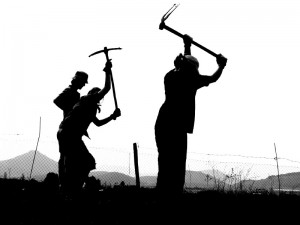
A number of years ago, someone wrote an article in a Jewish publication about how wonderful it is that we now have the computer capability to quickly search and find what we're looking for, while learning Torah.
The way he put it was, "no more wasting precious time trying to locate the Rambam, Shulchan Aruch etc", and "no more time wasted finding a sefer or trying to figure out the translation of difficult words."
There was a response in the next issue which took exception to the whole article, bringing up the issue of having computers altogether, as well as the issue of ameilus ba'Torah (exertion in Torah study), that clicking a couple of times to find a source eliminates ameilus ba'Torah.
The author's response was 1) that which is invented can be used for good or bad 2) it got approval from gedolim etc. and 3) "ameilus" does not really refer to hours spent looking around for the right sefer or trying to figure out a translation. He called that bittul zman (wasting time).
My question is: what is true ameilus or yegiah (exertion)?
Over the years, I've collected examples of people exerting themselves for a mitzva when their actions are ostensibly unnecessary:
The story of the Rebbe walking to get mayim sh'lanu (water for matza baking) when overtaken by another Rebbe in a wagon who asked him to join him on the wagon. The one walking said he didn't want to share the mitzva with a horse.
What is the justification for saying this? Would he really be sharing his mitzva with the horse if he rode rather than walked? And maybe if he conserved energy by riding, he could learn more Torah later on?
Or in "Guardian of Jerusalem", p. 134 , R' Yosef Chaim Sonnenfeld says he doesn't want to get into the carriage because, "We are involved in saving a Jew's life. I prefer to perform this mitzva on my own, without the help of a carriage."
Or R' Y.Y. Herman ("All for the Boss"), who got out of the wagon to walk in the mud to the Chofetz Chaim.
Or Chasidim walking to their Rebbe instead of riding, or walking to the Kosel (in a story written by Meir Wikler) which took all day for Reb Elya. Was that a waste of time? Maybe he should have taken a taxi and spent the rest of the day learning?
Or the Terumas Ha'Deshen (who precedes the Beis Yosef and is constantly quoted) who objected to the "lazy susan" (a revolving platform) in the beis medrash to make it easier to get sefarim. He certainly wouldn't approve a Torah CD Rom!
Then there is the Gemara in Menachos about the rav who went to talmid to learn something he (the rav) forgot. Why did he go to the talmid rather than the talmid going to his teacher? Because the yegia would help him.
more examples to follow
Mar 30, 2014
Love-Timing-Details

Leiby Burnham was a guest lecturer for a retreat in Yosemite. There were three photographers on the trip who were eagerly after the best shots at all hours of the day and night.
He learned three major life lessons from them:
1) When you truly love something, nothing is too difficult.
There was no task too hard for them because they LOVE photography and were willing to work 200% harder for a shot that would be only 2% better.
Lesson: Instilling love for Hashem and mitzvos is the goal. Many of our frum society's "issues" would melt away if we were successful at this.
Lesson: Instilling love for Hashem and mitzvos is the goal. Many of our frum society's "issues" would melt away if we were successful at this.
2) They sat down each night to strategize the next day's photo shoots. They had only a limited amount of time and they wanted to make sure they got all the shots they needed.
Lesson: We only have a limited time here on Earth and need to maximize the time.
3) Many of us take pictures but these professionals were obsessed with the details.
Lesson: As Burnham put it, people often wonder, does Hashem really care about my kavana, about how I remove pits from cantaloupe on Shabbos? Isn't Yiddishkeit mainly about connecting to Hashem? Are we losing the feeling and passion in the details?
Lesson: As Burnham put it, people often wonder, does Hashem really care about my kavana, about how I remove pits from cantaloupe on Shabbos? Isn't Yiddishkeit mainly about connecting to Hashem? Are we losing the feeling and passion in the details?
The truth is, Hashem does care about the details, because He wants each of us to create a masterpiece. (And here's a point that Burnham makes so well:) Leonardo da Vinci didn't paint the Mona Lisa by just focusing on the "spirit" of the painting. Motzart did not create masterful music by just thinking about the feeling behind the music; he meticulously worked on every single note. L'havdil, Hashem gave us clear instructions for so many of the details because passion and love are great but mastery is in the details.
Apr 10, 2013

Rabbi Yaakov Galinsky
It was gratifying to see that R' Mordechai Kamenetzky, a regular columnist for Ami Magazine, is perplexed by the same thing I wrote about: here and here
In the Pesach issue, he describes seeing a sign at the matza bakery where the bracha for hafrashas challa is written, that said, "I am doing the mitzva of separating challa for the refuah of the child Shmuel Yaakov ben Esther." He did not how to proceed. He felt bad about the sick child but he was doing the mitzva because Hashem said so, not for any other reason. Should he give away the mitzva as a zechus for a sick child? Did he have the right to do so?
His compromise decision was to do the mitzva of hafrashas challa for the sake of that mitzva and then to spend ten minutes saying Tehillim for the child, for he really did care about the sick child.
In the article, he went on to tell a story from the maggid, R' Yaakov Galinsky in which giving away the zechus of a mitzva turned out to have serious repercussions. One Shabbos, he told the entire episode to his family. One of his children seemed surprised by it all because in school, she said, almost every mitzva they did, they were told to give away, whether it was machsom l'fi, making a loud bracha acharona, giving tzedaka, etc.
It is something people do repeatedly and without thinking, as though it is normal to give mitzvos away
His daughter asked, "What does it mean? Should we just be giving our mitzvos away to others?
R' Kamenetzky did not know what to answer. So I am not alone.
Jun 26, 2012
Just Because

This week, we read about the Para Aduma. The laws of the Red Heifer are so mysterious that even the wisest of men, King Shlomo, said he did not understand it.
There is a halacha in the mishna about not reading by candlelight on Shabbos. The mishna does not give a reason for this (as opposed to the rabbis of the beraisa who gave a reason, i.e. lest a person adjust the light which is prohibited on Shabbos). The Vilna Gaon learns from this that we should not tell people not to do something because of any reason. Once you give a reason, you open yourself up to people thinking the reason does not apply to them or to their circumstance. Reasons provide people with excuses.
And this is what the Para Aduma teaches us. "Zos chukas ha'Torah" - this is the law of the Torah. It is not just a law concerning impurity and purity. It is a law that applies to all of Torah. We observe the mitzvos whether we understand them or not.
I read this dvar Torah and thought about those who espouse teaching everything with explanations and reasons as they do in baal teshuva schools. There is certainly an honored place for reasons. They are called "taamei ha'mitzvos" and books like the Sefer Ha'Chinuch, which provides explanations for the mitzvos, are classics in our Torah literature. However, a foundational message needs to be conveyed loud and clear - we keep Torah and mitzvos because Hashem said so, whether we like the reasons offered or not.
We do a disservice by seeking to ingratiate ourselves by constantly providing "relevance" and reasons for what we do. When we present a reason, it should be understood that we do the mitzva regardless, and the reason is merely to give us an appreciation for mitzvos and insights as to their benefit and purpose. Mitzvos are not negotiable and at the same time that we offer rationales for them, we should be conveying the beauty of the anashim peshutim (simple people) who serve Hashem with love and joy in simple faith.
Apr 30, 2012
Mitzva Appreciation

When people blithely agree to do a mitzva in someone's zechus, do they realize the significance?
The late Rabbi Scheinberg's nephew said that when his father (husband of Racoma Shain of "All For the Boss" fame) passed away, his mother went to her brother-in-law, Rabbi Scheinberg and asked him to please learn 15 minutes a day in the merit of her husband. Rabbi Scheinberg refused. He finally compromised and said he would learn five minutes a day for seven days.
His explanation was, "If you had come and offered me a million dollars for five minutes, I would have refused. I only did it for you."
In other words, he was loathe to part with the merit of his Torah study.
This reminds me of the story that is told of when Rabbi Naftoli Tropp, the rosh yeshiva in Radin, was very sick. The bachurim donated years of their lives to save the Rosh Yeshiva. One person was sent to ask the Chofetz Chaim how much he'd be willing to donate. The Chofetz Chaim said he would need to think about it. Later he said he was willing to donate five minutes! Every minute was precious to him and it was no small matter to donate five minutes of his life.
So when people make an announcement that a shiur is being learned in someone's merit, what does that mean for the people sitting in the shiur? Does it mean that they willingly forego the zechus of their learning for someone else? Who says they agree to that? Ditto for doing mitzvos in someone's zechus - are you sure you want to give the zechus away? Do you truly appreciate the value of a mitzva?
see also: this
Apr 28, 2012
It's All In the Presentation

This is a response to Rosie's comment to the previous post.
I don't see a problem in presenting mitzvos in an appealing way. The problem is when the purpose of the mitzva is distorted such as when side benefits are highlighted, or when promises are made or implied and cannot be guaranteed.
So although Shabbos is usually "family time" and a time to disengage from the electronic stimuli and tools around us, that is not what Shabbos is about. A presentation about Shabbos without mentioning or emphasizing G-d's creation of the universe and His taking us out of Egypt, is sorely lacking.
How about "Do a mitzva for the _____" (fill in the name of the sports team)?
Vulgar, is it not?
How about "Do a mitzva in memory of/in honor of the Holtzbergs?"
Trying to guilt-trip me into doing mitzvos?
Do we look at the bottom line which is it gets people to do mitzvos, or do we say that is not the proper way to encourage people to do mitzvos?
I found it perplexing when we were asked "to do a mitzva for Leiby." Why does Leiby Kletzky need my mitzvos? And what does that mean anyway - to do it for him? I don't get the zechus, but he does?
Too bad I don't just accept these lines as they are. Life is complicated when you question what everybody else accepts!
Apr 27, 2012
All About Me

Aish is running a series on the Six Constant Mitzvos again. This is the second year that one can subscribe to it during sefira. It's a great idea to bring these mitzvos to people's attention and I read the emails and watch the videos.
However, I am finding the angle they are using this year jarring. In the desire to make this topic interesting and relevant and different than last year, these mitzvos are presented from the perspective of "how can I use them every single day to be more successful in everything that I do in my life." In other words, they are taking the mitzvos that focus our attention on G-d, and twisting them into a focus on self!
Jan 18, 2012
Do It for Them
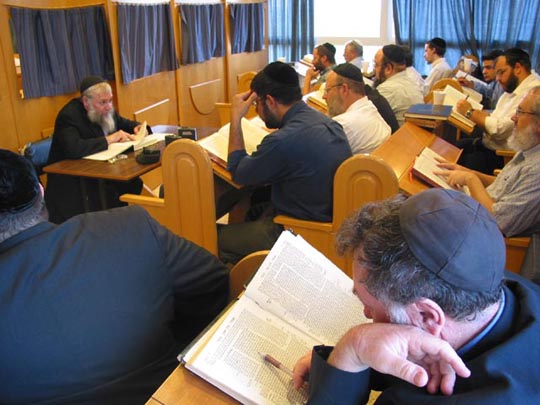
Another thing (in addition to Tehillim lists) I haven't gotten a satisfactory explanation for is when people announce at a shiur or event that the learning should be a zechus or l'ilui nishmas someone. What does that actually mean?
I would understand if people got together solely for the purpose of providing a zechus for someone, but if the shiur is happening regardless, because it's a weekly or daily event, how does tacking on the words "this should be a zechus" accomplish anything?
So too, the calls for "Do a mitzva for ----." If someone does a mitzva as a zechus for someone else, does that mean they forgo the reward of that mitzva and bestow it on the other person? That's an enormous gift! Is that what they mean?
I saw lists of mitzvos that people from all walks of life committed to doing in honor of the slain Holtzbergs. I can understand being moved by the Holtzbergs' devotion to the Jewish people and how they enabled and encouraged others to do mitzvos, and wanting to do something that they valued, i.e. a mitzva. If that is what they mean by doing a mitzva in their honor, fine.
But how about pages in books, and entries on websites, which say "dedicated to ..." What does that mean? The person paid money for what purpose? I must be missing something because to me, it simply looks like a way for the publisher to raise money and for the person to have a name mentioned. Does it go beyond that to accomplish anything else?
Everyone else seems to go along with it as though it makes sense. I just don't get it.
Oct 10, 2011
Beware the Yetzer Hara's Approval

Powerful thought heard at a shiur:
The Gemara says that the way the yetzer hara works is today it tells you kach (such), and tomorrow it says kach, and then finally it tells you to serve idols. It's not that the yetzer hara starts off by telling you to sin, because you wouldn't listen to that. The problem begins when you do a mitzva and the yetzer hara approves.
There are things that are “off limits” that you don't even consider doing. Aveiros should be in this category, not in the category of I could do it, or not do it, because I have bechira (free choice), but I won't. Likewise, mitzvos should be in the category of “must do,” not “it would be a good idea to do.” It should be non-negotiable, not open to discussion.
The yetzer hara, by giving approval to a mitzva as a good thing to do, not as something that must be done, makes inroads and opens the possibility of not doing it. The yetzer hara makes it about you and your decision, as opposed to being about Hashem and your obligation.
Feb 21, 2011
How Much Is It Worth To You?

Most people's gut reaction is - no way!
(You can substitute a mitzva that elicits that reaction for you and you can make it ten million dollars).
The teacher then went on to say, if you wouldn't sell the mitzva for a million dollars, why don't you treat the mitzva as something worth a million dollars?
It's food for thought. If you think about it long enough you might start wondering - well, maybe it is worth giving up the mitzva of tefillin for a day in exchange for millions of dollars. Think about how many mitzvos one can do with that money! There are halachos about precedence in mitzvos. But somehow it seems that's the Yetzer Hara talking. I don't know. If the opportunity arises, maybe it's a question for a rav (or maybe the very question shows we don't value the mitzva we are willing to sell).
Until then, we can think about how valuable mitzvos are to us.
Jan 4, 2011
Don't, It's Forbidden versus Do, It's Good for You

Then today, someone shared a thought - all the restrictions of Shabbos, you can't do this and you can't do that, are that which enable you to experience the beauty of Shabbos.
I'm all in favor of beauty and being positive but I am wary when people propose emphasizing the positive exclusively. If you don't state clearly that something is forbidden and you only say what wonderful things will occcur if you do things right, I think we will be getting only half the picture and half a picture is a distortion of the truth.
It is claimed that today's generation can't be told things in negative terms, they reject that, they need to be explained why and see the beauty. I'm not so sure. But then again, maybe I'm not today's generation! If I am told that something is outright forbidden, I know where I stand. It's clearly off-limits. If I'm told about the brachos I'll get if I do the right thing, well, I want brachos, but it's just not as compelling to me as being told: danger! stay away! If I'm told I'll be praiseworthy if I do this, I may not be interested, so I won't be praiseworthy ... not a big deal.
Would we write on a bottle of bleach or other dangerous product: If you ingest products other than this, such as actual food, you will be so much better off! Or do we write: Danger! Poison! If accidentally ingested, call Poison Control.
I understand that different times and different cultures require different approaches but certain things need to stay the same because they are Torah and Torah is Truth for all time. I note that there are 248 Positive Mitzvos and 365 Prohibitions. Oh my! So many more negative mitzvos than positive ones! Why is that so? I don't know. Yet it tells me that G-d sees fit to couch most of His mitzvos in the form of "don't" rather than "do" (though some mitzvos are written in both the positive and the negative).
What is the bigger motivator for you to keep halacha - knowing how it's good for you or knowing the negative consequences if you don't keep it?
Subscribe to:
Posts (Atom)

 Posts
Posts

