I read an article recently by Yael Mermelstein. She was doing renovations and was told that Mohammed, the second in command to the Jewish contractor, is actually Jewish himself. His mother and her sisters all married Arabs.
YM was told not to bother with outreach efforts since Mohammed grew up as a Muslim, married an Arab and has Arab children and is not interested in anything Jewish.
The author then tells us about Carrie who loves the Jewish people, married a Jew, feels Jewish, celebrates Jewish holidays, made bar mitzvas, and is very interested in Judaism, but ... her mother wasn't Jewish. Carrie says, "I know you don't consider me Jewish but I know that I'm Jewish. My husband considers me Jewish (after a Reform ceremony) and I feel Jewish. I feel it all the way down to my bones and I love being Jewish."
Mohammed doesn't feel Jewish, but he is.
Carrie feels Jewish, but she isn't.
So much for feelings.
Showing posts with label Jewish identity. Show all posts
Showing posts with label Jewish identity. Show all posts
Jul 30, 2015


Mar 29, 2015
What Message Do You Want to Convey?
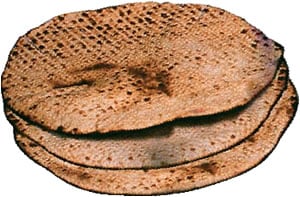
I came across this question: What message should our children or guests or ourselves leave the seder with?
That's a good one to ponder before Pesach. The one that stands out for me is Hashem's involvement in the world, Hashem caring about what people do as we see with the deeds of both the Egyptians and the Jewish people.
Avi Shulman asked this question to R' Noach Orlowek and R' Avraham Fishman and both said the same thing: We should want our children to leave the seder feeling proud, joyous and privileged to be members of Klal Yisrael.
Mr. Shulman goes on to say that this should be the objective of every teacher and parent all year round, but it is highlighted Pesach night when there is the mitzvah of "v'higadita l'bincha."
Jan 15, 2015
Not so Poshut
In R' Dovid Kaplan's fourth "Impact" book, called Lasting Impact! he tells of a couple who had a baby boy and decided to name him after the mother's grandfather. But then she began to have second thoughts. "My grandfather was a very nice man and a fine person," she said to her husband, "but he wasn't a talmid chacham. He was just a poshute Yid (plain Jew). Maybe we should name the baby after someone great."
Her husband consulted with his rav who asked, "When did her grandfather live?" When he answered, "He came to America in the 30's," the rav asked, "And where are his children today?"
The husband answered, "All of them are frum and all his grandchildren are bnei Torah."
The rav then said, "Anyone who lived in America in the 30's and 40's and raised a family that produced bnei Torah is not a poshute Yid! Name the baby after him."
The same week I read this story, someone told me that when her husband's grandfather was bringing up his children at some point, when he lost a lot of money (see story that follows) he went to Rabbi Levy to take his girls out of Beis Yaakov. Rabbi Levy asked him why he was taking them out and when he heard that it was because of money he said something to the effect that money has nothing to do with this and made sure that they remained free of charge! The P.S. to that story is that when the grandfather had more money in later years he repaid the money.
As to how the grandfather lost a lot of money - he built a dry cleaning business from scratch with partners, with the intention that it would be a shomer Shabbos place. When it was ready to open, the partners decided that Shabbos was the busiest day for business and that it would have to be open on Shabbos. At that point, the grandfather pulled out of the business at a great loss of money. A daughter of his remembers the hard times that she went through at that time and how she went to the bank with her mother to redeem a bond so that they would have a little more money.
People like this are not famous, they don't appear in our Jewish history books, but they are far from being "poshute Yidden." They are Jewish heroes.
Sep 20, 2014
Who are You Really?

Then he was mechazek people after the war. There was one bachur who dropped Yiddishkeit but R' Godel did not say a word to him about his behavior. This bachur had a 'pass' and this was regarded with much astonishment.
Half a year after the war, he told R' Godel that he's getting married. To who? A goyta. R' Godel thought for a moment and said a goyta? I don't think it posses (suits) a chassidishe bachur.
Who me, a Chassidishe bachur, the fellow asked?
Said R' Godel, of course you're a chassidishe bachur! The war affected all of us, and some are quicker and some slower [to come back to Yiddishkeit]. I, for example, am quick, and right after the war I went to mincha. Remember Yankel? He came back the first Shabbos. Others took a few months.
The bachur burst out crying and asked for a Chassidishe hat.
What a brilliant mashgiach!
Dec 8, 2013
Spiritual DNA

I read a terrific chinuch idea in an article by Rabbi Hillel Belsky, printed in Hamodia's Inyan magazine.
He described a talmid of his whose achievements in general were average but who was particularly devoted to tefilla b'tzibbur. He never missed a minyan and the disparity between his punctiliousness with this mitzvah and other areas of his spiritual life was obvious. "Upon investigation, I learned that his grandfather, whom he had not known, used to stand on street corners trying to collect people for a minyan in a dying neighborhood."
R' Belsky is the founder and dean of a seminary in Yerushalayim and he says he tries to enlist his students to search their family backgrounds to find the specialness of their ancestors. "Who were they? Were they known for anything special, big or small? Any area of avodas Hashem for which they were moser nefesh? It all becomes a part of their singular and collective spiritual DNA."
The idea is "to encourage students to claim their forebears' strengths as their own." On the subject of Shabbos, the students were asked to find out about any instances of mesirus nefesh for Shabbos on the part of their parents, grandparents and so on. He says "the stories the girls told could have filled a book!"
"Every family has stories. I want my students to connect to these stories."
And it's true. A family does not have to be illustrious to have inspirational stories. A family does not even have to be religious to have mitzva-related inspiring stories. We need to speak to family members and glean these stories so that we have personal inspiration to draw upon.
Aug 16, 2013
Hashem as our Father

I read a moving article in which the author, a counselor in a Russian camp, described visiting day. How saddened she was to see the family members, "estranged Yiddish parents, some of whom were descendents of chassidishe rabbonim and chashuve gedolim, others were children of simple erliche Yidden. These neshamos were so cut off, so unfamiliar with their people's customs ..
"I suddenly felt the terrible feeling of a parent whose beloved child is off the derech. The pain, the hurt, the broken heart. It is almost unbearable. I contemplated the immense suffering Hashem must feel, having so many wayward children ..."
What immediately comes to my mind is - what is the comparison? Do parents rip Yiddishkeit away from their children and then mourn their going off the derech? Or do they try to raise them in a wholesome, Jewish environment and, for whatever reasons, their chinuch efforts do not bear the expected results?
Hashem is the one who had the shuls, yeshivos and mikvaos close in Russia. Hashem is the one who made life so miserable in Eastern Europe that poverty-stricken and persecuted Jews left for America in their millions. Hashem made Hitler rise to power and annihilate most of European Jewry. That most Jews today have not had a proper chinuch is not, for the most part, because parents withhold it from their children, but because Hashem set things up in such a way that most of His children are estranged.
Why He chose to do this is inexplicable to us. Maybe, contrary to Hashem feeling grief over His handiwork, He feels joy at every single mitzvah estranged Jews keep. Because unlike a parent whose children has left the path, Hashem's children who never had the path, still feel a warmth toward Yiddishkeit. The neshama still flickers.
Jan 1, 2013
Disappearing Jews
From 1952 through 2012, the rate of intermarriage has risen from 3% to 56%. I read this statistic and thought, that means that the entire kiruv movement with all the Shabbos meals, all the Pesach sedarim, the menorah lightings, the Discovery programs, the matza and mishloach manos, the campus outreach, all the tefillin, all the summer camps, has been a failure. Shocking.
You can say that without all that outreach, the intermarriage rate would be even worse. But that's small comfort.
I knew that the intermarriage rate had grown tremendously, so I don't know why I reacted this way when I read about it the other day. I think it's because this time, I juxtaposed it with all the heartwarming outreach and baal teshuva stories I've read and heard. It doesn't make the stories any less heartwarming, but the Jewish reality is quite bleak.
Nowadays, when Cohens and Weinbergers aren't Jewish because their mothers are gentiles, and McDonalds and Prescotts are Jewish, we Torah Jews are the few and the proud (to borrow the Marines' motto) and it's quite sad.
Apr 25, 2012
Emotional Ties

R' Grylak of Mishpacha magazine tells the story about how, after the Holocaust, a community of survivors including his father-in-law formed in Milan. There was a Polish survivor from a chassidishe family who had given up religion after being in Auschwitz. One day, he announced that he was going to marry an Italian non-Jewish woman. The religious members of the community were appalled but none of their arguments were effective to dissuade him.
Then someone said, "How can you do such a thing?! Have you forgotten that you are the only living descendent of a beautiful family of Gerer Chassidim from Lodz?"
Now, what kind of reasoning was that when the man had dropped Yiddishkeit? And yet, this is what convinced him and he cancelled his marriage plans. It's like all those Jews who are not religious who are proud to let you know about their rabbinic ancestors. Why are they proud when they themselves aren't religious? Apparently there is something in their neshama that lets them know that this is worthy of admiration.
The lesson R' Grylak learns from this is that a person is kept from sin (and I would add - is inspired) only by what is relevant to him personally, what he is tied to emotionally. It's hard to capitalize on this insight because what is meaningful to one person is not to another. There are many ways people have been convinced not to marry out, and what worked for one is not a guaranteed approach for someone else. Likewise, for religious people, some love the structure of halacha, others love the mystical approach. There is a way to speak to every child and adult. One needs wisdom and siyata dishmaya to find it.
Apr 4, 2011
Mi K'Amcha Yisrael

I think we need to be discerning about when we exclaim, "Mi K'Amcha Yisrael," when we are amazed by what Jews do. The words mean, "Who is like Your nation, the Jewish people." There are certain things that are exclusively Jewish or almost exclusively Jewish, but then there are things that although they are impressive, are done by other people too.
I think martyrdom for the sake of Hashem would be a good example of something special about the Jewish people. Although there are some non-Jews who gave up their lives for their religion, the vast numbers of Jews who died al kiddush Hashem rather than convert supersedes anything we know of among other people. Simple Jews, learned Jews, pious Jews, not that observant Jews, whole communities died al kiddush Hashem again and again over the centuries. We don't see this with any other nation.
I've been thinking about this because I read about US Marines who were posthumously awarded for allowing themselves to be killed by a grenade to save their buddies. This immediately brought to mind the story of the Israeli soldier, Roi Klein, who jumped on a grenade to save his fellow soldiers. I was taken aback. Apparently, I was under the impression that what the IDF soldier did was uniquely Jewish.
We know from Chazal what traits are uniquely Jewish. Chazal say we are "maaminim bnei maaminim" - believers, children of believers, and Chazal say that Jews are: rachmanim, bayshanim, and gomlei chasadim (compassionate, inhibited due to their refinement, kind).
Can you think of examples of "Mi K'Amcha Yisrael"?
Mar 21, 2010
Who Are We? part 2

http://www.nytimes.com/2010/02/28/world/europe/28poland.html?pagewanted=1
He struggles daily with his new identity and with discarding his previous ideas.
In a Mishpacha magazine interview with Rabbi Hershel Schachter of YU, he referred to the opposite situation, i.e. cases in which yeshiva bachurim discover that they are not Jewish. This could be due to improper conversion somwhere along the line and/or adoption.
It boggles my mind just thinking of either scenario. Finding out that your identity, that which defines you, is wrong, mistaken, like my "Partner in Torah" who realized she was in fact, not Jewish, because although she had a Jewish father, her mother's conversion was not according to halacha. She could have opted to follow the Seven Noahide Laws but she unhesitatingly pursued conversion.
I heard someone describe a classrooom discussion in which frum students were asked what would they do if they learned that they were not Jewish. It's really not a reasonable question because you can't truly imagine what it would be like to be something you are not. You can't really imagine what it would be like to be a bird, rose or a rock because you are a human being and cannot think in those terms. Likewise, if you have a Jewish neshama, you cannot possibly imagine what it would be like not to have that neshama. You can only think about what it entails to be Jewish as far as the mitzvos we are obligated to do and what it might be like to be absolved of them. And in fact, many students in that discussion loved the idea of not being bound to the dictates of halacha. And that gets back to my theme of "who are we." Is our Torah "lifestyle" an add-on or an expression of our neshama and its connection with Hashem?
Whether we are conscious of it or not, Torah and mitzvos are the essence of our lives as Jews. When we see Jews who are not religious and doing as they please, the correct way of viewing their freedom is as avodas perech. The Egyptians had men doing women's work and women doing men's work and this was called avodas perech, extremely difficult labor. It is obvious that women doing physical labor in construction is extremely hard but why was it so hard for the men to do the women's lighter work? The answer given is that when you do something you're not suited for, that is avodas perech. So too, even if not doing mitzvos looks easier, it is avodas perech because it goes against the natural inclination of a Jew.
At this time year when we celebrate cheirus - true freedom, let's think about who we are and what makes us truly free.
Mar 11, 2010
Jewish Music Videos - Who are we?

Much has been said about contemporary Jewish music and what makes it Jewish aside from the choice of words and I'm not getting into that in this post. I'm focusing on the children who perform and listen to this music.
After watching these music videos the other day, I analyzed what it is that bothers me about them. For one thing, I wonder whether these children have any appreciation for genuine Chassidishe music like that of Modzitz and Skulen. Would they listen to Avrohom Fried's Yom Tov Ehrlich recordings for their enjoyment? I suspect not.
For another thing, as I watch the kids in the videos I think about the numerous articles I've read about chinuch and kids going off the derech because it seems to me (and I know this is a generalization) that Yiddishkeit is an add-on in their lives.
What do I mean by that? I wrote about this in the post called "Yiddishkeit - Doing It All the Way", Feb. 14. It seems to me that for very many frum people, Yiddishkeit is an add-on to their "regular" lives. Sometimes I see a frum person who resembles a non-Jew with a kippa or if it's a woman, she looks like her non-Jewish counterpart with longer sleeves. Yiddishkeit doesn't seem to be something that goes "through-and-through."
- more in my next post about identity and who are we really
Feb 14, 2010
Yiddishkeit - doing it all the way
Now, I can understand why he would say that to someone he was trying to mekarev. He wanted to convey our normalcy. He wanted her to be able to relate to religious people. And maybe this was a fine answer under the circumstances.
But ...
But is it accurate? Are religious Jews the same as everyone else - with our jobs, families, worries and joys - with the addition of a bunch of mitzvos that prevent us from working on Shabbos, eating many things, and that require us to pray and dress a certain way? Are religious Jews accountants, lawyers, doctors, homemakers, writers, entrepreneurs, like everyone else with the addition of Yiddishkeit: i.e normalcy plus?
The answer for many of us (most of us?) is yes. We live like everyone else plus we have to get ready for Shabbos, we have holidays to celebrate, we watch what we say and eat and wear and do. And that's fine. There are very few religious Jews (Surveys show that Orthodox Jews account for about 10 percent of the 5.2 million Jews in the United States and about 20 percent of synagogue-affiliated Jews) and the few who follow the Torah are the standard bearers.
And yet, have you ever met or read about a Jew who is not merely "normal plus" but Yiddish through and through? The kind of person you can't imagine being anything other than religious? When we think about ourselves or people we know and we can say - hmm, yes, if they weren't Jewish or weren't religious, they would be pretty much the same, they'd be in the same profession or doing the same things minus the religious stuff, then to me that says that the commitment, the utter devotion to Hashem is lacking. If we can view the two - the person and their Yiddishkeit - as separate items, then the love for Hashem is not "with all your heart(s), with all your soul, and with all your might."
Subscribe to:
Posts (Atom)

 Posts
Posts

