What an interesting week this has been!
Two posts and three days ago, I wrote about meeting Yossi Wallis, the subject of the book I had just finished reading.
Yesterday, I met Ruth Lichtenstein, who is the heroine of the book I wrote about last month here. Her husband was there too and I sat there and thought, wow, here are the people out of the book I read! I would have loved to have been able to tell her how special her daughter made her out to be, but did not think she would appreciate a mention of that book. Especially when her identity is disguised in the book. So I kept quiet.
Showing posts with label hashgacha pratis. Show all posts
Showing posts with label hashgacha pratis. Show all posts
Dec 23, 2016


Dec 20, 2016
Postscript
The eeriness continues.
I went to be menachem avel by the children of R' Pinchus Gross. No sooner did I tell them what I wrote in my previous post, how I had been reading about their father in the book about Yossi Wallis and Arachim, and a few hours later, heard about his passing, then ... Yossi Wallis walked into the room, to be menachem avel! There was the subject of the book I had been reading over the past two weeks, in real life!
Here are some interesting points that I heard at the shiva house that relate to us all:
Wallis said that R' Pinchus always wanted to hear details about the people who attended the Arachim seminars. To him, it wasn't about numbers, but about the individuals. Some organizations have to prove themselves with numbers. Their donors want to know how many people attended their events. They want to know that their monetary support is worthwhile. R' Pinchus wanted to know how people were affected by the seminars - who committed to shemiras Shabbos, kashrus etc. Wallis said this attitude has affected his staff.
From the book I gathered that R' Pinchus and Chaim Gross were wealthy people. After all, they donated a million dollars a year to Arachim! I was surprised to hear that R' Pinchus went around to bungalow colonies, yeshivas and shul and made appeals for Arachim. Someone said that in the Shomrei Shabbos shul, he made an appeal in minyan after minyan in this "minyan factory," and it was a different speech each time!
So in addition to their own money that they gave to Arachim, R' Pinchus fundraised for this cause that he believed in. This was not a new interest to him since back in Europe he had started Beis Yaakov schools and worked to convince people to send their daughters there.
One last incident - R' Pinchus was in the mountains, staying with his daughter. She noticed that his bekeshe in the closet needed to be cleaned so she brought it to the cleaners. The next day, he asked where his bekeshe was and she told him - the cleaners. Oy, he had put money that he had collected for Arachim into a pocket of the bekeshe. The money was not retrieved and although he had no halachic obligation to replace it, he calculated the amount, about $900 and replaced it.
Dec 25, 2015
Thought Beaming
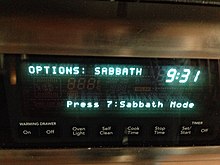
I began learning with a new Partner in Torah. We discussed Shabbos observance, and how one can keep Shabbos 100% even when not in walking distance of a shul.
This was on my mind after we spoke, and I thought of asking whether there is a light in their fridge. I figured that's a simple thing to suggest, that the light be shut off for Shabbos, and maybe other lights in the house could be either on or off for Shabbos. I considered emailing this, but I suppose I preferred bringing it up in conversation.
The next time we spoke, at the end of the conversation I said, I have a strange question to ask you. Do you have a light in your fridge? I assumed I would have to explain about why it's important to unscrew the bulb or tape the switch so the light won't go on every time the fridge door is opened.
Before I could launch into an explanation, do you know what the answer was? Oh, yes, I noticed there is a "Sabbath mode" and we tried to set it before Shabbos but there wasn't enough time so we just taped it.
Wow! Were my thoughts that potent? There are Torah sources about the power of thought but I can't say I've experienced it as directly as this.
Aug 20, 2015
"From"
A girl's shidduch resume was sent to a mother of a boy. The girl seemed to be what the mother of the boy was looking for, for her son, and the girl was in town!
Within hours of sending off the resume, the mother of the boy said no to the idea. Why? She was out of town and would let me know the following week.
The following week she explained that since the parents of the girl were divorced, and it would have required extra research, and it was complicated, she declined.
Divorced!? They are not divorced!
What?! But it says in the resume that the father is in Miami and the mother is in Detroit!
No it doesn't! The fact that it says "Miami" in parentheses after the father's name is to indicate that that is where he is from, not that he is currently living there! In fact, the very next line says where he works and it's in Detroit, where he lives with the mother in an intact home!
Oh! But the resume does not say (from Miami). It says (Miami). Can you see why I thought they were no longer married?
Yes, but ... I would have said if they were divorced! And I had looked at that resume and did not think anything untoward by (Miami).
Divine providence strikes again. For some reason, she was meant to misread the resume and say no at that time. She can still revisit the idea, but the suggestion at that time was definitely off.
Within hours of sending off the resume, the mother of the boy said no to the idea. Why? She was out of town and would let me know the following week.
The following week she explained that since the parents of the girl were divorced, and it would have required extra research, and it was complicated, she declined.
Divorced!? They are not divorced!
What?! But it says in the resume that the father is in Miami and the mother is in Detroit!
No it doesn't! The fact that it says "Miami" in parentheses after the father's name is to indicate that that is where he is from, not that he is currently living there! In fact, the very next line says where he works and it's in Detroit, where he lives with the mother in an intact home!
Oh! But the resume does not say (from Miami). It says (Miami). Can you see why I thought they were no longer married?
Yes, but ... I would have said if they were divorced! And I had looked at that resume and did not think anything untoward by (Miami).
Divine providence strikes again. For some reason, she was meant to misread the resume and say no at that time. She can still revisit the idea, but the suggestion at that time was definitely off.
Feb 18, 2015
Life Lesson

It was Presidents Day and although the trains came quickly enough, there were changes, the kind of changes that they usually have on weekends but extended into this holiday.
I was waiting for a D train at my usual spot and had just uttered a prayer, "Please bring me the D train quickly." A D train appeared but on the opposite track. Oh well. A while later, an N train appeared on the opposite track. I let that go. After all, the D or N has to be on the side I'm waiting on.
Then another D came on the opposite track. At that point, lots of people got up and went on and I figured I'd join them. I hoped it was going where I wanted to go. In fact, the announcement did say my direction. It got me exactly where I wanted to go.
I thought - how foolish. I prayed for a D and a D came right away, but I didn't board it! It was followed by another train I could have taken, but I didn't take it. It was only when I was beginning to wonder whether a train would ever come where I was waiting that I decided to take the chance and get on the train on the opposite track.
I later learned that D and N don't regularly travel on that opposite track, so if it does, take it!
What I took from this is: sometimes we pray and Hashem answers our prayers, exactly what we asked for! But for whatever reasons, we pass up the very thing we wanted, mostly because we don't recognize it for what it is.
Aug 31, 2014
Timing is Everything
I found out yesterday that someone I know is sitting shiva. I looked on the Misaskim page today and saw that she gets up from shiva tomorrow. So today is the only day to be menachem avel. But it's hot and humid and it's not pleasant walking in this heat. Should I go now when it's not as hot or wait until later when it's even hotter but I could combine it with something else?
I called a neighbor to ask if she knows about the shiva and would be interested in going. She was in a rush because she and another person were about to go be menachem avel these very same people, did I want a ride? Yes! When she confirmed the address with me, it turned out she had the wrong address. I provided the correct one. So I got a ride and they got to go to the right address and she provided a ride (air conditioned) back home and boruch Hashem, a mitzva was done by the three of us.
I called a neighbor to ask if she knows about the shiva and would be interested in going. She was in a rush because she and another person were about to go be menachem avel these very same people, did I want a ride? Yes! When she confirmed the address with me, it turned out she had the wrong address. I provided the correct one. So I got a ride and they got to go to the right address and she provided a ride (air conditioned) back home and boruch Hashem, a mitzva was done by the three of us.
Jun 27, 2014
Brainstorm
Hashem puts ideas into our minds. Or He doesn't. I saw that today.
I needed to get some items for a Kiddush to a certain shul before Shabbos. I was told the shul is always open, but I was skeptical. I was offered the text number of the gabbai and I took it, thinking I might need it to be in touch with him.
This morning (Friday), I traveled to a different neighborhood, which is rare for me to do on a Friday. As I walked down the street, I unexpectedly encountered the wife of the gabbai who was giving out Shabbos candles to Russian women and any Jews who wanted them. I said hello and walked on.
Then, it occurred to me - I should go back to her and give her the items I have for the Kiddush! As the gabbai's wife, that would work out perfectly. And that's what I did, just as she was getting ready to leave. I was happy with how that worked out and how Hashem had given me that idea.
A while later, as I sat waiting for a bus to go home, I thought - hey, when I gave her the items, she was packing up to go home. To the same neighborhood as me. Why didn't I ask her if she had room for me to join her in the car? Why am I sitting here waiting for bus #1 which will take me to where I get bus #2, when I could have been home already?
The answer: because Hashem did not give me that idea until it was too late.
Now, it is possible that for whatever reason, a ride with her would not have worked, but I could have asked and found out. Why do we sometimes have a brainstorm just in time and other times, we think of something and it's too late? I don't know. But I do know that when ideas "pop" into our minds, the source is Hashem.
I needed to get some items for a Kiddush to a certain shul before Shabbos. I was told the shul is always open, but I was skeptical. I was offered the text number of the gabbai and I took it, thinking I might need it to be in touch with him.
This morning (Friday), I traveled to a different neighborhood, which is rare for me to do on a Friday. As I walked down the street, I unexpectedly encountered the wife of the gabbai who was giving out Shabbos candles to Russian women and any Jews who wanted them. I said hello and walked on.
Then, it occurred to me - I should go back to her and give her the items I have for the Kiddush! As the gabbai's wife, that would work out perfectly. And that's what I did, just as she was getting ready to leave. I was happy with how that worked out and how Hashem had given me that idea.
A while later, as I sat waiting for a bus to go home, I thought - hey, when I gave her the items, she was packing up to go home. To the same neighborhood as me. Why didn't I ask her if she had room for me to join her in the car? Why am I sitting here waiting for bus #1 which will take me to where I get bus #2, when I could have been home already?
The answer: because Hashem did not give me that idea until it was too late.
Now, it is possible that for whatever reason, a ride with her would not have worked, but I could have asked and found out. Why do we sometimes have a brainstorm just in time and other times, we think of something and it's too late? I don't know. But I do know that when ideas "pop" into our minds, the source is Hashem.
Apr 30, 2014
One Family

On Chol Ha'Moed, we were in a car service on our way to a bris. In the pocket of the seat in front of me, I saw a book. I pulled it out and saw it was a sefer and it had a name written in it, in Hebrew. Of all topics, the sefer was about bris mila!
We asked the driver about it and he said it was there for a week and nobody had called. I told him I would take the book and see if I could return it.
The person had four names plus a last name. Two of the names were Efraim Fishel. When I took out a local phone book to see how many people there were with that last name, I saw there weren't too many. One name that stood out was Fishel. Although that was only one of the four names and the last one, I decided to call that one.
The wife answered and she said, yes, her brother-in-law had borrowed the sefer. I was glad to have hit upon the owner on my first try and we concluded that someone would pick it up.
Since I had access to a car yesterday, one of my stops was to return the sefer. It was a good feeling to have completed the mitzva of hashovas aveida - I didn't want to wait for someone to get around to calling me and picking it up. It's also a good feeling that it's a "small world," and I can easily find a fellow Jew and return his sefer.
Feb 27, 2014
Why Am I Hearing This?

Someone told me the following:
Her son will be bar mitzvah next year and he started working with a teacher to prepare his haftora. One day in shul, her husband heard someone relate a story. The story had to do with a man whose son was not very bright. He went to R' Shlomo Zalman Auerbach z'l and asked what to do. He just couldn't see his son laining the haftora like the other boys.
R' Shlomo Zalman said, don't wait until it's six months before his bar mitzvah. Start a year in advance. So the boy began studying and preparing to lain the haftora.
Months went by and the boy's father got to talking with someone whose son was also going to be bar mitzvah. They realized that their sons' bar mitzvah would be on the same Shabbos. The other man referred to the haftora his son was preparing, "Machar Chodesh," because the Shabbos of the bar mitzvah it would be Shabbos Mevorchim with Rosh Chodesh on Sunday. When this happens, the usual haftora is waived for the special reading of erev Rosh Chodesh.
The father of the weak boy was in shock. He hadn't realized that the bar mitzvah Shabbos was Shabbos Mevorchim with the "Machar Chodesh" haftorah. His son was preparing the wrong haftora!
He went back to R' Shlomo Zalman and asked him what to do, as his son would certainly not be able to start preparing a different haftora at that point. R' Shlomo Zalman told him to have his son continue preparing the haftora he was working on and that would be fine.
The Shabbos of the bar mitzvah, in walked R' Shlomo Zalman to the shul where the weak boy would be laining. After the davening, the father went over to him to ask why he had gone out of his way to come to that shul.
R' Shlomo Zalman said, if I would not have come, your son would have started laining and people would have said: No! It's "Machar Chodesh!" Then you would have told them that I said that what he is laining is fine ...
In order to preempt any opposition, R' Shlomo Zalman bothered to show up himself, davening not in his usual shul, so all would go smoothly.
A very nice story indeed. But it doesn't end there. The father of the bar mitzvah boy who heard this story in shul wondered: Why did I hear this story?
He went home and checked and ... yup, his son was preparing the wrong haftora. It will be Shabbos Mevorchim that Shabbos, and the proper haftora for that particular Shabbos is "Machar Chodesh." His son is bright enough so switching haftoras is not a problem.
***
Without the premise that everything is b'hashgacha pratis, the question, Why did I hear this story? is not relevant. Whenever we wonder why we met someone, why that person called when they did, why we had to see, hear, encounter something, the underlying thought is, Hashem is running the show. And that's a good thought to have.
May 8, 2013
History Repeating Itself

In a discussion about Shavuos, someone made the point that our holidays are not mere commemorations of events that occurred years ago. On a Yom Tov, the same spiritual energy that was present the first time, is present again.
They noted that this week, according to the Hebrew date, marks 46 years since the miraculous victory of the Six Day War. Likewise, this week, Israel bombed Syria for the second time in a few days, the date coinciding with the start of the Six Day War. It was suggested that their success had to do with this being a spiritually propitious time to fight our enemies.
Oct 31, 2012
In the Aftermath of the Storm

I've been reading that the man killed in Flushing, the two boys killed in Salem and the man killed in Pearl River were killed in their homes by fallen trees.
Moral?
G-d is in charge. We can and should take reasonable precautions, but we are not in control. People can listen to instructions to avoid going outside and get killed by the storm by being inside.
Apparently, rabbonim in safer zones did not think it was forbidden to leave the house during the storm for minyan, yeshiva, mikva and weddings because I did not hear or read of any such announcements. Whoever was mesader kiddushin at weddings during the storm (with at least one chuppa outdoors) held it was permissible to be there and for guests to attend the wedding.
You know how sometimes (often) people say, "If only one person is affected/killed/inspired/helped ..." But that does not seem to be how the halacha or logic works in many of these cases. Rabbonim didn't say, if only one person might get injured or killed nobody should leave their house. It's good they didn't, because indoors wasn't necessarily the safest place to be.
May all those still lacking electricity have it restored immediately!
Jul 11, 2012
How Does G-d Fit Into the Picture?

People tend to refer to something as "hashgacha pratis" (individual, specific supervision by Hashem) when it stands out, when in truth, every single thing is under Hashem's hashgacha pratis, not only amazing occurrences.
Furthermore, people tend to refer to something as "hashgacha pratis" when it works out well, when it truth, everything that happens, whether it seems good or not, is under Hashem's hashgacha pratis.
To give a common example, whether someone misses a flight and it crashes or someone doesn't miss a flight and it crashes, both are hashgacha pratis.
We need to establish these as the ground rules because otherwise, for one thing, we will have the wrong outlook. For another thing, we can end up hearing heretical ideas presented as logic and be convinced that it's reasonable.
I'm thinking about this because of a chapter in a book I'm reading which is about how human nature is such that we focus on those things that fit our premise and ignore the rest. We like to see patterns and so we attribute meaning to certain events whether a pattern may be there or not.
Where the chapter went wrong, from a Jewish perspective, is when the author made it clear that he doesn't think G-d is running the world. It's not that he says so explicitly. What he says is our minds reject randomness. But one minute, Judaism rejects randomness! And yet, even as believing Jews, we don't say on a clear day, "Wow, I was walking down the street and no tree limbs fell on me" or "I wasn't struck by lightening." Why don't we say that? Because on a clear day, there is no reason to expect that those events will occur, and although we believe Hashem oversees every detail, we know that He wants the world to run by teva-nature. The reason humans look for patterns is because we innately know that G-d created the world and there is a seder here. So the author is correct in that we sometimes attribute meaning to something that is not statistically meaningful (akin to expressing amazement about not being struck by lightening on a clear day), but he is wrong when he says everything is random!
I find this perturbing not only because he's wrong, but because he is not being intellectually honest in a book that is about how we delude ourselves! There are things in our world which are statistically rare and make no sense logically and yet he does not acknowledge this. In the author's atheistic worldview, he must believe that all is random. It is disturbing to pick up a book that is ostensibly objective but actually has a distinct, anti-G-d bias.
Subscribe to:
Posts (Atom)

 Posts
Posts

