Showing posts with label moral relativism. Show all posts

Nov 30, 2015

On Forgiveness

I don't know if Simon Wiesenthal's The Sunflower: On the Possibilities and Limits of Forgiveness (1976) is the first book to explore the possibilities and limits of forgiveness, but it is probably the most famous. 

Wiesenthal describes a dying Nazi soldier asking him for forgiveness for murdering Jews, which he does not grant.  He then has fifty-three distinguished people tell us how they would respond to such a request.

Three other, more recent books, come to mind which have understanding the enemy and/or forgiveness as its theme.  One is, Revenge: A Story of Hope (2003) by Laura Blumenfeld.  Her father was shot by the PLO and survived and she sought revenge. 

Not by the Sword: How the Love of a Cantor and His Family Transformed a Klansman (2012) by Watterson, is about how a Jewish cantor changes the life of a white supremacist by offering him friendship.

And a book I recently read is called The True American: Murder and Mercy in Texas (2015) by Giridharadas.  It's about white trash shooting what he thinks are Arabs after the WTC attack on 9/11 and the one victim who survives, a Bangladeshi, forgiving him and working hard to prevent his execution.

Lots of food for thought here about who has the right to forgive and whether forgiveness and understanding are always positive qualities.  Is there a G-dly standard for forgiveness?


Jul 31, 2013

The Devil Made Me Do It


Rabbi Wolbe is quoted as saying that the most prevalent kefira (heresy) in our generation is in the realm of free will.  "I couldn't help it," and "My circumstances forced me," are some of the most common excuses given today to explain one's behavior and choices.  This week's parsha Re'eih begins with, “See that I am placing before you today a blessing and a curse.”  As the Rambam puts it in Hilchos Teshuva:

Freedom of choice has been granted to every man: if he desires to turn toward a good path and be righteous, the ability to do so is in his hands; and if he desires to turn toward an evil path and be wicked, the ability to do so is in his hands... This concept is a fundamental principle and a pillar of the Torah and its commandments.

A recent magazine cover had a picture of the Boston bomber which annoyed many people as it seemed to glorify him.  What bothered me more than the picture was the accompanying text:

"How a popular, promising student was failed by his family, fell into radical Islam, and became a monster."

When I saw the phrase "failed by his family," it was, here we go again ... I read many articles about him and don't recall that part of his bio.  He seemed to be doing well in college and had friends.  But if we can say he was failed by his family, maybe we will feel bad for him and understand "where he is coming from."  It's a good thing we didn't psychoanalyze Hitler and his cohorts; just labeled them as evil and fought to destroy them. 

And the phrase "fell into radical Islam," sounds accidental.  You know, you only fall accidentally, not on purpose.  So poor guy, he was failed and he fell and he became a monster.  Do all those crippled and bereaved by him feel for him too?

Aug 10, 2012

In the Name of Achdus


I heard a shiur recently in which the speaker spoke about respecting shomer Shabbos Jews with different ideologies and lifestyles than yourself.  In an attempt to promote achdus, problematic ideologies and lifestyles were glossed over.

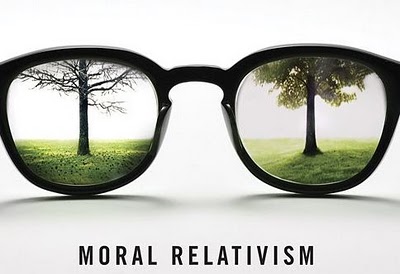
As important as achdus is, when moral relativism gets mixed in, that spells trouble.  I see this in statements such as, "We need to be able to see people who feel differently than we do, as people with a valid opinion, albeit different from our own ..." without qualification.

Even when referring exclusively to opinions seemingly sourced in Torah, we know that even such views can be wrong! I would give examples but prefer not to be that controversial.

In this era of moral relativism it isn't considered proper to view anything as wrong, but that doesn't change the fact that sometimes, people have wrong views.  We are not allowed, according to Torah, to validate these views! We might try to understand why they hold the wrong views they hold, and love them despite their wrong views, but wrong is wrong!

A similar sentiment is expressed when a frum psychologist writes, "All feelings are legitimate … All feelings are valid."  This is certainly the prevalent view in America today, unfortunately so, but it certainly doesn't reflect Torah values! Regarding anger specifically, rather than say we have the "right" to be angry, the Gemara equates anger with idol-worship!

We are supposed to be work on ourselves to ensure that invalid and illegitimate feelings such as anger, jealousy, hatred, glory-seeking, arrogance etc. do not find a place in our heart.  And if we, or our children or students, experience these feelings, we need to know how to get rid of these bad feelings, not legitimize them.