Showing posts with label Shabbos. Show all posts
Showing posts with label Shabbos. Show all posts
Feb 3, 2017


Jan 27, 2017
Shabbos and Rosh Chodesh
Many are unaware that it's a halacha brought in Kitzur Shulchan Aruch that it is a mitzva "l'harbos b'seuda" - to have something additional to eat on Rosh Chodesh, and if it falls out on Shabbos, to make one extra "tavshil" - cooked dish, more than you have on other Shabbosos.
This is a mitzva I like :) I have made it a point now for years to have an extra treat on Rosh Chodesh.
For those who want to make a good hachlata/kabbala in life, this is an enjoyable one.
This is a mitzva I like :) I have made it a point now for years to have an extra treat on Rosh Chodesh.
For those who want to make a good hachlata/kabbala in life, this is an enjoyable one.
Jun 28, 2016
Shuls, Shabbos and our Intentions
continued from previous post
I received the following in one of the weekly Shabbos emails I subscribe to:
I received the following in one of the weekly Shabbos emails I subscribe to:
The Vilna Gaon remarked (as cited by his brother) that if, when a shul is built, each and every nail is banged into place with the proper intentions, then one will not be able to pray in that synagogue without concentrating. The kedushah generated by the intentions with which it is built will have such an impact that people who pray in the building will automatically feel uplifted and inspired.
This applies to Shabbos preparation, as well. The purer our intentions when we prepare for Shabbos, the more of an impact Shabbos will have upon us. Whether it's the woman's preparation of food, or the work done by the husband to earn money with which to purchase food for Shabbos, if the preparations are done with sincere and pure thoughts, these thoughts will affect the spiritual impact of the Shabbos experience. Of course, Shabbos is inherently sacred and will thus have some impact regardless of the preparations, but the quality and force of that impact depends upon the preparation.
Mar 25, 2016
Hyperfocus on Shabbos

This is a thought I read in this book, A New Shabbos Soul Boruch Leff. He says R' Shimshon Pincus z'l points out that in the traditional Shabbos zemiros, almost all of them describe what we do on Shabbos and have as the main refrain, "Shabbos HaYom L'Hashem" or "Shabbos, Shabbos," or something similar.
By way of contrast, the songs of Pesach do not contain words like "Pesach, Pesach" and do not describe what we do on Pesach. On Yomim Tovim we sing about the themes of the Yom Tov - on Pesach about the exodus, on Rosh Hashana about Hashem's malchus, on Succos about simcha. Why is Shabbos different?
R' Pincus says that on Pesach, the mitzvah of matza, for example, is to eat it, not to remember and concentrate on it (though of course kavana is all important). The same is true for shofar on Rosh Hashana and dalet minim on Succos. But on Shabbos we have the mitzvah of "zachor," to remember and focus on Shabbos throughout the day. The more we mention Shabbos, the more the mitzvah of zachor we are fulfilling.
On Shabbos we must be focused on Shabbos and not be distracted from a constant awareness that it is Shabbos.
On Shabbos, we are supposed to eat with Shabbos in mind, sleep with Shabbos in mind, walk with Shabbos in mind, and talk with Shabbos in mind.
Shabbos, like tefillin, is an os - a sign, of connection between Hashem and the Jewish people. When wearing tefillin, a man is supposed to be constantly aware that he is wearing tefillin, and on Shabbos, we need to be constantly aware that it is Shabbos.
Good Shabbos!
Dec 25, 2015
Thought Beaming
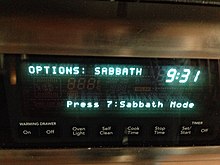
I began learning with a new Partner in Torah. We discussed Shabbos observance, and how one can keep Shabbos 100% even when not in walking distance of a shul.
This was on my mind after we spoke, and I thought of asking whether there is a light in their fridge. I figured that's a simple thing to suggest, that the light be shut off for Shabbos, and maybe other lights in the house could be either on or off for Shabbos. I considered emailing this, but I suppose I preferred bringing it up in conversation.
The next time we spoke, at the end of the conversation I said, I have a strange question to ask you. Do you have a light in your fridge? I assumed I would have to explain about why it's important to unscrew the bulb or tape the switch so the light won't go on every time the fridge door is opened.
Before I could launch into an explanation, do you know what the answer was? Oh, yes, I noticed there is a "Sabbath mode" and we tried to set it before Shabbos but there wasn't enough time so we just taped it.
Wow! Were my thoughts that potent? There are Torah sources about the power of thought but I can't say I've experienced it as directly as this.
Sep 16, 2015
Loving Shabbos
The test to know whether you love Shabbos, says R' Boruch Leff in his third Shabbos book, A New Shabbos Soul, is how do we feel when Shabbos leaves. Do we wait with bated breath for Shabbos to be over? If we do, we don't really love Shabbos. Do we feel like we want Shabbos to be finished so we can get back to a project we were working on? Then we don't really love Shabbos, he says.
I disagree. If you look forward to seeing your family and after spending many happy hours with them, you are ready to go, does that mean you don't love your family?
There is loving spending time with people, there is loving doing an activity, and then there is having enough and wanting to do something else. I don't see how that demonstrates lack of love. According to his reasoning, if I don't want to spend all my time, always, with my family, then I don't love them and of course, that is not true.
I think the same is true for Shabbos. I look forward to Shabbos. I am happy when it begins. I like Shabbos morning. I like Shabbos afternoon. And then, when it is time for Shabbos to be over, I am not pining for more and more. Now that's a chisaron, I know, based on many sources, for example, Shabbos being a taste of Olam Haba which is for eternity. If I appreciated Shabbos even more than I do, I would want to extend it. But to say that it means I don't love it? No.
Jul 8, 2015
Heavenly Accounts
From an article by Mrs. Krohn:
An elderly man who had kept Shabbos in the early 20th century was interviewed by his grandchildren about the challenges he faced.
"Zeidy, it must have been so hard for you to keep Shabbos in those years," said a grandson.
The grandfather smiled and said, "It wasn't difficult to keep Shabbos; it was difficult to earn a parnassa."
Since the grandfather did not view Shabbos as a hardship, this enabled him to merit to raise generations of frum descendents, for as R' Moshe Feinstein would say, the reason earlier generations lost their children even though they were shomer Shabbos was because the parents would complain, "It's hard to be a Jew," when they lost their jobs yet again in order to keep Shabbos.
Interestingly, in the same article, R' Chaim Pinchas Scheinberg z'l is quoted as saying that the money a person spends on any mitzvah will not be deducted from the amount that is granted to him for his yearly expenses (source: Ritva, Shita Mekubetzes Beitza 16a).
An elderly man who had kept Shabbos in the early 20th century was interviewed by his grandchildren about the challenges he faced.
"Zeidy, it must have been so hard for you to keep Shabbos in those years," said a grandson.
The grandfather smiled and said, "It wasn't difficult to keep Shabbos; it was difficult to earn a parnassa."
Since the grandfather did not view Shabbos as a hardship, this enabled him to merit to raise generations of frum descendents, for as R' Moshe Feinstein would say, the reason earlier generations lost their children even though they were shomer Shabbos was because the parents would complain, "It's hard to be a Jew," when they lost their jobs yet again in order to keep Shabbos.
Interestingly, in the same article, R' Chaim Pinchas Scheinberg z'l is quoted as saying that the money a person spends on any mitzvah will not be deducted from the amount that is granted to him for his yearly expenses (source: Ritva, Shita Mekubetzes Beitza 16a).
Apr 24, 2015
Shabbos versus Theft
I heard a lecture in which Yossi Mizrachi asks why Madoff became a headline for fraud when stealing, in the halachic hierarchy, is a far lesser sin than chilul Shabbos. For chilul Shabbos you are chayav missa (deserve the death penalty)!
Well, of course, as far as secular headlines go, secular media are not interested in chilul Shabbos. Not to steal, on the other hand, is one of the Seven Noahide Laws which everyone is obligated to observe.
There is also the fact that chilul Shabbos doesn't hurt others while stealing does.
Nevertheless, it was intriguing to hear R' Mizrachi pose the question. We recoil when someone Jewish is caught stealing but we don't recoil when we hear of Jews who don't keep Shabbos, even when they are our own relatives or neighbors.
Theft is also a most serious sin since, as it says in many machzorim before the Neila prayer, if a person has stolen anything he had better resolve to take care of it immediately after Yom Kippur. It does not say shemiras Shabbos or kashrus or Talmud Torah, but gezel.
And of course, not stealing is in the category of mishpatim, rational mitzvos that any just society upholds, while the myriad laws of Shabbos are not obviously logical.
Well, of course, as far as secular headlines go, secular media are not interested in chilul Shabbos. Not to steal, on the other hand, is one of the Seven Noahide Laws which everyone is obligated to observe.
There is also the fact that chilul Shabbos doesn't hurt others while stealing does.
Nevertheless, it was intriguing to hear R' Mizrachi pose the question. We recoil when someone Jewish is caught stealing but we don't recoil when we hear of Jews who don't keep Shabbos, even when they are our own relatives or neighbors.
Theft is also a most serious sin since, as it says in many machzorim before the Neila prayer, if a person has stolen anything he had better resolve to take care of it immediately after Yom Kippur. It does not say shemiras Shabbos or kashrus or Talmud Torah, but gezel.
And of course, not stealing is in the category of mishpatim, rational mitzvos that any just society upholds, while the myriad laws of Shabbos are not obviously logical.
Mar 28, 2015
Connections to Fire

For those looking for areas to focus on that relate directly to fire, here are some ideas:
Yechiel Spero points out, fire and Shabbos are connected in several places in the Torah. We welcome Shabbos with Shabbos candles. We conclude Shabbos with the Havdalah candle. And the only melacha of the 39 that is mentioned in the Torah is, “Lo sevaaru aish bechol moshvoseichem b'yom ha'Shabbos - You shall not kindle fire in any of your dwellings on the Shabbos day” (Shemos 35:3).
Torah is compared to fire.
Anger is compared to fire.
And, in My jealousy, in the fire of My anger, I have spoken ... "(Yechezkel 38:18-20)
Machlokes is compared to fire.
The Bais Hamikdash was destroyed by fire and will be rebuilt with fire.
And Hashem is like an eish ochla - a consuming flame.
Jan 15, 2015
Not so Poshut
In R' Dovid Kaplan's fourth "Impact" book, called Lasting Impact! he tells of a couple who had a baby boy and decided to name him after the mother's grandfather. But then she began to have second thoughts. "My grandfather was a very nice man and a fine person," she said to her husband, "but he wasn't a talmid chacham. He was just a poshute Yid (plain Jew). Maybe we should name the baby after someone great."
Her husband consulted with his rav who asked, "When did her grandfather live?" When he answered, "He came to America in the 30's," the rav asked, "And where are his children today?"
The husband answered, "All of them are frum and all his grandchildren are bnei Torah."
The rav then said, "Anyone who lived in America in the 30's and 40's and raised a family that produced bnei Torah is not a poshute Yid! Name the baby after him."
The same week I read this story, someone told me that when her husband's grandfather was bringing up his children at some point, when he lost a lot of money (see story that follows) he went to Rabbi Levy to take his girls out of Beis Yaakov. Rabbi Levy asked him why he was taking them out and when he heard that it was because of money he said something to the effect that money has nothing to do with this and made sure that they remained free of charge! The P.S. to that story is that when the grandfather had more money in later years he repaid the money.
As to how the grandfather lost a lot of money - he built a dry cleaning business from scratch with partners, with the intention that it would be a shomer Shabbos place. When it was ready to open, the partners decided that Shabbos was the busiest day for business and that it would have to be open on Shabbos. At that point, the grandfather pulled out of the business at a great loss of money. A daughter of his remembers the hard times that she went through at that time and how she went to the bank with her mother to redeem a bond so that they would have a little more money.
People like this are not famous, they don't appear in our Jewish history books, but they are far from being "poshute Yidden." They are Jewish heroes.
Dec 22, 2014
Life Must Go On
A woman described her grandmother, a Holocaust survivor who was the only survivor of a very large family. She had one child who died at age 40:
"My grandmother is very bitter about losing her entire family in the Holocaust and then her only child dying. She often talks about her father who was a great talmid chacham. She is very angry at Hashem. She keeps Shabbos and a strictly kosher home. She goes to shul every Shabbos but does not daven. She says, 'I can't get myself to praise Hashem after what happened to me, so I say nothing.' She says, 'I don't bentch. If I were to thank Hashem for the food, I also must scold Him for what He did.'"
What an amazing approach to life! It's like what they teach kallos, that even when upset with your husband, the routine of life must go on. There is supper and mikva. This woman has a genuine relationship with Hashem and she is mad at Him. She stills keeps Shabbos and kosher and even goes to shul, but to praise Him? That's going too far.
I'd love for her to speak to disenfranchised teens and adults and tell them about her life and her attitude toward serving Hashem. Perhaps all those who walk away from Shabbos and kashrus will be touched by her story and ashamed when they compare their grievances to the life this woman has led, and hear how she still maintains the routine of Jewish life, because - just because you're upset, doesn't mean you walk away from it all.
"My grandmother is very bitter about losing her entire family in the Holocaust and then her only child dying. She often talks about her father who was a great talmid chacham. She is very angry at Hashem. She keeps Shabbos and a strictly kosher home. She goes to shul every Shabbos but does not daven. She says, 'I can't get myself to praise Hashem after what happened to me, so I say nothing.' She says, 'I don't bentch. If I were to thank Hashem for the food, I also must scold Him for what He did.'"
What an amazing approach to life! It's like what they teach kallos, that even when upset with your husband, the routine of life must go on. There is supper and mikva. This woman has a genuine relationship with Hashem and she is mad at Him. She stills keeps Shabbos and kosher and even goes to shul, but to praise Him? That's going too far.
I'd love for her to speak to disenfranchised teens and adults and tell them about her life and her attitude toward serving Hashem. Perhaps all those who walk away from Shabbos and kashrus will be touched by her story and ashamed when they compare their grievances to the life this woman has led, and hear how she still maintains the routine of Jewish life, because - just because you're upset, doesn't mean you walk away from it all.
Oct 23, 2014
As of now, Thursday night, I have no guest for the this week's "Shabbos Project." I wrote here about last year's magnificent Shabbos Project in South Africa. This year it is global and you can read about it here and see a heartwarming video about it here.
I tried inviting guests through Shabbat.com and got nowhere. I hope you have more success.
Sep 28, 2014
Me Too!

A guest of ours related the following story. She was close to Rebbetzin Bessie Scheinberg (daughter of Mr. Herman of "All for the Boss" fame, and wife of R' Chaim Pinchas Scheinberg, Torah Ohr, of the many pairs of tzitzis).
One day, a woman and her daughter came into the wig establishment where she worked. Our guest was inspired by the Lubavitcher Rebbe's call to women and girls to light Shabbos candles and she brought this up. The frum woman made it clear she was not interested and did so in a less than polite manner. Rebbetzin Scheinberg, who was there to have her wig done, interjected:
When my sisters and I were growing up, my father had us light a candle for Shabbos!
Sep 5, 2014
One of the Least Known Halachos of Shabbos
Since it's erev Shabbos, I will post some halachos which I read in Torah Tavlin (Israel Bookshop) p. 402, 410, and 418. The topic is introduced like this, "One of the least known halachos of Shabbos, one that many often transgress unwittingly, is the rabbinic prohibition against reading unwarranted material on Shabbos."
1) about activities which we are not allowed to do on Shabbos like cooking - recipes and crafts
2) advertisements and business type articles
3) news (unless it is to become aware of potential danger which does not apply nowadays)
4) editorials of world events
5) distressing information
6) household hints
7) shopping tips
8) dedications and mazal tovs
The popular frum magazines and newspapers contain news, editorials, recipes, ads, business related articles, household hints, and sometimes material of a tragic nature. What responsibility do these publications have to publish well in advance of Shabbos? What responsibility, if any, do the publishers have to make it known to their readers, many of whom save their reading for Shabbos, that ads and recipes etc. are forbidden to be read on Shabbos?
What about dvar Torah papers that are left in shuls which have dedications and mazal tovs on them. Aren't they a michshol? Are people expected to read the divrei Torah and save reading the dedications and simchas for after Shabbos? Would people donate money for these announcements if they knew that people are not allowed to read them on Shabbos?
Mar 7, 2014
A Call for Reviewing Hilchos Shabbos

Women are urged to review the laws of Family Purity. Indeed, it is vital to know and observe them meticulously.
However ... what about the Laws of Shabbos?
If you have gone through "Guard Your Tongue" or some such book, you get the idea. Do not say or listen to anything derogatory, albeit true, about anyone. That sums it up. There are related laws, there are exceptions, but that's the basic idea.
If you have gone through the laws of Family Purity, then you can sum them up in five to ten minutes, what to do, how, and when. There are many possible questions and situations that can arise, but they are asked of a rav.
But Hilchos Shabbos, which apply every single week, consist of thousands of practical laws. There is no way to sum them up briefly in a way that is meaningful to one's practical observance. Yes, you can say there are 39 categories of work, this is what they are, but that tells you nothing about all the derivatives of these primary forms of work and their applications.
You can summarize Muktza by stating the five categories, but that isn't a true summary of all the laws of Muktza. It would just be the "headlines" without providing the information that is needed to observe these laws. It's a vast study!
And even as it is vast, every layperson needs to know them. At the very least, they need to have a good idea of what constitutes a questionable area, even if they are not familiar with every relevant law. And yet, those who have always been religious, rely on their knowledge and Shabbos observance of many years. If they start to study the laws systematically, they discover that they did not actually know all the categories of muktza, or just how to deal with the food on the blech, or all the applications of borer or asking a gentile to do something for you.
There are very many books on Hilchos Shabbos available, detailed, with and without the reasoning behind the laws, with and without illustrations. Check this out:

Nov 9, 2013
The Incredible Shabbos Project

I am so impressed and moved by what I've been reading and seeing about the special Shabbos initiative a few weeks ago in South Africa. It took place on Shabbos parshas Lech Lecha and Yonoson Rosenblum described it as, "An experiment that has no precedent in modern Jewish history. It was called “The Shabbos Project.”
"The idea was simple: Encourage every Jew in South Africa to celebrate one Shabbos. And not just a friendly Shabbos dinner where nonreligious participants would be welcomed even if they drove to their host’s doorstep. Chief Rabbi Warren Goldstein, 42, who has led the South African community since 2005, decided early on that the Shabbos must be observed in its entirety."
“Keeping Shabbos completely was crucial to the success of the Shabbos Project,” explains Rabbi Goldstein. “The kedushah, energy, and emotional power of the experience depends on doing the mitzvah exactly as Hashem instructs. When Torah is diluted, it loses its spiritual power. South Africans like a challenge, and responded to my call to keep Shabbos in all its details accordingly.”
To get some idea of the magnitude of this project see this: The Great Challa Bake about how thousands of women and girls gathered to bake challa. And take a look at the website with all the information and resources that were made available to South African Jewry: here and be sure to click on "Our Stories" to read the reactions of those who participated, many experiencing Shabbos for the first time.
Jul 29, 2013
Acting on our Faith

Every Wednesday, there is a circular from my frum supermarket with the week's specials. I often find myself planning my Shabbos meals around the sale items. Eggplant is on sale? So let's have eggplant salad. Fresh mushrooms and grape tomatoes are on sale? So let's have the salad that calls for those ingredients. Napoleon is on sale in the bakery department, let's buy that for Shabbos.
I feel bad about it because I believe the Gemara that says that the amount of money we are designated on Rosh Hashana for the year, does not include Shabbos and Yom Tov expenses. So why should items on sale have any bearing on the Shabbos menu? Then again, just because our Shabbos expenses are not taken off our annual monetary allotment, doesn't mean people have the actual money to lay out for full-price food items. True, we will be repaid for our Shabbos expenses, but right now, I might not want to use up my available cash.
I had a conversation with someone who said, there is no way they are going to pay $12 a pound for flanken, it's too expensive! Their alternative was to use another, cheaper type of meat. All I said was there are often sales on the meat that goes into chulent which they can look out for. What I thought, but didn't say, was - if you believe the Chazal about repayment for Shabbos expenses, what difference does it make if it's $12 a pound or half that?
It might be a good idea to occasionally buy something expensive at the full price just to demonstrate our belief that we will be repaid for Shabbos expenditures. Otherwise, do we genuinely believe or not?
Jul 9, 2012
The Yumminess of Being a Yid
Rabbi Bloch is the rav of the Lakewood minyan in Monsey. He recently spoke in Flatbush and said that he changed the topic of his speech on his way to giving the speech. This was because of a story he just heard a story about a rebbi in a classroom of 14 yr olds in a good yeshiva in a very frum area.
The rebbi was teaching the Gemara in Kesubos about a ger katan who at age 13 has the right to decline being Jewish. A good boy in the class innocently asked - why would this kid want to become a Jew?
The shocked rebbi thought he was making trouble but he saw that the whole class agreed with the boy! He made a questionnaire and asked everyone to check one of three boxes anonymously on a paper. Today if you had a choice, what would you pick: 1) you'd choose to be Jewish 2) you'd choose not to be Jewish 3) undecided
The entire class except for two boys wrote they would want to be goyim. One wrote undecided and one wrote he'd choose to be Jewish.
In R' Bloch's words:
Don't tell me that that's because of the Internet! That's foolish!
We are goofing big time.
These are 14 yr old kids whose parents have some control over them; What about when they're 15, 17, 19?
How do they say the bracha "asher bochar banu ... ", "shelo asani goy"?
We had these kids for 9 years in school!
This is where we're holding. We are failing immensely in giving over to the children: what is our religion! We are failing terribly in conveying "ashreinu mah tov chelkeinu." We say the words, do we mean them? That Hashem is our chelek and that goraleinu is olam haba and how pleasurable-fun limud ha'Torah is (if it's done right).
If the children were given this feeling, the joy of being a yid, then "s'eis" - you'll go up. Yes, you have to be careful of aveiros, but Hashem said, "im lo seitiv," if you won't have this warmth, desire for something higher, then "l'pesach chatas roveitz" - sin crouches at the door, with or without a computer. Kayin did not have a computer. The sota did not have a computer ...
If you desire to get close to Hashem, you are moving up and away from bad things. If you're just going to fence off the bad stuff, I have news for you. You won't be able to fence it all off. It's impossible.
Our grandparents did something right. It has become popular today to look at ourselves as being great and our grandparents as so-so. We have it backwards.
40 years ago, R' Dessler described our generation as one of chitzoniyus. Our generation is completely about status-kavod.
A father came to speak to me, he's ready to die. His son came home for bein ha'zemanim and put on a T-shirt and shorts to play basketball. After 15 minutes or so, I asked the father about tefillin and the father said he does not think his son puts on tefillin. The father was agonizing about the T-shirt and shorts and not ready to die over the tefillin. That is why the kid is not wearing tefillin! Because he sees it's all about appearances. We have honest kids and they ask, why should anyone want to be be a Jew! Good question.
We have to give kids the yumminess of being a yid. Fear of gehinom won't do it. People ask me what to do about their children not wanting to stay at the Shabbos table. The Shabbos table must be the highlight of the week. The father must be a DJ, MC, comedian, journalist. When your daughter goes into the kitchen, you want her to say wait, don't continue until I come back. The kids should be glued to the table.
I don't think the story with the 14 year olds is an isolated situation. I am almost positive that it is indicative of the general situation today.
The problem is not that the kids don't get it. The problem is that YOU don't get it and they don't get it because you don't have it.
I repeat, we undervalue our grandparents. What we have is more visible yiddishkeit. What they had was more genunine, internal.
link to his speech
Jun 29, 2012
Loving Shabbos

This same R' Bensoussan (see previous post) said that on his way to or from shul on Shabbos, his father would say to him and his brothers, time and again, each time as though he never said it before, “This is very important. No matter where you end up and what you do, there is nothing as amazing, as beautiful as Shabbat.”
During the meal his father would almost break into tears and say there is nothing like Shabbat. R' Bensoussan's friends would break Shabbat in front of him but he never could. As he put it, why would he want to break Shabbat? There is no beauty that compares! He doesn't use the phone, text etc. on Shabbat because why would he?! He has Shabbat.
So this seems to be the new approach to convey the imperative of living a religiously observant life. It's not because G-d said so. It's not because of reward and punishment. It's because it's beautiful and enjoyable.
Sounds nice, but ... where does G-d fit into the picture? It sounds like it's all about me and what makes me feel good. Nothing about a relationship with G-d. Dovid Ha'Melech's pining for G-d seems irrelevant. Purpose, responsibility, obligation seem to play no role. It's all about my pleasure. Something is wrong with this picture, though apparently many feel this is what speaks to today's youth. Do they ever move on to the next level or is that not a goal?
Dec 9, 2009
Promoting Shabbos and Tznius

Rabbi Matisyahu Salomon makes an interesting observation. He says that nowadays, whenever some calamity happens, people are quick to lay the blame on deficiencies in shemiras ha'lashon (I would add the related sin of lack of Ahavas Yisrael and machlokes), but if you look into the collected letters of the Chofetz Chaim where he refers to many disasters (pogroms, fires, poverty, communism) he never connects them to shemiras ha'lashon! Usually, he lays the blame on the lack of Shabbos observance and tznius. Occasionally, he also mentions bittul Torah and poor tefilla, but never shemiras ha'lashon.
The problem as I see it is, shemiras ha'lashon is something that applies equally to men and women, so when we are urged to improve in this area, nobody feels uncomfortable. The same would also apply to Shabbos observance. But if people try to promote tznius and point out failings in tznius, the response is often negative since women don't want to be made to feel that the problems we face are their fault. You can't help but elicit a defensive reaction when you point a finger at a sub-group.
So what's the solution? Well, for one thing, to promote greater Shabbos observance. There are certainly plenty of books available in so many different formats on the subject of Shabbos. Some favorites of mine are: Baruch Chait's terrific book on the 39 Melachos:
http://www.feldheim.com/cgi-bin/category.cgi?item=0-87306-586-7
"Shabbos Secrets" for inspiration:
http://www.israelbookshoppublications.com/ProductDetail.asp?PID=360
and there's "Shemiras Shabbos K'Hilchasa" for practical guidance in Shabbos observance:
http://www.feldheim.com/cgi-bin/category.cgi?item=1-58330-494-0
As for promoting greater tznius, that's a tough one because it seems that those who are already doing well in this area are the ones who show up for the Kinusim on the subject. Maybe an avenue that should be pushed more is lecturing men on the subject of tznius with a particular emphasis on urging them to encourage their wives and daughters to dress according to halacha and in an aidel manner. Too many husbands either tacitly allow or actively urge their wives to dress inappropriately. And who is paying for their daughters' clothing? Parents should be encouraged to put their foot down and not allow purchases of inappropriate clothing.
Other suggestions? Post your comment! :)
Subscribe to:
Posts (Atom)

 Posts
Posts

