In a health column in a frum publication, written by a "certified Health Coach," Rivka Segal, the author says when she was studying to become a health coach, the school curriculum intentionally taught them conflicting dietary theories. One week they learned about a carb-free, high protein diet and the next week they'd learn about a high carb diet. Each course was taught by an expert in the field, often the founder of that diet.
Each time, the presentation was so convincing, that is, until the next class. She says, "The purpose .. was to teach us that with diet and nutrition, there are no absolutes, and there is no one right way to eat."
It's "eating relativity" in which everyone can be right, and it's whatever works for you.
I find this troubling and I'm not sure it's true. Granted, there can be differences between people in what they can and should eat and avoid, but aren't there general principles that apply to the majority of people? The Rambam thought so. He even included his dietary guidelines in his Mishna Torah!
I found this anecdote she related quite interesting. She spoke with someone whose daughter has Crohn's disease. The mother said that a top doctor told her daughter not to discuss her condition with anyone. Why? Not because of secrecy but because every patient's experience with Crohn's is different and what is helpful to one is not to another. He felt that talking to others about their approach would be confusing and overwhelming and he encouraged her to figure out what works for her body.
She concludes by saying there are some general guidelines like we should avoid sugar, caffeine and processed food, and that we can all benefit from regular exercise, reducing stress, and drinking more water, but what about salt, coffee, eggs, butter, margarine, meat, whole milk and on and on? We read conflicting information on these items. Are there no definitive answers?
Showing posts with label eating. Show all posts
Showing posts with label eating. Show all posts
Jul 13, 2016


Aug 24, 2015
Words for Food
I may have heard this idea in a shiur many years ago. It's been so long, I don't remember. Here is a list of roots and words related both to food as well as to war and destruction:
1) ochel - food אוכֶל
consume "והסנה איננה אֻכָּל" - and the burning bush was not consumed
2) milchama - war, bread מלחמה, לחם
3) טרף - sustenance and tearing
Tehillim: "טרף נתן ליראיו"
"טרף טרף יוסף" - like an animal that is treif
4) mazon - sustenance מזון
klei zayin - weapons כּלי זַייִן
5) shever - שבר referring to food and breaking
food: Yaakov said, "יש שבר במצרים"
6) michyeh - food, for it provides life chai מחיה
and to eradicate, as in the mitzvah of destroying Amalek: מחיית עמלק
So why do eating and destruction share roots? We do consume our food and we are called consumers, so the concept exists in English too. But how come in Lashon Ha'Kodesh, there are many roots that mean both food and destruction?
Apr 14, 2015
Sad Subway Scene
There was a chubby, frum lady lady on the subway with a chubby child, maybe 15 months old, in a stroller. The child was eating potato chips while mommy was busy with her phone. Some time later, the child's greasy hands were grasping a small chocolate bar.
Oy.
Food was used to occupy the child, keep her quiet, uncomplaining, not bothering anyone including mommy. Sad.
Sad because the mother doesn't know how to regard food properly and sad because she is teaching her baby bad habits that will stick with the child forever, most likely. It's sad to watch it happening.
Oy.
Food was used to occupy the child, keep her quiet, uncomplaining, not bothering anyone including mommy. Sad.
Sad because the mother doesn't know how to regard food properly and sad because she is teaching her baby bad habits that will stick with the child forever, most likely. It's sad to watch it happening.
Feb 14, 2015
French Kids Eat Everything

I found the book French Kids Eat Everything a fascinating read. It's about a couple who moves from Vancouver to a village in France for a year and describes the huge differences in attitudes and practices between North Americans and the French when it comes to food.
Although the book's focus is entirely on food and eating habits, from the very start what had me marveling is the broader implications of her observations. We live in our community, our country, our culture, and think (especially Americans) that "This is the Way It Is." We usually remain oblivious to other ways of doing things. For example, we will hear people decry the chutzpa in our schools today and often it is assumed that this is the way things are before Moshiach comes. Then, when you read about Jewish kids in South Africa and how well mannered they are in school, your eyes open and you realize, chutzpa is not a "given" that we need to put up with.
We have certain ways of eating in America and it usually doesn't dawn on anyone that there could be another way of doing things (other than being exposed to the main meal of the day being lunch in Eretz Yisrael). An example of this is snacking. In France, snacks are not acceptable. In the US, we snack throughout the day and on the go, making sure there is food available whenever going out, in your bag, in the stroller, in the car, stopping to eat somewhere. Frum kids are fed out on the street in the spring and summer and can be seen with nosh regularly. Pekelach for shul are standard and prizes are often food.
One of the frum magazines recently had a two page spread called "Turn Food Fights into Dining Delights," which addressed problems meant to be relevant to the frum mother such as: How do I get my kids to eat more vegetables? My kids don't want to eat supper! My kids won't try any new foods! My kids expect unhealthy snacks when we go on a road trip ...
I viewed this article so differently as I was reading this book. I looked at it through "French eyes" and it was embarrassing. French kids are taught to eat whatever is served and this is whatever the adults are eating. They are not given special dishes because they don't like what Mommy made. There is no such thing as a child rudely announcing that she or he hates that food and won't eat it. There is no whining about being hungry, and forget about making choices which Americans think are all-important.
In the French model, parents are in charge of training their children to eat everything, to regulate how much they eat, to teach them to recognize when they are satisfied (not full) and to tolerate being somewhat hungry until the next meal is served.
Food is not used as a reward or bribe or to keep kids quiet. It is not a distraction and something to do when bored or unhappy. Look at our frum world in contrast ...
The way the French accomplish all these "wonders" (and as the decades pass, the French are slipping into the bad habits of Americans) is by treating mealtimes and food as highly significant. There is a culture of venerating food. Now this is completely anathema to a Torah way of life, of course. Still, our Shabbos meals, in which the table is formally set and everyone is present and there is good conversation and laughter, well, that's what the French do on a regular basis, if not daily. They don't grab a danish and run out the door. They don't gobble down their food because they're rushing to get somewhere. Eating is a joyful, social experience, not a guilt-ridden or stressful one. Food is prepared at home with healthy ingredients. Children are trained from babyhood to try new things and to eat what they are served or have it taken away and not replaced with anything.
What we can take from this book is not only good ideas about food and mealtime, but also a perspective on a parent's role in instilling structure, discipline, and joy in their children which is vital to Jewish life and chinuch.
Jan 14, 2014
It's Inherently Contradictory

That is a quote from a letter to the editor of a frum publication. The author goes on to say that he joined OA and since then he has maintained a 150 pound weight loss.
After reading contradictory statements like these time and again, I can't help but wonder. Is it possible that I am the only one who notices that he is not making any sense? He just said he has a G-d inflicted disease in which he lacks the ability to control food choices or portion size. In the next breath he extols an organization that he joined which has helped him control food choices and portion sizes. Nobody comes to his home and monitors his food intake. There are no cameras recording all his eating. No penalties if he makes the wrong choices.
What happens is, he decides to control is food intake. So does he have a disease or not? Can he control himself or not?
Aren't the answers obvious? I.e. He acquired terrible eating habits and is working to overcome them. That is commendable. I don't see why they have to falsify the facts. Why the need for the disease lie? Why the need for an illogical claim of lack of control when those who "work the steps" are controlling themselves?
He concludes the letter by saying, "There is a solution. It is not surgical. It is not in taking supplements. It is not counting points. It is not by tricking your body into burning its own fat. Rather, the solution is Overeaters Anonymous."
Why not this alternate conclusion: There is a solution. It is neither surgical nor does it involve supplements nor counting points nor tricking your body. It's about free will and acknowledging that as a human being we have free choice and can exercise this power. For ain davar ha'omed bifnei ha'ratzon - nothing stands in the way of one's will, as the author has shown.
Jul 30, 2013
Bon Appetit

A quote from a food editor in a frum magazine:
"These days, whether we're reading about it in a magazine, or watching it live on stage at a fundraiser, cooking has become great entertainment. It's a positive thing. In every Jewish community, our interest in cooking is being leveraged to plan events and raise tzedaka for both chesed and Torah institutions."
I'm thinking there just might be a bias there, considering who said that ... Are there any Torah sources that say that immersion in the world of food is a positive thing? The sources I've come across have a different perspective:
* The Gemara interprets "kedoshim tihiyu" (Vayikra19:2), "Be holy" as a mitzva to "abstain also from that which is permissible to you" and a warning against being a naval b'reshus ha'Torah (a hedonist with the Torah's permission) who indulges in every permissible pleasure.
* A quote from Chovos Ha'Levavos (Duties of the Heart) in the introduction to Shaar Avodas Hashem says: "Desires for worldly pleasures are unable to dwell in the heart together with a love of G-d."
* Tosfos in Kesubos (104a) quotes the Medrash. It says before a person prays that Torah goes into his system, he should pray that delicacies don't go into his system. Rabbi Yehudah HaNassi had the finest foods in the winter and in the summer. The Gemara says that when Rav Yehuda HaNassi died, he lifted up his ten fingers and said Ribono Shel Olam, it is known and revealed to you, that I toiled with my ten fingers and I didn't even have the pleasure of my smallest finger. Rabbi Yehuda HaNasi was at such a high spiritual level that despite his extravagant lifestyle he could testify that during his entire lifetime nothing was consumed for his own enjoyment.
We may not have to eschew trying a new recipe, but to glorify gastronomic delights and to say that immersing oneself in the culinary world is a good thing is something else entirely.
Sep 23, 2012
You Need a D&C (Determination and Commitment)
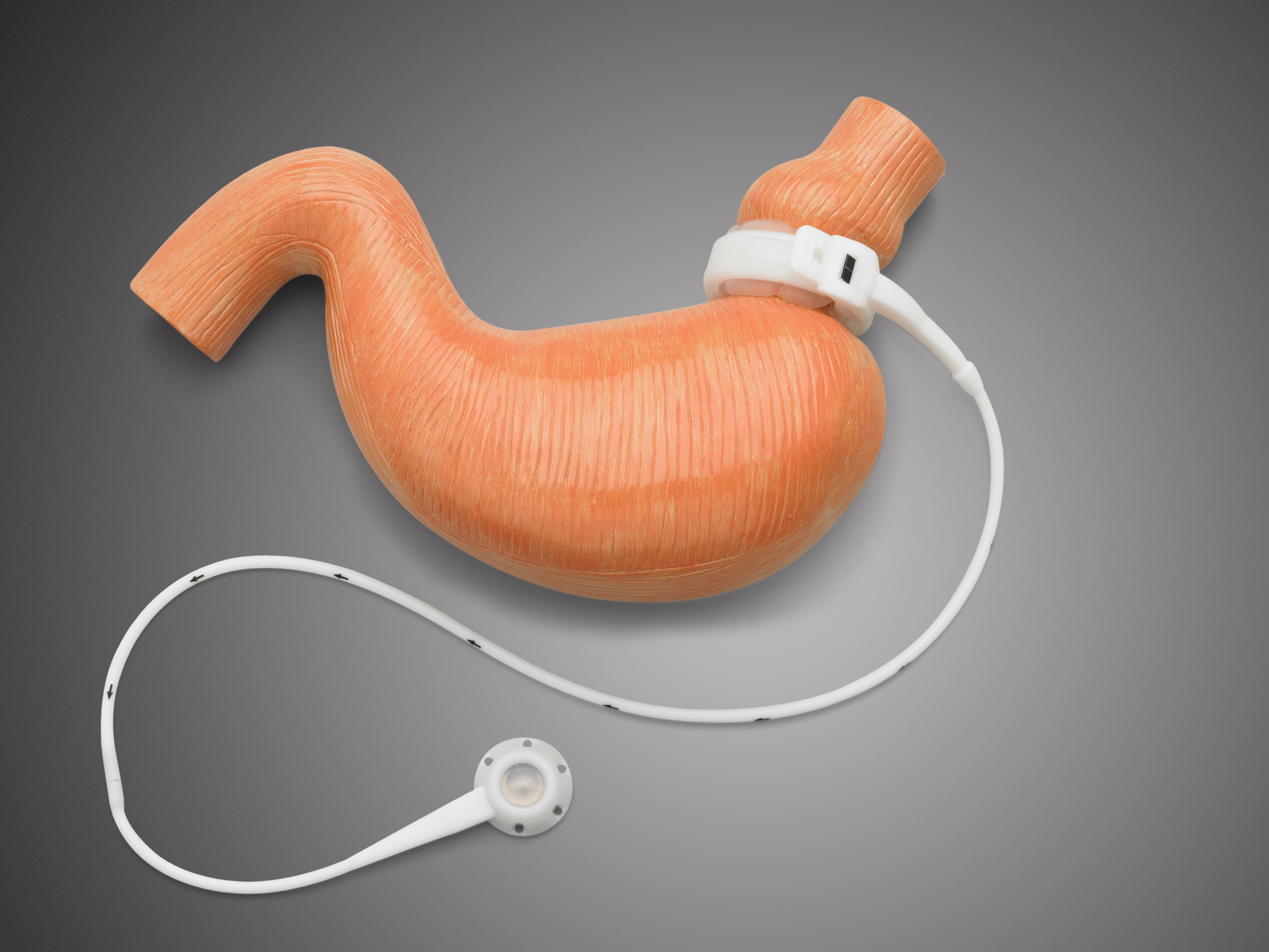
Surgical solutions to obesity are written about here and there in frum publications. After one such article, someone wrote a letter to the editor expressing her surprise that the woman in the article who had lap band surgery feels guilty for taking the easy way out:
"As someone who underwent the same procedure, I think it's basically the only way out and not so easy at all ... Actually, you need major determination if you want to be successful."
She repeats the warning, "If you want to be successful, you need to be extremely determined and committed."
I seem to be missing something here. If you need to be extremely determined and committed with the lapband surgery in order to be successful, why can't the identical determination and commitment be applied to proper eating without undergoing surgery? Can she muster that singlemindedness only upon going under the knife?
In an article about lap band surgery I read, "The most important aspect to the success of lap band surgery is its follow up care. Without suitable modifications in lifestyle, it is not possible to lose any weight through lap band surgery. It is not easy to lose excess weight; however with the right attitude and commitment, it is possible to change your life for the better." Hmmm. Again, wouldn't modifications in lifestyle and the right attitude and commitment make all the difference without surgery?
Blessed will be the person who can devise ways of helping people gain control and learn self-restraint with the power of their mind.
Jul 20, 2011
Passionate About Food?!

Obesity is skyrocketing so I'm not convinced that magazines devoted to FOOD is the best thing for us. A recipe column in a magazine is a nice thing; an entire magazine devoted to food is another thing entirely! It is particularly irksome when the word "inspired" is used in one of the magazine titles. Food is as "inspiring" as the latest hit song is "awesome". The devaluation of the meaning of words is not doing us any good.
From a spiritual perspective, I fail to see how a title like "Dairy Decadence!" belongs in a publication targeting frum readers. Nor "Unlimited Ways to Create the Ultimate Grill Fest." Should a frum publication be advertising itself as a "Gourmet Food Magazine for the Kosher Epicure"? Should a kosher magazine with a website describe itself as being "for people with good taste who are passionate about food"? Passionate about food?! Does this fit with anything we've learned in our Jewish studies? I think not.
R' Avraham David of Botshash, a posek and a Chasid of R' Levi Yitzchok of Berditchev, ate very little. He would often say, "Eating makes a man unspiritual. Adam sinned through eating; the angels maintain their lofty spiritual heights because they don't need to eat."
We need to eat, and Shabbos and Yom Tov are days that we honor and celebrate with special food. Seudos mitzva are also occasions for special food. However, it seems that our preoccupation with food and its presentation has gotten out of hand. Special occasions like an upsheren, bar mitzva etc. are not reason enough to celebrate and a theme is sought. I thought the upsheren, bar mitzva etc. are the theme!
I read an interview with a woman who has produced some popular cookbooks which I found quite distasteful (ha). Her mission is to put gourmet, high-class kosher cooking into the hands of every cook, in an attempt to spark a renaissance in kosher cooking. To me, this is Artscroll promoting "naval b'reshus ha'Torah." As far as I know, neither the Chofetz Chaim nor any other gadol sees promoting gourmet kosher cooking as a way to bring Moshiach.
In terms of recipe hunting, this particular author says she leaves no stone unturned. Having mined the best of friends and family members' repertoires, she now works with seasoned chefs to develop novel and creative formulas. She's an avid reader of menus from kosher and non-kosher upscale restaurants. The chefs she invites to her home help her cook up exciting new recipes as she observes and takes notes.
Why are frum publishers glorifying this? Are we so lacking in recipes for good food that we need to "develop novel and creative" new ones? Or is it more likely that this is about making money and without new and exciting recipes (what's an exciting recipe?) there are no new cookbooks and no sales. And this also explains the outrageous recent advertisement by a "gourmet kosher supermarket" that was in such poor taste (ha). We can sustain gourmet kosher supermarkets because we buy the cookbooks that present us with recipes with gourmet ingredients. Then we sustain the gastric bypass industry, nutritionists, the eating disorder programs, personal trainers, and weight loss programs ... and wonder why we feel spiritually empty.
I'm in favor of good cooking. I'm in favor of making special things for Shabbos and Yom Tov. I'm in favor of showing not-yet religious Jews that kosher cooking is delicious. But I don't think we need a renaissance in our cooking or an entire aisle of kosher snack food and another aisle of kosher cookies, and I do think we, as a frum society, need to put food in perspective and use it in positive ways, in our service of Hashem.
Subscribe to:
Posts (Atom)

 Posts
Posts

