Showing posts with label Rosh Hashana. Show all posts

Jan 31, 2017

Timely Vort

This vort catches my fancy. I do not guarantee that the people cited as saying them are the correct sources. I would love if someone could verify it for me.

A thought from the Chozeh of Lublin:

The parshiyos of Bo, Beshalach, Yisro, Mishpatim, Terumah, Tetzave and Ki Sisa, all contain within them different Yomim Tovim. If you make the effort, you can experience the aura and inspiration of that particular yom tov during these coming weeks.

Parsha Bo has the story of the Exodus from Egypt which corresponds to Pesach. 
Parshas Beshalach has the Splitting of the Sea which happened on Shvii shel Pesach (the 7th of Pesach).
Parshas Yisro, has the Ten Commandments, corresponding to Shavuos.
Parshas Mishpatim, which has numerous laws, dinim, corresponds to the Yom HaDin and Yimei HaDin, Rosh Hashana and Yom Kippur   
Parshas Terumah has instructions for the building of the Mishkan and with it came the cloud that hovered above it, which corresponds to Succos.
Parshas Tetzave has the lighting of the menorah which corresponds to Chanukah. 
Parshas Ki Sisa which has the mitzva of giving the machatzis ha'shekel corresponds to the month of Adar when the half shekels began to be collected.

Another version or point to the vort, cited in the name of the Spinka Rebbe, is that the weeks of these parshiyos with yetzias Mitzrayim, kerias Yam Suf, and Mattan Torah, are more spiritually potent than the actual yomim tovim of Pesach, Shevii shel Pesach, and Shavuos! 

This is because the parshiyos contain the the koach (power, spiritual strength) of Torah while the yomim tovim are the koach of zeman (the time of year that they fall).

Sep 11, 2015

Try Again, Maybe


On Rosh Hashana there is a new cheshbon, completely unrelated to last year's cheshbon, see this post.

I read this analogy long ago, not sure whose it is.  It goes like this.  There is a fly that is buzzing against a window, wanting to get outside.  The fly keeps hitting the glass in a futile attempt for freedom.  There is a  window without a screen that the fly could easily fly through, but the fly doesn’t see it. It doesn’t even look for it! It only sees one way to accomplish its goal as it repeatedly bangs against the glass.

The fly is motivated, but without help to see it from a new angle or perspective, the fly is doomed to repeating the only behavior it knows.

****
How do we know whether something we've tried, without success, needs to be tried again and we will finally succeed, or whether it is futile, no matter how many times we try, it just won't work?

I've read of people who tried, unsuccessfully, to learn Torah, who were determined and who davened, and who finally succeeded.  They could have said, learning is just not for me.

I've read of people who tried various ways of making money, unsuccessfully, until finally they succeeded.  They could have said, I'm just not the kind of person who succeeds financially.

Sometimes it's the method that needs changing, sometimes the method is fine but it will take time and repeated efforts to see change.  Davening is a must and asking an objective person is helpful.

Sep 27, 2014

"Who will Live and Who will Die"

As I perused the headlines one day last week, I saw the following news items:

Woman killed by bee stings.

Man killed by bear.

Woman died after being hit by a cyclist.

Bee, Bear, Bike.  Bizarre deaths.

All decreed a year ago on Rosh Hashana.

I've read and heard the following suggestion.  Make a list of all the positive and negative things that happened last year that had an impact on you.  It should include personal events in your life as well as national and global events.  Then ponder the idea that all these events were decreed a year ago on Rosh Hashana. 

Now, during the Aseres Yimei Teshuva, we have a unique opportunity to affect the course of history for the coming year.  Carpe diem.

Sep 10, 2013

Post Rosh Hashana Thoughts


Primaries were held today for major positions and an election is coming up in November.  As I wrote almost a year ago: here , the election was decided by the Heavenly court on Rosh Hashana and we voters went to carry out their decision.

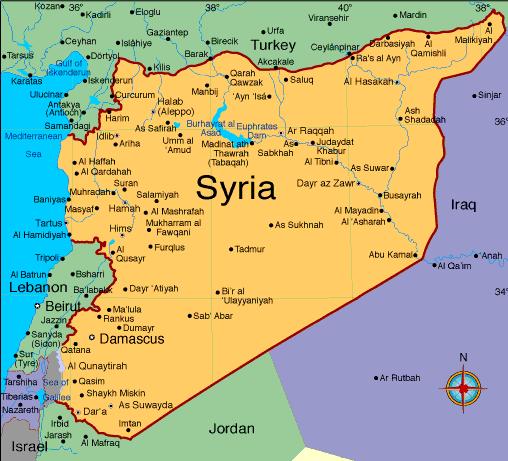
There is news regarding Syria every day and the big question is whether the US will attack or not.  On Rosh Hashana I thought, the articles I've been scanning speak about those for and against a military response, but there is no united feeling here about what should be done.  I figured, that's because the decision about Syria will be made on Rosh Hashana.

Now it's a few days after Rosh Hashana, and there is still no clear direction.  Maybe it is because the decision in the Heavenly court was not finalized and matters are pending during the Aseres Yimei Teshuva.  I think about how the "little people" like the president of the US and other world leaders think they are making history with their decisions.  In reality, they are carrying out G-d's plan for the world which is the Geula. 

And since all world events are about us, as the Gemara says, a ship does not sink at the other end of the world except for the Jewish people, maybe that is why the decision is pending.  I don't know whether we should attack or not, but Teshuva, Tefilla, and Tzedaka will avert the evil in any decrees.

Jul 29, 2013

Acting on our Faith


Every Wednesday, there is a circular from my frum supermarket with the week's specials.  I often find myself planning my Shabbos meals around the sale items.  Eggplant is on sale? So let's have eggplant salad.  Fresh mushrooms and grape tomatoes are on sale? So let's have the salad that calls for those ingredients.  Napoleon is on sale in the bakery department, let's buy that for Shabbos.

I feel bad about it because I believe the Gemara that says that the amount of money we are designated on Rosh Hashana for the year, does not include Shabbos and Yom Tov expenses.  So why should items on sale have any bearing on the Shabbos menu? Then again, just because our Shabbos expenses are not taken off our annual monetary allotment, doesn't mean people have the actual money to lay out for full-price food items.  True, we will be repaid for our Shabbos expenses, but right now, I might not want to use up my available cash.

I had a conversation with someone who said, there is no way they are going to pay $12 a pound for flanken, it's too expensive! Their alternative was to use another, cheaper type of meat.  All I said was there are often sales on the meat that goes into chulent which they can look out for.  What I thought, but didn't say, was - if you believe the Chazal about repayment for Shabbos expenses, what difference does it make if it's $12 a pound or half that?

It might be a good idea to occasionally buy something expensive at the full price just to demonstrate our belief that we will be repaid for Shabbos expenditures.  Otherwise, do we genuinely believe or not?

Sep 3, 2012

No Inevitability


The Gemara says that we read the curses in Parshas Ki Savo before Rosh Hashana so that, “tichleh shana v’kililoseha” (may the year and its curses end).  Rabbi Breitowitz points out an astonishing concept:

It seems to us that the reason things are a certain way today, is because that is how they were yesterday and the day before and things don’t tend to change.  We are in a routine and our life is set up a certain way. We need to know that even if that is true as a rule, there is no connection between the last day in Elul and the first day of Tishrei. Whatever the decree is for the last day of Elul was decreed last Rosh Hashana, and whatever happens in Tishrei is rooted in the new year’s decrees! However, if things remain the same maybe it’s because we didn’t change.

The idea of there being a fundamental disconnection between the old year and new year can be reassuring or frightening, depending on how last year went. If it was a bad year, you can come to Rosh Hashana with thoughts of a fresh start, that if things were bad last year that doesn’t mean it will be that way this year. It gives us hope. But if things went well last year, on Rosh Hashana you can think – this may not continue!

To take Rosh Hashana seriously means that you realize a change and new decrees are taking place based on new considerations and this point is driven home by Chazal with “tichleh shana …” There is no inevitability of the curses of the previous year.  May we be inspired to make it a good new year.