Showing posts with label thought. Show all posts

Mar 28, 2017

We Do Have Choices

In a talk, Rivka Malka Perlman told about a young man whom her brother (Benzion Klatzko) is trying to be mekarev.

The person is tough and bitter and her brother asked him what's your story?

He said, when I was younger I was okay, but then my mother got sick and passed away. I was very lonely and having a very hard time in school, and I ended up connecting with not the greatest kids.
One day, the boys threw a rock at someone's car and the alarm went off. The owner came out screaming but the other boys ran off and I was blamed for it. The man said I'm calling your father and the police. The police came and took a report. My father came and took me home and was very disappointed with me.

I was punished and I didn't know what to think. I had gone from being an average person to a horrible person. I left school and did horrible things.

***
One day he was at a pizza shop and a nice man came over and spoke to him. He began casually meeting him, and he gradually spent more time with the man and began to trust him. The man recommended a summer camp for him. He was excited to go and the man said he would take care of the money and speak to the boy's father.

He hadn't been in a Jewish environment for so long but this seemed like a chance to start over.
His father gave permission and camp was a fresh start and he was reminded that he's actually a nice guy, and he started to have fun again and to heal from his mother's passing.

He came back from camp a new person.

The guys back home saw that he was different. They invited him to a barbecue and he was nervous about attending because he hadn't had friends back home in a long time. He decided to give it a try. He wanted to be the kid he was in camp, but it was hard to do that at home.

The barbecue was wonderful and he felt so grateful that the good times could last. He went inside to the kitchen for more drinks and saw, to his dismay, that the host was the owner of the car that had been hit by a rock. The man yelled, I remember you, I don't forget kids like you, you think you can come to my house and be part of a barbecue here, what are you doing on my property? Get out of here, you don't belong here!

"That was the end for me. I joined a gang and that's me today."

***
I heard this story and thought, it is so important to teach children about free choice, that Hashem makes things happen to us, but we get to choose how to respond. We are not compelled to react one way or another.

Losing his mother and feeling lonely, made him friendly with fringe kids. Being yelled at, apparently wrongly, made him decide he's bad. Going to camp and having a good experience, made him feel he's good. Being yelled at again, made him feel turned off from everything and everyone. He behaved like a marionette - when his "strings were pulled," he moved in that direction.

One can imagine someone else in similar circumstances responding differently. It's not like this young man had to respond as he did, though he may have felt that there was no other way. It is this that I think we must convey, that we do have choices in our responses, that the way we respond is not a given.

As I read in a book about happiness long ago about a former prisoner of the Soviet gulag who spent 12 yrs. in concentration camps, starved, beaten, humiliated, who lost two fingers to frostbite who said, "Victim! I am not a victim! I survived!"

Many people can’t do this. They carry their hurt forever. They begin to define themselves as their pain.

Life hurts but you can’t allow yourself to get wrapped up in this hurt, constantly reliving it, fearing the future and grieving the past. That’s victimization.

Other people can hurt you but only you can victimize yourself.

Feb 23, 2016

Thinking about Thoughts

Someone brought the following question to my attention:

Where is the first time that we see thoughts associated with the brain or head?

We are so used to thinking of thoughts originating in the mind that we don't give it a second thought (ha), but in Tanach, thought is not associated with the brain but with the heart.  In this week's parsha, the term "chacham lev" is used.  The famous work, the Chovos Ha'Levavos is not about obligatory feelings but about what we should be thinking about!

What about in the secular world - when did thoughts become associated with the brain?


Dec 27, 2015

Our Thoughts Create Our Feelings

There was a "Lifelines" article in a recent Mishpacha magazine about a kalla, aged 30, whose wedding was scheduled for the blizzard-that-never-happened a year ago in New York.  The kalla writes about how miserable she was about the weather forecast, about her grandmother crying nonstop, how people told them to postpone the wedding by two days, and how the rav said no, you get married with a minyan if that's all you've got, and you don't postpone a wedding because of the weather.

The kalla, who was finally getting married after years of shidduchim, even expressed the thought that the situation with the forecasted blizzard was harder, in a way, to deal with than her years of singlehood.  It was at that point that she really lost me.  I can sympathize with someone whose planned-for event is ruined, or looks like it will be ruined, but when she makes that comparison and explains how it was harder (which didn't make much sense to me), I'm not impressed.

Interestingly, she writes that her chasan didn't care one way or the other.  If the wedding would be with a minyan of people, that didn't bother him.

Which goes to show that this, and many other events in life, are not objectively bad or good.  If the kalla and her grandmother would have had the same attitude as the chasan, they wouldn't have suffered.  The suffering was caused by their "awfulizing" the hall's cancellation of the wedding if there would be a blizzard. 

And the end of the story was, the forecasters were wrong (as they often are, no matter how authoritative they sounds) and the amount of snow that fell was nowhere close to what they predicted and the hall was open.

Dec 25, 2015

Thought Beaming


I began learning with a new Partner in Torah.  We discussed Shabbos observance, and how one can keep Shabbos 100% even when not in walking distance of a shul.

This was on my mind after we spoke, and I thought of asking whether there is a light in their fridge.  I figured that's a simple thing to suggest, that the light be shut off for Shabbos, and maybe other lights in the house could be either on or off for Shabbos.  I considered emailing this, but I suppose I preferred bringing it up in conversation.

The next time we spoke, at the end of the conversation I said, I have a strange question to ask you.  Do you have a light in your fridge? I assumed I would have to explain about why it's important to unscrew the bulb or tape the switch so the light won't go on every time the fridge door is opened.

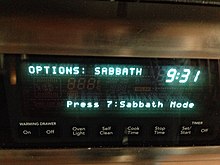
Before I could launch into an explanation, do you know what the answer was? Oh, yes, I noticed there is a "Sabbath mode" and we tried to set it before Shabbos but there wasn't enough time so we just taped it.

Wow! Were my thoughts that potent? There are Torah sources about the power of thought but I can't say I've experienced it as directly as this.