Jan 31, 2016

Different Approaches to Emuna

In a shiur by R' Doniel Katz, he says:

"Emuna is feeling Hashem as a reality and this informs my actions, it's stronger than my fear or ego.

It's not dependent on how much Torah you learn or how many mitzvos you keep.

An ignoramus can, in certain situations, deeply connect to G-d.

Emuna is not something taught; it has to be revealed.

It is not something external but something inherent within us that needs to be awakened. It wells up in us like sap in a tree.

It says Mordechai was 'omein es Hadasa,' the word for raising her is omein. Emuna is something developed, nurtured, drawn out."

All this made me think of those who are working on "teaching emuna" with proofs that G-d exists and the divinity of Torah.

We are "maaminim bnei maaminim" - believers, children of believers.  That needs to be the acknowledged starting point.

Jan 25, 2016

A Modest Proposal

A few weeks ago there was an article and a follow-up letter in Mishpacha by a kollel wife in which she explains how she supports her husband's learning.  Among the details, she writes that she pays for full-time childcare since she is out of the house ten hours a day.  Without skipping a beat she goes on to write about other expenses and how she manages.

One second! Ten hours a day out of the house?

How long are her children awake and what part of that time is spent with their mother? She's not talking about school aged children who are not with their mothers because they are old enough to attend school for many hours of the day.

There are frum couples who are don't have children of their own, and even those who do, who would love to adopt and raise Jewish, healthy children not their own.  Perhaps this couple, and all those who live a similar lifestyle, should consider giving their children to a woman who will actually mother them, to someone who is not a paid employee (as wonderful and loving as those employees might be).  A formal adoption will free the birth parents from the expenses and difficulties in raising their children and will enable the woman to work and the husband to learn in peace, while providing their children with a normal home.

Jan 24, 2016

A Parent's Influence

In a passionate talk given by R' Meisels, he tells the story of someone who contacted him to learn with him.  By now, this man he calls Barry, has learned through half of Shas, puts on tefillin daily, keeps Shabbos most of the time and kosher most of the time.

R' Meisels believes that to become frum nowadays is so outlandish that it can only happen with zechus avos and he usually finds out what it is.

In this case, this successful attorney Barry told him what happened.  He was raised by communist-atheist parents who observed nothing, not Yom Kippur, not a Pesach seder.  When he went to college, he met a girl he liked.  When he told his parents about her, his mother said, that's not a Jewish name!Barry said, she isn't Jewish.

His mother said, you're not marrying a shiksa! He said, what's that? She explained and he said, who cares? We don't do anything Jewish anyway.  His mother insisted it was out of the question.  He thought she'd come around and he married the girl.  His father attended the wedding and his mother did not.

He thought she'd come around when he produced grandchildren.  When he had his first, he sent a picture of her to his mother.  What grandma wouldn't melt? She sent it back to him torn up.

She did not answer the phone in her house.  It was the days before caller ID and she did not want to pick up if her son called.  He only spoke to her husband.

There was a simcha which they both attended and he heard someone say to his mother, "Marilyn, Barry is here!" She said, "He had better not say hello!"

They resumed contact when he divorced his wife twenty years later.

And this, R' Meisels thinks, is what made an impact on Barry so now he is taking an interest in Judaism.

I wonder what would have happened if the father would have been united with the mother on this and also did not attend the wedding and refused to speak to his son.  Would Barry have married the girl? Would he have divorced sooner?

Jan 19, 2016

Self-Contradictory Views

I've noticed the following.  People want it both ways.  They will say that children grow up just the same whether they have a stay-at-home mother or are babysat.  The very same people will say that the mother or grandmother are best for the baby.

So which is it?

They seem to realize that under normal conditions, the mother or close relative are best for the baby.  At the same time, they don't want to concede that children at babysitters are at a disadvantage!

In psychology, cognitive dissonance is "the mental stress or discomfort experienced by an individual who holds two or more contradictory beliefs, ideas, or values at the same time, performs an action that is contradictory to one or more beliefs, ideas or values, or is confronted by new information that conflicts with existing beliefs, ideas, or values."  But they don't see they are espousing contradictory views!

Jan 18, 2016

You Deserve It!

Three ads in frum publications:

"Every patient deserves a masterpiece" - cosmetic dentistry to improve your smile

"Because you deserve it" - a wig

"Every girl deserves a shadchan who cares" - shadchanim for girls ages 23-30

***
Each of these ads rubs me wrong, even the shadchan ad.


Jan 17, 2016

It's Just Too Hard

R' Daniel Gross spoke in Yiddish at the Keiravtuni Shabbaton.  He said he saw a bunch of guys hanging out, drop-outs.
 
One of them said, it's a pity I was born a Jew.
If I was born a goy I would have only 7 mitzvos.  Taryag mitzvos are a pressure for me, I always have a guilty conscience.
A goy gets olam haba for doing his seven.

***
So it's not the kid did not believe. He believed and wanted olam haba, but felt it was just too hard.  A friend of mine thinks this comes from "affluenza," which includes the idea that life should be easy.

R' Gross presented the issue to chassidishe bachurim, of why be a yid, what's good about it.  The best answer they could come up with was olam haba.  They viewed Torah and mitzvos as an ol (burden), and saw the point as just olam haba.

It's a great essay topic to assign 12th graders.  Describe the scene, repeat what the guy said about it being a shame he was born a Jew and why, and ask them to write their response.


Jan 12, 2016

Thoughts About Remaining Anonymous

I know there are people who feel strongly opposed to anonymous letters to the editor.  Someone recently wrote a letter to Mishpacha magazine complaining about anonymous letters containing personal opinions and criticism (as opposed to understanding unsigned letters about personal matters) letters and putting forth these reasons:

1) It is unfair to the target of the criticism
2) It is difficult to take anonymous views seriously
3) They seem to avoid charges of hypocrisy as though the authors express one view to their community and another, anonymous view to the public
4) Anonymous rebukes and criticism lack authority and sincerity and are of little value.

Are you convinced? I am not. 

1) Why is it unfair? Is the criticism valid or not? Why does a name attached to it affect its validity?
2) Why is it difficult? You are welcome to skip those letters but again, if the content has validity what difference does it make?
3) And let's say the author has a view for the community and a public view, how does that affect you the reader?
4) If you think those letters are worthless, don't read them! As for me, I think, “kabel es haemes mimi sheomro” (Rambam, intro to Shmone Perakim) - accept the truth from the one who says it.

In short, I do not see the logical imperative in the declaration: unsigned letters have little value.  And anyone can make up a name so the letter looks signed. This complainer would reject all letters signed by people with common names: Schwartz, Cohen, Goldberg, even if those are truly their names!

As for me, my letters to the editor are usually, but not always signed.  This blog is not signed!

Dec 30, 2015

More on Judging

In a letter to Mishpacha magazine, a person writes the following about young people who are off the derech:

"It is important for each one of us that encounters or has a connection to these children that we do not become judgmental or look down at their current way of life."

Why - is a life off the derech equivalent to a life on the derech?

" ... Each one of them has a story that reads: 'My Rebbi looked down at me and didn't want me in shiur.  My parents wouldn't allow me to sit at the Shabbos table as they thought I was a bad influence.  The people in shul stare at me with my long hair and non-Shabbosdig clothing.'"

And these individuals never stare at something unusual? Would they visit the White House wearing jeans and a T-shirt or would they dress for the occasion? Why then do they attend shul with long hair and non-Shabbosdig clothing? Is it a test they've devised - let's see how rude we can be and see if people will react or not?

"I am in no way an expert to understand the psychological issues and needs of off the derech children.  I do know, however, that we need to support, accept, and welcome all these children that are labeled off the derech and are searching for a way to be accepted back in.

" ... If we want these children to be chozer b'teshuva, we need to stop being judgmental and open our hearts and our minds to them."

Welcoming, yes.  But I hope it's clear to them that we think the derech of Torah and mitzvos are superior and the only true way.  If that's being judgmental, and of course it is, so be it.

Dec 29, 2015

Judging Well

Hamodia's Inyan magazine had an article about a judge, a Chief Judge of Oregon's Court of Appeals, to be exact. 
 
In a sidebar there were the judge's, "Principles that Should Guide Us All" which included the following:
 
"We are all judges ... We all act as judges, observing, evaluating, and responding to our fellow man's acts and words, assessing his or her motivations.  Our challenge, and our charge, is to live each judiciously in the best sense, with integrity, humility, insight and compassion."
 
How refreshing to hear the truth for a change.  We all are judges.  We all act as judges. 
 
see previous posts about judging here


Dec 28, 2015

My Children, Myself

In Zecharia 3:7, the angel says to Yehoshua the High Priest, "So says Hashem, if you go in My path ..."

The commentary Metzudas Dovid says this means, "If your children go in My path, and he [the angel] said it about him [Yehoshua] because a person's children are considered like himself."

Over the years, in numerous articles, I've seen how parents separate themselves from their children.  This is in the sad situations in which the child is not going in the ways of their parents and the parents agonize over this.  One way they have of dealing with it is to say things like: children are entrusted to us but they are not ours, we do the best we can and they have free choice, we can teach them and show them but ultimately the decision is theirs in how to live their lives. 

These lines are true but when the parent adds a "disconnect" to their perspective, this flies in the face of how we were created.  As Metzudas Dovid writes, our children are like ourselves.  This is why it is so devastating when they don't carry on our ways.  With a disconnect we don't feel as invested and we don't try as hard. 

To deny that our children are like ourselves might temporarily make someone feel better, but since it is not the reality, it is a false assurance.

May all parents derive yiddishe nachas from all their children.

Dec 27, 2015

Our Thoughts Create Our Feelings

There was a "Lifelines" article in a recent Mishpacha magazine about a kalla, aged 30, whose wedding was scheduled for the blizzard-that-never-happened a year ago in New York.  The kalla writes about how miserable she was about the weather forecast, about her grandmother crying nonstop, how people told them to postpone the wedding by two days, and how the rav said no, you get married with a minyan if that's all you've got, and you don't postpone a wedding because of the weather.

The kalla, who was finally getting married after years of shidduchim, even expressed the thought that the situation with the forecasted blizzard was harder, in a way, to deal with than her years of singlehood.  It was at that point that she really lost me.  I can sympathize with someone whose planned-for event is ruined, or looks like it will be ruined, but when she makes that comparison and explains how it was harder (which didn't make much sense to me), I'm not impressed.

Interestingly, she writes that her chasan didn't care one way or the other.  If the wedding would be with a minyan of people, that didn't bother him.

Which goes to show that this, and many other events in life, are not objectively bad or good.  If the kalla and her grandmother would have had the same attitude as the chasan, they wouldn't have suffered.  The suffering was caused by their "awfulizing" the hall's cancellation of the wedding if there would be a blizzard. 

And the end of the story was, the forecasters were wrong (as they often are, no matter how authoritative they sounds) and the amount of snow that fell was nowhere close to what they predicted and the hall was open.

Dec 25, 2015

Thought Beaming


I began learning with a new Partner in Torah.  We discussed Shabbos observance, and how one can keep Shabbos 100% even when not in walking distance of a shul.

This was on my mind after we spoke, and I thought of asking whether there is a light in their fridge.  I figured that's a simple thing to suggest, that the light be shut off for Shabbos, and maybe other lights in the house could be either on or off for Shabbos.  I considered emailing this, but I suppose I preferred bringing it up in conversation.

The next time we spoke, at the end of the conversation I said, I have a strange question to ask you.  Do you have a light in your fridge? I assumed I would have to explain about why it's important to unscrew the bulb or tape the switch so the light won't go on every time the fridge door is opened.

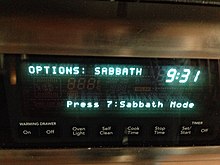
Before I could launch into an explanation, do you know what the answer was? Oh, yes, I noticed there is a "Sabbath mode" and we tried to set it before Shabbos but there wasn't enough time so we just taped it.

Wow! Were my thoughts that potent? There are Torah sources about the power of thought but I can't say I've experienced it as directly as this.

Dec 14, 2015

It's Not Over Yet!

Today (the 8th day of Chanuka) someone said, Chanuka is over.

I said, it isn't over yet!

The person insisted it was.  Proof? Are you having any Chanuka party today, I was asked.

I said, what difference does that make? It's still Chanuka!

The person said, but there is no menorah lighting tonight.  I asked, do you say on Shabbos day that it is no longer Shabbos because at night it won't be Shabbos anymore?

Was I really having this conversation?!

I said, today is Chanuka! I said "V'Al Ha'Nissim" twice this morning.  The person said, yeah, but that's all.

I said, I will be saying V'Al Ha'Nissim again in mincha! It is Chanuka until 4:29!

Not only that, but it's Zos Chanuka which we are told has special significance and is the chasima of the din of the Yomim Noraim.

Another person commented that a speaker said the Chanuka parties are bittul Torah.  Oh really? I said.  Killjoy.  Chashuve Roshei Yeshiva, Admorim, and rabbonim take part in Chanuka parties, so apparently this is a good use of the time. 

These days are yimei simcha v'hallel says the Rambam and some Rishonim hold that we are obligated to eat a seuda, while others hold that there is no obligation. The Rema in Hilchos Chanuka writes that if zemiros and shvachos (songs and praise) are said at a Chanuka seuda (party) it becomes a seudas mitzva (without this, it only has in it "katzas mitzvah" according to the Rema).

Why we have people who want to reduce the simcha in Klal Yisrael, I don't know.  Considering the numerous articles about depression and anxiety in our midst, I would expect us to be eager to partake in as many yiddishe simcha opportunities we can get.

Dec 11, 2015

Chanuka Musings part 2

continued from previous post
 
So I thought about it a lot on Shabbos, the day before erev Chanuka, and concluded as follows.  When we say V'Al Ha'Nissim, the section ends with the words, "and they established these eight days of Chanuka to thank and praise Your great name."
 
There are many themes to Chanuka, many important ideas, but the reason we have this yom tov is "to thank and praise" Hashem.
 
So I decided that I must focus directly on thanking and praising Hashem.  How would I go about it?
 
I wrote about gratitude here and here.  Over Chanuka I've been reviewing my list, adding some more, keeping my focus on gratitude.  As for praise, I've been paying special attention to the pesukei d'zimra, which are all about praise of Hashem, particularly Ashrei.  There is a book in English which explains Ashrei according Malbim's explanation and at the end of the book it summarizes it all.  I've been looking at the summary when I daven Ashrei in the morning.
 
So far, so good.

Dec 7, 2015

Chanuka Musings

 
The same thing happens with every yom tov.
I read about the yom tov. I listen to shiurim about the yom tov.
And then there's the yom tov and I don't feel cheirus on Pesach or extra joy on Purim.
 
Chanuka - I plan and make special Chanuka foods, we light the menorah, and often get together with family members. And the days of Chanuka pass and it's nothing special except for the actual lighting.  I can list dozens of themes and ideas about Chanuka but this does not go past the brain and into my heart so that I feel the yom tov. 
 
Sad to say, the menorah lighting itself can be a "pain" because of the timing, having to get home to light so it breaks up a gathering earlier in the day, it keeps us looking at the clock because we have to get home, or keeps us at home and we can't leave until we're finished sitting with the lights, which is pathetic because if the lighting is a pain then I've really missed the boat!
 
Chanuka is certainly more exciting with young children around because you take enjoyment from their excitement, but that can't be what Chanuka hinges upon.
 
So, my thinking went this year, if I keep on doing the same thing every year (read-listen-cook-visit-host) I can expect the same results.  What should I do differently?
 
to be continued