An 11 year old commented that she is not looking forward to being bas mitzva because then she will have the ol mitzvos (yoke-responsibility of mitzvos). And she is not looking forward to age 20 because then she will be chayav b'dinei shomayim (obligated by heavenly judgement).
This was presented as something quite negative, that there is no joy in her observance of Yiddishkeit. I countered with - she sounds mature, like a yirei shomayim, not someone fixated on her bas mitzva party and presents.
True, she should be told that Yiddishkeit is about serving Hashem with joy, and this should be emphasized in various ways, with halacha and stories. But how wonderful it is to hear that a child that age takes mitzva observance seriously.
The other extreme is a focus entirely on Hashem loves us no matter what. Although that is true, it seems to be producing people who think they can dress as they please, go where they want, and do what they want, because regardless of their actions, Hashem loves them.
We need to meet in the middle and teach both yiras shomayim which includes yiras cheit, and simcha shel mitzva.
Showing posts with label simcha. Show all posts
Showing posts with label simcha. Show all posts
Feb 15, 2017


Apr 19, 2016
Pesach: I am Grateful for ...
The following is based
on an article by SC Radcliffe with some of her ideas and some of mine as applied to Pesach. Feel free to adjust the list to reflect your circumstances and add yours in the Comments.
I am
grateful for the opportunity to do mitzvos.
I
am grateful for having people to make Pesach for.
I
am grateful for the numerous shiurim about Pesach available online.I am grateful for all the reading material about Pesach.
I
am grateful for cleaning help.
I
am grateful for the help I get shopping, setting up before Pesach, and
dismantling after Pesach.
I am grateful that we've done this before and have our routine in setting up for Pesach so we are not first figuring it out.
I am grateful that we've done this before and have our routine in setting up for Pesach so we are not first figuring it out.
I
am grateful we are healthy enough to make our own Pesach.
I
am grateful to be Jewish and to have this Yom Tov.
I
am grateful to be alive, safe, and free to make Pesach.
I
am grateful about how it fell out, i.e. the days of the week.
I
am grateful that we have guests.
I
am grateful that I have siblings and that we siblings live near one
another and get to see one another over Pesach.
Mar 28, 2016
Attitudes Toward Simchas
Time and again we read and hear (or at least I do) that it's our perspective and not the external event that makes a difference.
I find it interesting that when it comes to attending weddings and other simchas, I have heard:
1) moans and groans about attending, attending seen as a chore, an obligation
and
2) someone recently say what a lift they get from attending a simcha.
When I heard the latter it made me think, wow, what a different perspective. It pulls down the one and raises up the other.
Then there are those who survived the Holocaust or are closely related or identified with that tragic era who see every Jewish simcha as something extraordinary and a major celebration.
It is a blessing to see a simcha through simcha-eyes!
I myself have felt both 1 and 2 but then again, as I once heard in a talk, when we hear about a simcha, our natural tendency is to focus on ourselves (what will I wear, etc.) when it really should be about them and sharing in the simcha and being happy for the other.
I find it interesting that when it comes to attending weddings and other simchas, I have heard:
1) moans and groans about attending, attending seen as a chore, an obligation
and
2) someone recently say what a lift they get from attending a simcha.
When I heard the latter it made me think, wow, what a different perspective. It pulls down the one and raises up the other.
Then there are those who survived the Holocaust or are closely related or identified with that tragic era who see every Jewish simcha as something extraordinary and a major celebration.
It is a blessing to see a simcha through simcha-eyes!
I myself have felt both 1 and 2 but then again, as I once heard in a talk, when we hear about a simcha, our natural tendency is to focus on ourselves (what will I wear, etc.) when it really should be about them and sharing in the simcha and being happy for the other.
Dec 14, 2015
It's Not Over Yet!
Today (the 8th day of Chanuka) someone said, Chanuka is over.
I said, it isn't over yet!
The person insisted it was. Proof? Are you having any Chanuka party today, I was asked.
I said, what difference does that make? It's still Chanuka!
The person said, but there is no menorah lighting tonight. I asked, do you say on Shabbos day that it is no longer Shabbos because at night it won't be Shabbos anymore?
Was I really having this conversation?!
I said, today is Chanuka! I said "V'Al Ha'Nissim" twice this morning. The person said, yeah, but that's all.
I said, I will be saying V'Al Ha'Nissim again in mincha! It is Chanuka until 4:29!
Not only that, but it's Zos Chanuka which we are told has special significance and is the chasima of the din of the Yomim Noraim.
Another person commented that a speaker said the Chanuka parties are bittul Torah. Oh really? I said. Killjoy. Chashuve Roshei Yeshiva, Admorim, and rabbonim take part in Chanuka parties, so apparently this is a good use of the time.
These days are yimei simcha v'hallel says the Rambam and some Rishonim hold that we are obligated to eat a seuda, while others hold that there is no obligation. The Rema in Hilchos Chanuka writes that if zemiros and shvachos (songs and praise) are said at a Chanuka seuda (party) it becomes a seudas mitzva (without this, it only has in it "katzas mitzvah" according to the Rema).
Why we have people who want to reduce the simcha in Klal Yisrael, I don't know. Considering the numerous articles about depression and anxiety in our midst, I would expect us to be eager to partake in as many yiddishe simcha opportunities we can get.
I said, it isn't over yet!
The person insisted it was. Proof? Are you having any Chanuka party today, I was asked.
I said, what difference does that make? It's still Chanuka!
The person said, but there is no menorah lighting tonight. I asked, do you say on Shabbos day that it is no longer Shabbos because at night it won't be Shabbos anymore?
Was I really having this conversation?!
I said, today is Chanuka! I said "V'Al Ha'Nissim" twice this morning. The person said, yeah, but that's all.
I said, I will be saying V'Al Ha'Nissim again in mincha! It is Chanuka until 4:29!
Not only that, but it's Zos Chanuka which we are told has special significance and is the chasima of the din of the Yomim Noraim.
Another person commented that a speaker said the Chanuka parties are bittul Torah. Oh really? I said. Killjoy. Chashuve Roshei Yeshiva, Admorim, and rabbonim take part in Chanuka parties, so apparently this is a good use of the time.
These days are yimei simcha v'hallel says the Rambam and some Rishonim hold that we are obligated to eat a seuda, while others hold that there is no obligation. The Rema in Hilchos Chanuka writes that if zemiros and shvachos (songs and praise) are said at a Chanuka seuda (party) it becomes a seudas mitzva (without this, it only has in it "katzas mitzvah" according to the Rema).
Why we have people who want to reduce the simcha in Klal Yisrael, I don't know. Considering the numerous articles about depression and anxiety in our midst, I would expect us to be eager to partake in as many yiddishe simcha opportunities we can get.
May 3, 2015
Feeling Content
A 9th grade class of frum girls was asked to complete the sentence: "I am happy when ..."
Here are some of the answers:
I am not worried about anything.
I am in the company of people I enjoy.
I find something that was missing.
I do a job well.
I overcome a challenge.
I am able to help someone.
I do something satisfyingly creative.
I do something meaningful.
What is the difference between happiness and contentment? One writer (B Myndi) posits that happiness is a single state of pleasure, a momentary feeling which is dependent on externals. An example would be, getting a phone call with exciting mazal tov news or finding just the thing we need when shopping or getting a compliment. The joy wears off after a while
While contentment is a long-term state of being that comes from our attitudes and values, not from something outside of us. It's about acceptance and finding the good in what exists right now. Babies are great at this.
R' Zushe of Anipoli said you can learn three things from a baby:
1) always be busy
2) when you need something, cry out for it
3) when your needs are satisfied, be content
Here are some of the answers:
I am not worried about anything.
I am in the company of people I enjoy.
I find something that was missing.
I do a job well.
I overcome a challenge.
I am able to help someone.
I do something satisfyingly creative.
I do something meaningful.
What is the difference between happiness and contentment? One writer (B Myndi) posits that happiness is a single state of pleasure, a momentary feeling which is dependent on externals. An example would be, getting a phone call with exciting mazal tov news or finding just the thing we need when shopping or getting a compliment. The joy wears off after a while
While contentment is a long-term state of being that comes from our attitudes and values, not from something outside of us. It's about acceptance and finding the good in what exists right now. Babies are great at this.
R' Zushe of Anipoli said you can learn three things from a baby:
1) always be busy
2) when you need something, cry out for it
3) when your needs are satisfied, be content
Jan 19, 2015
Disciplined Thinking
Someone presented the following situation. She had married off her first child and due to an oversight, they had not given a bracha to an uncle.
After the chuppa, her mother told her that the uncle was upset and he and his wife were leaving. Of course, the baalas simcha was mortified to hear about this and she apologized and begged the uncle to stay. Naturally, this shterred (disturbed) the simcha.
Her question was, what should she have done? *
The answer given by the speaker was, the Satan intervenes at holy and special times and we cannot allow it. What she should have done was determined that she was not going to deal with this situation at the wedding; she would deal with it the next day. The wedding is a time for simcha and gratitude!
I liked this answer because it did not dismiss the situation. Rather, it gave it its due but at the right time, tomorrow, not today. We often get caught up in the issue of the moment, feeling outraged/sorry/defensive etc. but we need the discipline to assign the matter its due time. Shabbos, for example, is not the time. A simcha is not the time.
An added bonus, and no small thing, is that by dealing with it later, we will be able to approach it much more calmly and handle it better than in the moment.
* Obviously, I am appalled that someone 1) would be so zealous about his honor and would 2) shter someone's simcha over it, but what the uncle should have done is not the question here.
After the chuppa, her mother told her that the uncle was upset and he and his wife were leaving. Of course, the baalas simcha was mortified to hear about this and she apologized and begged the uncle to stay. Naturally, this shterred (disturbed) the simcha.
Her question was, what should she have done? *
The answer given by the speaker was, the Satan intervenes at holy and special times and we cannot allow it. What she should have done was determined that she was not going to deal with this situation at the wedding; she would deal with it the next day. The wedding is a time for simcha and gratitude!
I liked this answer because it did not dismiss the situation. Rather, it gave it its due but at the right time, tomorrow, not today. We often get caught up in the issue of the moment, feeling outraged/sorry/defensive etc. but we need the discipline to assign the matter its due time. Shabbos, for example, is not the time. A simcha is not the time.
An added bonus, and no small thing, is that by dealing with it later, we will be able to approach it much more calmly and handle it better than in the moment.
* Obviously, I am appalled that someone 1) would be so zealous about his honor and would 2) shter someone's simcha over it, but what the uncle should have done is not the question here.
Sep 29, 2014
"180 Rechov Yaffo"

R' Cohen, the father of 19 children, personifies simcha and bitachon and has incredible siyata dishmaya. The stories told about his ruach ha'kodesh and advice are remarkable. He is not a rebbe but people (including women) line up twice a week, when he has visiting hours, to speak to him and receive brachos and advice. There is no charge. The title of the book is the address of his office. He is very warm and strikes up friendships with all kinds of people.
Apr 9, 2014
Keeping it Simple
As I once heard someone say, never travel first class unless you will always travel first class!
Why? Because it is so marvelous in first class, that going back to no-frills class will be especially miserable.R' Orloweck, in a talk about achieving peace of mind, referred to a "pleasure meter." If a person hits a 10 with a gourmet meal served on fine china, while another person is happy with toast, butter and hot cocoa, who is more fortunate? The second fellow, because he is much more likely to experience lots of pleasure in life.
We, frum society, have been upping the standards. Day camp activities used to be dodge ball, swimming, and popsicle sticks arts-and-crafts. These days, the camping experience is so much more sophisticated. Little children, who would be happy with simple activities, are introduced to fancy projects so that they can't go back to simple. That would be boring.
The reason may be competition for campers but the campers end up losing out because they don't learn the pleasures or the reality of plain and normal. Like the kids who get ices (or fill in the blank) on a regular weekday and are not trained that special treats are for Shabbos.
In an article by Miriam Gitlin about pashtus-living a simple life, being satisfied with basics without needing more, she told about a chinuch dilemma she had. She had never given her children ices. Then, one year, they started bringing them home from school parties and other occasions. They asked if she would buy them. She wasn't sure. She liked the idea of making them happy but something bothered her about it.
When she discussed it with her husband, he verbalized what she was thinking. Buying the ices wouldn't make the children happier in the long run. It would make them unhappier. Why? Because it would turn into something her children needed, and when they didn't have it, they would feel they were missing out.
But maybe not. Maybe her kids would get tired of them.
She adds the point that kids need to fit in and can't be made to feel inferior to their peers, so instilling your values has to be done with a degree of caution and good sense.
Even striving for simplicity isn't simple.
Dec 19, 2013
Socialist Chesed

In one of Mishpacha's Succos supplements, there was a piece about cost price catering in Gateshead, England. A team of ladies does all the catering for local weddings and it can be as elegant or as simple as you are willing to pay for.
I don't get it.
This chesed began 30 years ago when there were two caterers in the community who made a living (i.e. their service was not at cost price) from catering simchas. A doctor in the community asked two women if they would be willing to arrange cost-price simchas to provide an option people could afford. Once this became standard for every couple getting married in Gateshead, naturally the caterers went out of business.
So regardless as to what you can afford, you get a cost-price wedding catered by six ladies out of a list of volunteers. Why would they want to cook for someone who can afford to pay for a caterer? I don't know. Why was it a good thing that caterers were put out of business? I don't know. Why is this done for everyone, no matter the need? Someone suggested it's because England is a socialist country so this is the mentality.
Toward the end of the article it says the waiters and waitresses respect the frum lifestyle but they can't always understand it. One of these non-Jewish waitresses couldn't believe that no money is made off of catering these weddings because "as far as she's concerned, if people can't afford it, why are they having 300 guests at their wedding?" Uh, right.
If weddings had fewer guests eating at the meal, we could bring the caterers back because weddings would be affordable. The caterers would make a living, the volunteers could turn their attention elsewhere, and even the gentile waitress would see that Jews know to pay for what they can afford.
Mar 17, 2013
The Power of a Baal Simcha
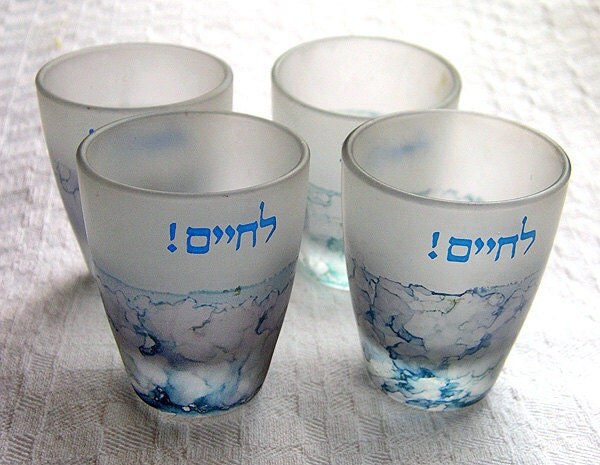
I read the following:
Why is a person who makes a simcha called a "baal simcha" - literally, a master of happiness? Because when a person marries off a child or gets married himself or any other happy occasions, he is a master of happiness and this is why he has a tremendous power at the time of his simcha to bestow blessings on others (quoted in the name of the Chozeh of Lublin).
We have proof from the Torah - when Serach the daughter of Asher told Yaakov the news that Yosef is alive, Yaakov, in his tremendous simcha, blessed her that she should live forever. She lived for hundreds of years and midrashim say she is still alive in Gan Eden.
When BasSheva was given the news that her son Shlomo would succeed Dovid as king and build the Beis Ha'Mikdash, she exclaimed, "Yechi Dovid Ha'Melech l'olam," and till this day we sing "Dovid Melech Yisrael chai v'kayam."
Says the Sefer Taamei Ha'Minhagim: Take advantage of your special powers as a baal simcha and bless everyone!
Jul 24, 2012
A Study in Contrasts

R' Benzion Shafier tells of going to visit his friend, Rabbi Simes (in picture), who became a quadraplegic as a result of a road accident, see here. He was apprehensive, but they ended up speaking for hours. The strange part of it was, R' Simes was so genuinely happy!
R' Simes said when he first came home from the hospital, he couldn't find a trained medical aide to help him. He wondered why. After all, he wasn't the only person in this condition.
He subsequently found out the reason. His injury, a C4-C5 injury to the spinal cord, is considered such a terrible situation that people rarely leave the hospital which is why there are no trained technicians available. R' Simes explained that they don't actually need to be in the hospital. They are there because they are so angry and depressed. As for himself, he has no anger and no depression.
R' Shafier was astonished. Here's a man living through hell but he has joy and happiness because he's growing and changing, learning and teaching. At a certain point, R' Simes said he believes Hashem chose him and he thinks Hashem gave him this nisayon because he can withstand it and still grow. R' Shafier said he felt humbled. He has spoken about these concepts and wrote a book about them, that Hashem custom designs our lives for us, but here was a man who was living it and has a simchas ha'chaim!
R' Shafier contrasted this with a talk he gave at a seminary in Israel on this subject. A girl raised her hand and said, I hear what you're saying, that Hashem tailors our lives for us, but that's in theory, how do I apply this to my life when I am in so much pain? The next girl said, my life is so hard - how can I apply this to my life? Out of 60 girls in the room, it seemed like 40 had the same question.
R' Shafier looked around and saw well-dressed girls. Someone was paying thousands of dollars for their seminary education. They were not homeless. He felt he was talking to a room full of Holocaust survivors when they actually came from good homes, a land of liberty and opportunity!
He concluded that so many people today are unhappy and suffering and not healthy, functioning citizens. Although it's true we live in a time of unparalleled health, wealth and opportunity and we, as the Jewish nation, have the Torah, there is so much suffering. The addictions, divorce, pain, anxieties, obsessions - why is this happening? R' Shafier says, it's a long bitter exile. People are supposed to be joy-filled, living purposeful lives. This is rare in our days. To those who say - who needs Moshiach, the answer is, says R Shafier: look at the numbers of unhealthy people in our community which is a result of our exile.
Aug 1, 2011
The Pilot Light is Always On

I heard a nice mashal to answer this. If you remember the old gas stoves, you know that they had a pilot light inside that was always on, even if you hadn't turned on any of the fires to do some cooking. So too, our simcha always has to be there, in the background, even as we are in this more somber time. Perhaps a good modern version of this mashal would be putting your computer into a sleep state or hibernation when it's not completely off, or those programs that run in the background while you're working on something else.
So like the smiley face in the oven picture above, keep smiling!

Mar 15, 2011
A Gantz Yohr Freilich

I read that although of course we are enjoined to be happy and to serve G-d with joy all year, all the time, nevertheless, there is a month and a special day in that month that are devoted to joy. That month is Adar and the day is Purim.
This made me think - why are Mother's Day and Father's Day disparaged by many, as I'm sure you've all heard at some time or another, for the reason that we don't designate one day a year to honor and give thanks to our parents. We have the mitzva of Kibud Av V'Eim all year round.
Seems to me that just as we know that "ivdu es Hashem b'simcha" applies all year but there is a month and a day to be especially joyous, we can relate to the idea of singling out a time for parents. Of course, we have the Torah to guide us and we don't have to acknowledge a secular holiday. My point is that the reason some give to disparage it is inconsistent with what we ourselves hold about Adar and Purim.
Subscribe to:
Posts (Atom)

 Posts
Posts

