Mar 31, 2014

No Baby Showers


What I'm wondering about is the custom of not buying anything for a baby until it is born.  It seems to be regarded as inviting an ayin hara.  As someone put it, anything under the category of "counting your chickens before they hatch" is considered ayin hara-ish. 

This puzzles me because it would seem to be act of faith, that one has bitachon that all will go well, to buy things for a baby before it is born.  There is even a story (or several) about two women who asked for and received a bracha for a child and, as an act of faith in the fulfillment of the bracha, one of them bought a carriage.  She had a baby.  The lesson apparently, is that by purchasing the carriage, she was tangibly expressing her confidence in the bracha.

So why was that a good thing for her to do, while the general custom is not to do that? I understand that in one case, it's about confidence in a bracha, while in all other usual situations, a bracha is not involved.  Why doesn't the same reasoning apply?

Mar 30, 2014

Love-Timing-Details


Leiby Burnham was a guest lecturer for a retreat in Yosemite.  There were three photographers on the trip who were eagerly after the best shots at all hours of the day and night.

He learned three major life lessons from them:
 
1) When you truly love something, nothing is too difficult.
There was no task too hard for them because they LOVE photography and were willing to work 200% harder for a shot that would be only 2% better.

Lesson: Instilling love for Hashem and mitzvos is the goal.  Many of our frum society's "issues" would melt away if we were successful at this.

2) They sat down each night to strategize the next day's photo shoots.  They had only a limited amount of time and they wanted to make sure they got all the shots they needed.
 
Lesson: We only have a limited time here on Earth and need to maximize the time.

3) Many of us take pictures but these professionals were obsessed with the details.

Lesson: As Burnham put it, people often wonder, does Hashem really care about my kavana, about how I remove pits from cantaloupe on Shabbos? Isn't Yiddishkeit mainly about connecting to Hashem? Are we losing the feeling and passion in the details?
 
The truth is, Hashem does care about the details, because He wants each of us to create a masterpiece.  (And here's a point that Burnham makes so well:) Leonardo da Vinci didn't paint the Mona Lisa by just focusing on the "spirit" of the painting.  Motzart did not create masterful music by just thinking about the feeling behind the music; he meticulously worked on every single note.  L'havdil, Hashem gave us clear instructions for so many of the details because passion and love are great but mastery is in the details.

Mar 26, 2014

L'Maiseh ...


continued from previous post

I think back to some book reviews I posted here over the past six months or so, Shlomie, Joseph, The Chicken Lady.  I am so impressed by each of the people written about.  But in what way has my admiration for them translated into anything practical?

There are two approaches I think one can take.  One is the "Rabbi Akiva and water dripping on the rock" approach.  You may not see immediate results or any results, but if you keep on hearing positive, Torah messages, they have an effect.  Even if you cannot clearly see the cause and effect, like water dripping on a rock, which eventually wears it away, we too, are affected by what we hear and read.

The other approach, which responds to his second question: given limited time and energy, what is the most effective way to foster change, requires you to come up with a practical application.  Maybe, after reading or hearing something that makes you so "wow," the next step must be - okay, so now what? What can I do to emulate them?

As to whether a formula can be devised to make it more likely that a talk or article will have positive, practical effects, it is probably impossible to find out which speaker or writer has the most impact.  There are very popular speakers, they can be funny, deep, and insightful, but aside from the entertainment and educational value, who can say what moves whom to lasting change? If there are speakers out there whom we know can be credited with numerous baalei teshuva or communities that have grown spiritually, can we analyze their method? I think it often comes down to their particular personalities and siyata dishmaya; I don't know to what extent they can be copied.

Mar 25, 2014

A Momentary High?

The Chofetz Chaim zt"l

Eytan Kobre raised an interesting point in one of his Mishpacha articles.  His daughter was going to attend one of those inspirational programs with a lineup of popular speakers.  Even as she was looking forward to attending, she said she wondered whether the experience would be one in which she would go to lecture after lecture and end up by feeling inspired without any concrete results.

That's a provocative point to ponder for those who attend or listen to shiur after shiur and/or read one inspiring book and article after another.  Speaking for myself, I ooh and ahh over powerful messages, new ideas, touching stories and moving biographies, but then what?

Kobre goes on to refer to the famous episode in which the Chofetz Chaim exorcised a dybbuk from someone possessed of it, a story that his talmid, R' Elchanan Wasserman repeated annually on Purim (or parshas Zachor).  Kobre wrote that a talmid of Radin, later a rav in the Bronx, was a witness to that dybbuk incident.  Years later he said, "Do you think being present at that awesome moment had a lasting effect on me? For two weeks afterward I behaved like a malach (angel) and then, I went right back to the way I'd been before."  Pointing to the wall he said, "It had an effect on me like it had on this wall."

Likewise, Kobre wondered what effect remains two weeks after hearing an inspirational talk.  His questions are:

Do inspirational talks never help foster changes in people's lives? He says, surely that is not so.  But the question is what approach, given limited time and energy to devote to personal growth, is most likely to help one succeed?

to be continued

Mar 24, 2014

R' Meir Schuster z'l - part 2


I posted about R' Meir Schuster z"l a month ago here.  Since then, I've read a number of articles about him which only reinforce what I wrote previously. 

Dedication

Since I've written recently about little things adding up, I was struck by this point made by R' Edelstein who was executive director of R' Schuster's Heritage House for 20 years.  He said, "There are many unusual stories about this man and about the people he affected for life.  But his daily routine wasn't about the exotic.  R' Meir's greatness lay in the smallest deeds; in the consistency and daily pursuit of his cumulative acts of sensitivity and profound commitment to each neshama.  There was nothing complicated about what he did.  He just did it every moment of his life."

And that is greatness.

The Power of Will

Another point.  Some people think that to be successful in kiruv, in order to attract the unaffiliated, you need to be "cool," i.e. have a certain modern look, sound like you can relate to today's generation, and be knowledgeable about what's going on in the world.  R' Schuster was far from hip.  He dressed in a suit, hat and tie as though he was just on his way to or from yeshiva or shul.  He did not possess charisma in the conventional sense.  He had ratzon, and there is nothing that stands in the way of ratzon - will, persistence, determination.  As Rabbi Yehuda Silver, a kiruv professional, put it, "He was living proof that we all have latent potential that can be actualized when we choose to tap into it and together, with Hashem's help, we can overcome any limitation."

No Calculations; No Discouragement

Some lines from R' Yonoson Rosenblum's column:

"His own ego played no role.  He never asked himself whether he was well-suited to approach hundreds of complete strangers every day for nearly 40 years or whether he was likely to be successful in getting them to taste Torah for the first time.  For if he had asked the question, the answer would have been a resounding no.  But in his calculations, only Hashem's purposes counted.

"I would guess that the percentage of those who responded positively to his entreaties to hear a class on Jewish philosophy or to meet a wise man (Rabbi Noah Weinberg) was less than 20% and that of those who did agree to a class, only a small fraction remained in yeshiva for more than a few hours.  Yet he could not be deterred by rejection."

Mar 20, 2014

Sad Epilogue

A little over four years ago, I posted about the tragedy of missing Iranian Jews: here

Today, I read the sad news that Israel declared eight of them dead, saying  the Mossad has proof that they were murdered.

Mar 17, 2014

Saying Yes is Also Saying No


I remember that it was a new thought for me when someone pointed out the ramifications of choice when it comes to chumras.  Saying "yes" to stringencies on Pesach, for example, means saying "no," to some extent, to an aspect of the mitzvah of simchas Yom Tov (unless a person is so elevated that they truly take joy in the restrictions). 

Saying yes to someone when asked to get involved, help out, do a chesed, means saying no to whatever else you may have done in that time.  That is why it is not just the merit of the chumra or the chesed that needs to considered, but what will be gained by doing it versus the possible loss.

In fact, halacha often states what takes priority.  Since Torah study takes precedence over every other mitzvah, is it ever set aside for another mitzvah? Yes.  For example, if there is nobody else to take care of a particular mitzvah. 

But it is not always that clear, particularly with optional activities.  Ask your LOR.

Mar 16, 2014

Little Things Add Up


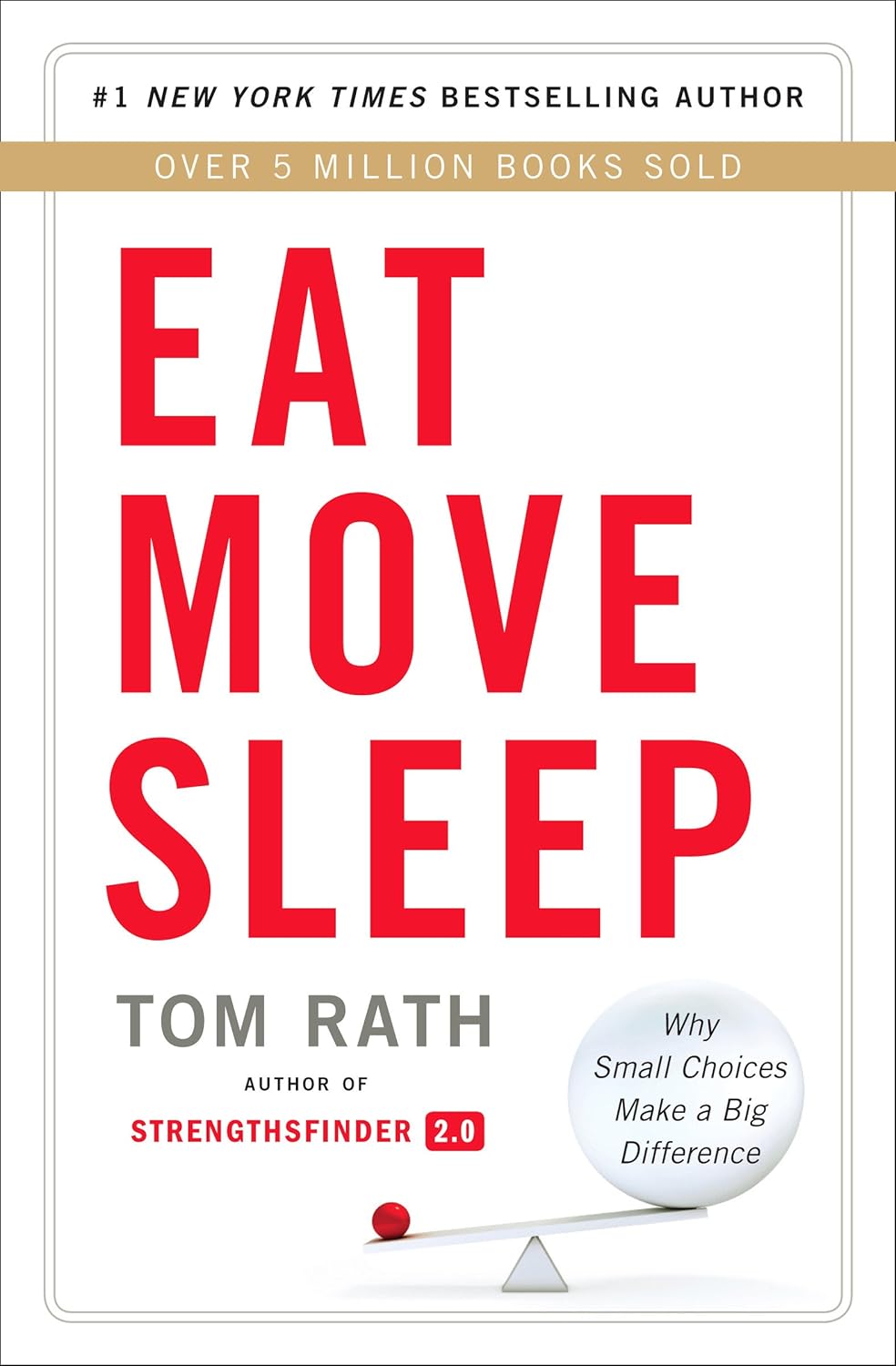
I enlarged the photo in this recent post about health here so the words "Why small choices make a big difference" would be clear.  Life is made up of small choices.  Every moment, whether we think about it or not, is a choice.  I am doing this; I could be doing that. 

There was an article by Leiby Burnham, who regularly writes for Binah magazine, which drove home the point of the importance of small decisions.  He described panicking when his street flooded.  He called a neighbor, the type who always knows what to do, and the neighbor came out with a long pole with a metal claw on the end.  He poked around with it while explaining that the sewer covers have holes that get stuffed with leaves.  When he pulled out the leaves, the water quickly drained away. 

Burnham noted that the clog that flooded his street was made up of small twigs and a few clumps of grass which were easily removed.  The removal of the blockage took two minutes.  Contemplating this he realized this is a good metaphor for life.  "It is usually not the big things that make the most dramatic changes in our life, but the little things.  The big things can be disruptive, but it is the little things that make the man."

He goes on to say that marriages are not made and broken by the big things, the big gifts or the angry scene.  They are made up of the daily little interactions, the greetings, the expressions of gratitude, the helping out.  And they are broken by the little things, the repeated actions and words that bother the other spouse.

He quotes a famous marriage counselor as telling him, "Divorces are almost never about the big things; they are always about the little things."  He goes on to clarify, that these little things accumulate and "clog" the relationship and eventually "flood" the marriage with resentment.

He says that at work the same principle applies.  "It is not the person who can pull impressive spreadsheets, give great presentations or the amount of overtime hours put in.  Rather, it is the person with the can-do attitude who responds with a simple 'yes' to as many requests as possible."

Of course he mentions health as well, the point emphasized in the book I reviewed in the post mentioned above.  "Good health doesn't come from big surgeries and expensive procedures" but from eating right, moving a lot, and sleeping enough and well, all on a regular basis.

I like the way he concludes on a spiritual note with the Rambam that says it is much better to give small amounts to tzedaka many times than the same amount one time, because by doing a mitzvah over and over again, we change ourselves for the better and become giving people.  Writing one check does not have that impact.

It is our frequent tefillos, our thinking of Hashem constantly, always looking for the hashgacha pratis and thanking Hashem, our constant mitzvos that add up.

"It may seem small, but those little twigs and leaves will soon gather together and change our entire lives, flooding us with a greater sensitivity in our observance in both mitzvos between us and Hashem and between us and our fellow Jews.  Sweat the small stuff."

As the Rambam also says, we need to see ourselves and the world in equal balance and just one deed can tip the scales.

Mar 14, 2014

Me and My MP3


When I first started using an mp3 on the street, I was ambivalent about it.  Perhaps when I walked down the street, I should just walk down the street, without doing something else.  You know, just do one thing at a time.  Look at the sky, pay attention to cars and where I'm going.  That's enough stimulation.  This is what I considered, even though I listen to shiurim when working on tasks at home that don't require much thinking or attention. 

Why did I think walking outside is different? I'm not sure.  Maybe something to do with closing myself off, to some extent, from what is going on around me.

Now that I've listened to several hundred shiurim, both while on the street and while at the gym, it seems to me that this was and is a good decision.  If my mind was disciplined and I put it to good use while walking and exercising, then an mp3 player wouldn't be necessary and might even be second best.  But my thoughts are not that focused and since our minds are working constantly, with and without an mp3, it seems a good idea to fill it with worthwhile thoughts through shiurim.

So I download shiurim from the Internet, usually on the parsha or upcoming holiday plus any other topic that sounds interesting.  There are literally thousands of available shiurim and so I can be choosy.  If I don't like a shiur, I'm under no obligation to complete it.  Next.  I move on to something I can benefit from.

I recommend it!

P.S. the picture is what my mp3 player actually looks like

Mar 7, 2014

A Call for Reviewing Hilchos Shabbos

Daily review of the laws of Shemiras Ha'Lashon is pushed aggressively.  Indeed, speaking and listening to lashon hara and rechilus is a grave sin.

Women are urged to review the laws of Family Purity.  Indeed, it is vital to know and observe them meticulously.

However ... what about the Laws of Shabbos?

If you have gone through "Guard Your Tongue" or some such book, you get the idea.  Do not say or listen to anything derogatory, albeit true, about anyone.  That sums it up.  There are related laws, there are exceptions, but that's the basic idea. 

If you have gone through the laws of Family Purity, then you can sum them up in five to ten minutes, what to do, how, and when.  There are many possible questions and situations that can arise, but they are asked of a rav.

But Hilchos Shabbos, which apply every single week, consist of thousands of practical laws.  There is no way to sum them up briefly in a way that is meaningful to one's practical observance.  Yes, you can say there are 39 categories of work, this is what they are, but that tells you nothing about all the derivatives of these primary forms of work and their applications. 

You can summarize Muktza by stating the five categories, but that isn't a true summary of all the laws of Muktza.  It would just be the "headlines" without providing the information that is needed to observe these laws.  It's a vast study!

And even as it is vast, every layperson needs to know them.  At the very least, they need to have a good idea of what constitutes a questionable area, even if they are not familiar with every relevant law.  And yet, those who have always been religious, rely on their knowledge and Shabbos observance of many years.  If they start to study the laws systematically, they discover that they did not actually know all the categories of muktza, or just how to deal with the food on the blech, or all the applications of borer or asking a gentile to do something for you. 

There are very many books on Hilchos Shabbos available, detailed, with and without the reasoning behind the laws, with and without illustrations.  Check this out:
and the one at the head of this post.  Find the ones that appeal to you and you're more likely to learn them.

Feb 28, 2014

Two Points for Being Consistent


Re this post: does-it-work-both-ways and this one: east-and-west , it's not often that I come across someone who is consistent in their parenting outlook.  Author Yael Mermelstein writes that she went to a shiur where the lecturer told the following story:

"Her friend had gone to a rav, bitterly bemoaning the sense of deep failure and disappointment that she felt as her son was no longer keeping Torah and mitzvos. 

"The rav asked her, 'How many other children do you have?'

"She answered, 'I have eight others.'

"And how are they doing?' asked the rav.

"The woman looked at him proudly and said, 'Boruch Hashem, they are all very matzliach (successful).'

"The rav shook his head slowly and then said, 'Your son is no longer walking the derech ha'yashar (straight path) - that is not due to you, just as the hatzlacha the other eight are experiencing is not due to you either.'"

I wonder how this rav defines the term "nachas."

Feb 27, 2014

Why Am I Hearing This?


Someone told me the following:

Her son will be bar mitzvah next year and he started working with a teacher to prepare his haftora.  One day in shul, her husband heard someone relate a story.  The story had to do with a man whose son was not very bright.  He went to R' Shlomo Zalman Auerbach z'l and asked what to do.  He just couldn't see his son laining the haftora like the other boys.

R' Shlomo Zalman said, don't wait until it's six months before his bar mitzvah.  Start a year in advance.  So the boy began studying and preparing to lain the haftora.

Months went by and the boy's father got to talking with someone whose son was also going to be bar mitzvah.  They realized that their sons' bar mitzvah would be on the same Shabbos.  The other man referred to the haftora his son was preparing, "Machar Chodesh," because the Shabbos of the bar mitzvah it would be Shabbos Mevorchim with Rosh Chodesh on Sunday.  When this happens, the usual haftora is waived for the special reading of erev Rosh Chodesh.

The father of the weak boy was in shock.  He hadn't realized that the bar mitzvah Shabbos was Shabbos Mevorchim with the "Machar Chodesh" haftorah.  His son was preparing the wrong haftora!

He went back to R' Shlomo Zalman and asked him what to do, as his son would certainly not be able to start preparing a different haftora at that point.  R' Shlomo Zalman told him to have his son continue preparing the haftora he was working on and that would be fine.

The Shabbos of the bar mitzvah, in walked R' Shlomo Zalman to the shul where the weak boy would be laining.  After the davening, the father went over to him to ask why he had gone out of his way to come to that shul.

R' Shlomo Zalman said, if I would not have come, your son would have started laining and people would have said: No! It's "Machar Chodesh!" Then you would have told them that I said that what he is laining is fine ...

In order to preempt any opposition, R' Shlomo Zalman bothered to show up himself, davening not in his usual shul, so all would go smoothly.

A very nice story indeed.  But it doesn't end there.  The father of the bar mitzvah boy who heard this story in shul wondered: Why did I hear this story?

He went home and checked and ... yup, his son was preparing the wrong haftora.  It will be Shabbos Mevorchim that Shabbos, and the proper haftora for that particular Shabbos is "Machar Chodesh." His son is bright enough so switching haftoras is not a problem.

***
Without the premise that everything is b'hashgacha pratis, the question, Why did I hear this story? is not relevant.  Whenever we wonder why we met someone, why that person called when they did, why we had to see, hear, encounter something, the underlying thought is, Hashem is running the show.  And that's a good thought to have.

Feb 24, 2014

"Eat, Move, Sleep"


I liked this book, Eat, Move, Sleep  - Why Small Choices Make a Big Difference.  In an easy to read format, the author presents research on what and how we should eat, the importance of exercise, and the significance of plenty of sleep.  Each chapter presents a different angle of these three areas and ends with a brief summary of the points that were made.

It can be gratifying to read about the many things you are doing right.  More importantly, it would be great if you picked up a few ideas that you would be willing to incorporate in your daily routine to improve your health. 

Although some reviewers complain that the author is not saying anything new, I found a mix of new and not-new ideas and liked the presentation enough that it didn't bother me.  Another complaint is the source for some of his recommendations.  He has a website where anyone can read the research and decide for themselves. 

These complaints seem picayune to me.  Take what is worthwhile to you, and move on. 

The main thing I took from the book is the importance of moving around, that even if you do regular exercise throughout the week, sitting for hours on end is no good.  Get up and move!

Feb 23, 2014

The Remarkable Story of Clara Hammer 1910-2010


I just finished reading this wonderful book, The Chicken Lady of Jerusalem: A Life of Giving -
The Remarkable Story of Clara Hammer 1910-2010.  I met her, but did not really get to know her.  Now, through the book, I got to know her.  What a lady!

Her idealism, her remaining frum when most of those around her did not, her passion, her strength of character, her love for Jews, for Eretz Yisrael, and for life, her exuberance.  A teacher and a doer.  She wasn't one to sigh over an unfortunate situation; she did something about it.

A short video interview of her: here

Feb 22, 2014

The Answers Lie Within

continued from previous post

"Achieving happiness isn't a negotiable option; it is an integral and fundamental part of avodas Hashem."

A young man who had many difficulties to contend with, told R' Heschel that he repeatedly looked for help from mentors, experts and close friends.  Nothing helped.  Then one day, his mentor, a wise and compassionate person, told him, "You must realize that ultimately it all depends on you.  There is no magic wand that I can wave; there are no shortcuts.  You must stop relying solely on others to change your mood and boost your morale.  With siyata dishmaya you will succeed, but you must do your own hishtadlus.  Force yourself to eat properly, make sure to sleep enough, and work on yourself to internalize the fact that Hashem gave you, and you alone, the strength to deal with your personal tests."

At the first the man felt very hurt but once the message sank in, he was very grateful for the advice.  "Those words changed my life," he told R' Heschel.  "I still face many of the same obstacles, but I look at them differently.  I still turn to my mentor for words of chizuk and direction, but for the first time in years my mood is upbeat and optimistic most of the time."