The picture is the "Star of Life," which is the emblem used on ambulances. What does the symbol represent? A search online says the staff and the snake comes from one of the Greek gods, a god of healing.
Isn't it more likely that the symbol originates with this week's parsha of Chukas? The Jewish people complained, and snakes came and bit them and they died. Moshe prayed on behalf of the people and Hashem told him to fashion a snake and put it on a pole and whoever was bitten was supposed to look at the snake on the pole. Chazal say, "Does a snake cause death or life? However, when Yisrael looked heavenward and subjected their hearts to their Father in heaven, they would be healed, but if not, they would waste away."
Jun 26, 2015
Jun 22, 2015
A New Career
Azriela Jaffe wrote an article in Ami about a man in her community, Steve, who was working as an accountant and hated it. His wife told him to find something that would make him happy. He eventually spoke with an appliance repairman, George, who was friendly with his in-laws, who invited Steve to join him and be shown the ropes.
George did not ask for any money as he trained him for six months. Steve went out with him every day and watched how George did his job.
Steve says George loved what he did and loved the idea of setting someone else up (the highest level of tzedaka according to the Rambam) in business.
Steve opened his own business and has been doing what he enjoys for 29 years. In addition to training Steve, George also trained his son, and son-in-law, both appliance repairmen, as well as eight non-Jews.
Steve in turn has trained a young man in Lakewood and is helping someone else. "Like George, I don't want any money from them. I get nachas out of seeing my pupils become successful. George was very proud of me, and I am very proud of them."
-- That George was so bighearted as to train others so they could support themselves honorably, is inspiring.
-- What I find just as moving is that many people consider a white collar job like accounting to be superior to a blue collar job like appliance repair. In shidduchim, a girl or woman are far more likely to be interested in an accountant that an appliance repairman. I give great credit to Steve's wife for encouraging him to do what makes him happy, rather than insisting that he remain in a more "honorable" profession, sitting in an office.
-- I'd like to know whether Steve always loved working with his hands, fixing things. Why did he choose to spend years on a college degree and studying for the CPA? The Chovos HaLevavos says work in a field you are drawn to and are good at.
-- Common wisdom is that you need not only an undergraduate degree but a graduate degree in order to make a decent parnassa. Steve spent six months and no money learning a profession he loves which apparently supports his family and supports many others in this line of work.
George did not ask for any money as he trained him for six months. Steve went out with him every day and watched how George did his job.
Steve says George loved what he did and loved the idea of setting someone else up (the highest level of tzedaka according to the Rambam) in business.
Steve opened his own business and has been doing what he enjoys for 29 years. In addition to training Steve, George also trained his son, and son-in-law, both appliance repairmen, as well as eight non-Jews.
Steve in turn has trained a young man in Lakewood and is helping someone else. "Like George, I don't want any money from them. I get nachas out of seeing my pupils become successful. George was very proud of me, and I am very proud of them."
-- That George was so bighearted as to train others so they could support themselves honorably, is inspiring.
-- What I find just as moving is that many people consider a white collar job like accounting to be superior to a blue collar job like appliance repair. In shidduchim, a girl or woman are far more likely to be interested in an accountant that an appliance repairman. I give great credit to Steve's wife for encouraging him to do what makes him happy, rather than insisting that he remain in a more "honorable" profession, sitting in an office.
-- I'd like to know whether Steve always loved working with his hands, fixing things. Why did he choose to spend years on a college degree and studying for the CPA? The Chovos HaLevavos says work in a field you are drawn to and are good at.
-- Common wisdom is that you need not only an undergraduate degree but a graduate degree in order to make a decent parnassa. Steve spent six months and no money learning a profession he loves which apparently supports his family and supports many others in this line of work.
Jun 21, 2015
Inside Their Homes
I just finished reading "Inside Their Homes". It was fabulous! I wrote the author to tell him so. The book is about Binyamin and his active seeking of relationships with special people. The book is actually as much about Binyamin as it is about the people he tells about. He is quite an impressive young man.
He describes how since he was a teenager, he has sought to connect with roshei yeshiva and other great men, some well known and others not known at all. He tells the reader how to do it. One of his pieces of advice is, don't just be a taker; see what you can do for the gadol. He says how he came up with ideas of what he could do to benefit those he sought as his mentors.
The book is well-written and in the author's response to me he wrote, "This has been my most popular book so far. I have received an incredible amount of feedback from readers."
Jun 19, 2015
Guilt Revisited
Long ago here, I wrote that "guilt" is considered negative and not Jewish and I wondered about how that fits with the idea of charata (remorse), a component of the teshuva process.
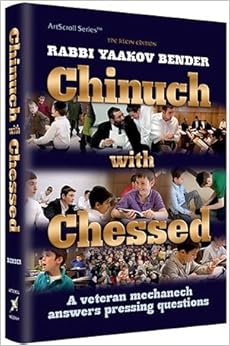
Once again, this time in R' Yaakov Bender's book on chinuch, it's down with guilt and up with regret. He says "there is nothing wrong with busha (shame) and regret," for this is part of teshuva. He says, "This allows us to move on and to become great individuals without an iota of guilt. Guilt is what you want to avoid. We don't want guilt. We don't want negativity."
More from R' Bender: "Are regret, remorse, and embarrassment necessary? Yes, of course, with the proper teshuva. Guilt? Absolutely not."
Maybe someone can explain to me the difference between regret and guilt, since the dictionary says they are synonyms.
Once again, this time in R' Yaakov Bender's book on chinuch, it's down with guilt and up with regret. He says "there is nothing wrong with busha (shame) and regret," for this is part of teshuva. He says, "This allows us to move on and to become great individuals without an iota of guilt. Guilt is what you want to avoid. We don't want guilt. We don't want negativity."
More from R' Bender: "Are regret, remorse, and embarrassment necessary? Yes, of course, with the proper teshuva. Guilt? Absolutely not."
Maybe someone can explain to me the difference between regret and guilt, since the dictionary says they are synonyms.
Jun 18, 2015
Maturity
When we describe a child, a young person, or anyone as "mature," what do we mean by that? Some characteristics are:
the ability to delay gratification
the ability to see the bigger picture
being responsible, taking responsibility
working/living for something higher than yourself
seeing beyond yourself, feeling other's pain
How do you become mature?
Maturity has more to do with what types of experiences you've had and what you do with them,
and what you've learned from them, and less to do with how many birthdays you've celebrated.
A speaker said that when he was a bachur in yeshiva, there would be a basketball game motzoei Shabbos, not for the bachurim, but for men in the neighborhood. One of the players was a guy who years earlier, had been the basketball star in the mountains in camp. At this point, he was older and not in fine form.
The game began and a foul was called against him and he was so upset that he took the ball and said, "It's my ball and I'm leaving." Those who remained were stunned. He sounded like a five year old and yet, he had children of his own!
As the speaker noted, just because you aged, doesn't mean you changed and matured. There are adults who have married and live adult lives but are as immature emotionally as they were when they were children. We need to actively seek change or we are likely to remain the same.
the ability to delay gratification
the ability to see the bigger picture
being responsible, taking responsibility
working/living for something higher than yourself
seeing beyond yourself, feeling other's pain
How do you become mature?
Maturity has more to do with what types of experiences you've had and what you do with them,
and what you've learned from them, and less to do with how many birthdays you've celebrated.
A speaker said that when he was a bachur in yeshiva, there would be a basketball game motzoei Shabbos, not for the bachurim, but for men in the neighborhood. One of the players was a guy who years earlier, had been the basketball star in the mountains in camp. At this point, he was older and not in fine form.
The game began and a foul was called against him and he was so upset that he took the ball and said, "It's my ball and I'm leaving." Those who remained were stunned. He sounded like a five year old and yet, he had children of his own!
As the speaker noted, just because you aged, doesn't mean you changed and matured. There are adults who have married and live adult lives but are as immature emotionally as they were when they were children. We need to actively seek change or we are likely to remain the same.
Jun 17, 2015
Good Chinuch
Tsirel attended Gateshead seminary. One Lag B'Omer, the school went on an outing and a boat trip. She knew that her parents were opposed to boat trips and told the hanhala she could not go. She remained in the school alone (the principal and family were on the premises).
As she sat there reviewing her notes, there was a knock. Who had shown up at the seminary? Her father and uncle! In her two years in seminary, they came just this one time, only because they were somewhat nearby and decided to drive to see her.
Her father asked where is everyone? Why are you here alone? She told him that the school had gone on a boating trip and she did not go because she knew he did not like the idea. He was moved to tears.
Here was a popular, lively, fun-loving girl who did not attend a school sponsored trip because she knew her parents did not approve. They would not have known if she went and the trip was really fine! But since she knew it was something they would not want, she stayed back. How many parents wonder whether the lessons they've taught their children follow them, even when the children are not under the parents' watchful eyes? How many children are faithful to their parents' wishes when unsupervised by their parents?
As she sat there reviewing her notes, there was a knock. Who had shown up at the seminary? Her father and uncle! In her two years in seminary, they came just this one time, only because they were somewhat nearby and decided to drive to see her.
Her father asked where is everyone? Why are you here alone? She told him that the school had gone on a boating trip and she did not go because she knew he did not like the idea. He was moved to tears.
Here was a popular, lively, fun-loving girl who did not attend a school sponsored trip because she knew her parents did not approve. They would not have known if she went and the trip was really fine! But since she knew it was something they would not want, she stayed back. How many parents wonder whether the lessons they've taught their children follow them, even when the children are not under the parents' watchful eyes? How many children are faithful to their parents' wishes when unsupervised by their parents?
Jun 14, 2015
What are My Clothing Saying about Me?
In a write-up about a ger who is a Chassid and dresses as one, he says that when he first saw Chassidim, he did not relate to their clothes but then:
"I had a shift in thinking when my father came to visit me in Israel. We rented a car and when my father asked to speak with the manager, he came out in a button-up shirt as opposed to the polo shirts of the regular employees. My father commented how the manager has to dress better because he has responsibility.
"I thought a lot about it. Doctors have a lab coat, accountants and attorneys wear dark suits, athletes have team uniforms. In business school, when I spent a month at Domus Academy in Milan, I learned how designers sell people on the idea of dressing as an identity - 'I'm a person who wears brand X because it's an identity statement.'
"Everyone, from the president to a drug dealer, wears clothes that send a message about who they are and how they want to be seen in society. When I realized all this, I thought: This is the team I want to be a part of, so I should wear the team colors."
***
What a good question to ask when trying on clothes: What message does this convey about me?
I want to look like this because ______________.
This applies to men, women, boys and girls. Why are you buying that for camp? Why do you wear that length, that style, that color?
The answers might surprise us.
"I had a shift in thinking when my father came to visit me in Israel. We rented a car and when my father asked to speak with the manager, he came out in a button-up shirt as opposed to the polo shirts of the regular employees. My father commented how the manager has to dress better because he has responsibility.
"I thought a lot about it. Doctors have a lab coat, accountants and attorneys wear dark suits, athletes have team uniforms. In business school, when I spent a month at Domus Academy in Milan, I learned how designers sell people on the idea of dressing as an identity - 'I'm a person who wears brand X because it's an identity statement.'
"Everyone, from the president to a drug dealer, wears clothes that send a message about who they are and how they want to be seen in society. When I realized all this, I thought: This is the team I want to be a part of, so I should wear the team colors."
***
What a good question to ask when trying on clothes: What message does this convey about me?
I want to look like this because ______________.
This applies to men, women, boys and girls. Why are you buying that for camp? Why do you wear that length, that style, that color?
The answers might surprise us.
Jun 2, 2015
Seeds and Sprouts
The cover of the book gives no hint as to the contents. Under the title it says, "True stories of inner work, inner growth and inner joy." It turns out, the book is a publication of Bnos Melachim, an organization that promotes tznius in numerous ways.
I was impressed when I read in the introduction that each story was well researched and the facts verified with each protagonist, and that certain stories were omitted because they could not authenticate the information.
Each story highlights a different aspect of tznius under one of six themes: long life and protection, children, health, parnassa, shidduchim-shalom bayis, spiritual success. In each case, when the person undertook a commitment of an upgrade in tznius, they experienced bracha in their life, whether a miracle or a yeshua.
They openly address the fact that there are people who have done the same thing and did not see a heavenly response, and people who have always been modest and yet have difficulties or tragedies in their lives.
They say the book is meant to inspire and not to promise miracles, and in any case, it is not our place to draw direct correlations between our actions and events (though the Gemara tells us to examine our deeds when we experience suffering). Though I think it's somewhat disingenuous to say that when most stories have an amazing connection between an upgrade in tznius (it is usually not a commitment to the basic halacha) and a distressing life situation.
They conclude by cautioning the reader that these stories do not guarantee that any particular commitment will result in a yeshua.
All in all, an inspirational book, though it would be improved with some editing.
I was impressed when I read in the introduction that each story was well researched and the facts verified with each protagonist, and that certain stories were omitted because they could not authenticate the information.
Each story highlights a different aspect of tznius under one of six themes: long life and protection, children, health, parnassa, shidduchim-shalom bayis, spiritual success. In each case, when the person undertook a commitment of an upgrade in tznius, they experienced bracha in their life, whether a miracle or a yeshua.
They openly address the fact that there are people who have done the same thing and did not see a heavenly response, and people who have always been modest and yet have difficulties or tragedies in their lives.
They say the book is meant to inspire and not to promise miracles, and in any case, it is not our place to draw direct correlations between our actions and events (though the Gemara tells us to examine our deeds when we experience suffering). Though I think it's somewhat disingenuous to say that when most stories have an amazing connection between an upgrade in tznius (it is usually not a commitment to the basic halacha) and a distressing life situation.
They conclude by cautioning the reader that these stories do not guarantee that any particular commitment will result in a yeshua.
All in all, an inspirational book, though it would be improved with some editing.
May 31, 2015
We are Confused
I was reading an old Binah magazine which has an extensive tznius section, highlighting various tznius initiatives.
They interviewed a woman who started a tznius hospital gown gemach in memory of her daughter. The typical hospital gown is immodest, while the gowns she provides are simultaneously modest while allowing hospital personnel to do their work (like insert an IV).
What struck me about the article is where the woman says she is always looking for ways to expand the gemach and since there is an overwhelming demand for these gowns, they need more money for fabric, and they want to set up a website.
A website? Hmmm. But if the conservative, quite frum readership of Binah follows the tznius guidelines promoted in the magazine, they won't have Internet in their homes! Who would the website be for?
I know that with filters and other measures and guidance from their rabbis, upstanding people have Internet, but the official line is: no Internet. The tznius stories promoted lately (see next post) include the message of not even using filtered Internet, and as far as business needs are concerned, some stories will tell how they use it under rabbinic guidance while other stories will convey the message that Hashem can send you parnassa without your using the Internet.
So it seems ironic and downright confusing that a tznius initiative wants a website!
They interviewed a woman who started a tznius hospital gown gemach in memory of her daughter. The typical hospital gown is immodest, while the gowns she provides are simultaneously modest while allowing hospital personnel to do their work (like insert an IV).
What struck me about the article is where the woman says she is always looking for ways to expand the gemach and since there is an overwhelming demand for these gowns, they need more money for fabric, and they want to set up a website.
A website? Hmmm. But if the conservative, quite frum readership of Binah follows the tznius guidelines promoted in the magazine, they won't have Internet in their homes! Who would the website be for?
I know that with filters and other measures and guidance from their rabbis, upstanding people have Internet, but the official line is: no Internet. The tznius stories promoted lately (see next post) include the message of not even using filtered Internet, and as far as business needs are concerned, some stories will tell how they use it under rabbinic guidance while other stories will convey the message that Hashem can send you parnassa without your using the Internet.
So it seems ironic and downright confusing that a tznius initiative wants a website!
May 30, 2015
Investing Our Energy
We often read or hear about fulfilling our tafkid, our life's mission. Aside from learning Torah and doing mitzvos, which is incumbent on us all, we might wonder: what is my particular life's mission?
Ideas for direction include 1) that which you are drawn to and 2) that which you find difficult. True, if you are drawn to something, it could be because that is where your tafkid lies. At the same time, if some area of mitzvos is difficult for you, that could very well be where your tafkid lies, although there is something contradictory about that, isn't there ...
I came across this line which I liked, which relates to figuring out where to put one's energies. It goes like this: "It is not something that I believe I should do; it's something that I cannot help but do."
Ideas for direction include 1) that which you are drawn to and 2) that which you find difficult. True, if you are drawn to something, it could be because that is where your tafkid lies. At the same time, if some area of mitzvos is difficult for you, that could very well be where your tafkid lies, although there is something contradictory about that, isn't there ...
I came across this line which I liked, which relates to figuring out where to put one's energies. It goes like this: "It is not something that I believe I should do; it's something that I cannot help but do."
May 29, 2015
Two Views on Family Time
Rabbi Bender, rosh yeshiva of Darchei Torah in Far Rockaway, and renowned mechanech, strongly promotes spending time with family. He writes, "Keeping a close kesher with relatives is very important. Chazal emphasize to us how we should value our relationships even with distant relatives. Hashem found fault with Avrohom Avinu for abandoning Lot."
Regarding children attending family simchos, for example, a son coming from yeshiva in Eretz Yisrael and parents wondering whether he should stay through the Shabbos sheva brachos or immediately return to yeshiva [note, the question is not whether he should fly in for the wedding; that's a given], R' Bender wrote, "It is my feeling and very strongly so, that parents are entitled to have all their children at each and every family simcha. All members of a family belong at the simcha of an immediate member of the family. It is simply the right thing.
"Boruch Hashem, we are living in a time when we have grandparents and great-grandparents. Why shouldn't your son from Eretz Yisrael spend time with them, be meshamesh them, gain from their elder wisdom, hear about past simchos, and just be in the atmosphere of mishpacha? ... There is so much to be gained from interacting with all parts of the family, even distant cousins. I am forever grateful to my mother for teaching us the importance of keeping a very close connection with all our relatives. I will never forget how she was determined to travel very long distances when she was elderly and frail, to attend family simchos."
Rabbi Avigdor Miller z'l, on the other hand, thinks spending time with family is mostly a waste of time and takes away from Torah study. Here's a quote:
"Motzoai Shabbos is an opportunity, don't just run around visiting relatives; forget about relatives. You have one relative you have to visit, that's yourself. It's not selfish, because life is only for the purpose of making something out of yourself. So you have Friday night, all day Shabbos; remember Shabbos morning before davening should be utilized. Shabbos afternoon, Motzoai Shabbos. If you don't work on Sundays, be a kollel man on Sundays. "Oh!" your wife will say, "at least one day a week you have to be home!" Answer is, say, "My dear, I am not in the yeshiva now, yeshiva people are going full speed ahead every day of the week, I have one day and that one day I should waste?" So Sunday morning say good bye to your family, take along lunch and you spend the day someplace else, don't go home until nighttime."
Rabbi Miller certainly did not "waste time" attending simchas and rarely attended them.
May 28, 2015
Not Doing the Best He Can!
Years ago, when I read the line, "S/he's doing the best s/he can with the tools s/he has," to put a positive spin on a negative situation, I didn't buy it. Who said he's doing his best? I know I'm not doing my best, so why would I think others are?
I recently read an article by R' Fishel Schachter in which he describes preparing a shiur on a daf of Gemara with a Rashi that contains a lengthy mathematical calculation. He wanted to avoid it altogether but was forced to tackle it. He spent days on it until he finally mastered it.
He asks, what if he did not have to prepare the shiur? If he had been learning that Rashi with a chavrusa, he would have read it through superficially and moved on. His thinking would have been, these mathematical calculations are not for me. He would have believed that he could never understand it and forget about teaching it to others.
So he asks, what do we mean when we say we can't do something? He answers:
"Perhaps we mean: Given my current level of motivation, I can't.
Or, given the amount of resources and time I am willing to invest in whatever it is, I can't.
Or, given my existing level of emuna as to whether the success at the end will justify the effort, I can't.
Or, I am so concerned with failing that I am not willing to really apply myself properly.
Or, I don't fully understand that for all practical purposes I can't do anything without siyata dishmaya."
He concludes, "Let's stop thinking whether we can or can't. Let's just engage and wait for help to come from Above. The next time you hear yourself saying, 'I just can't do it,' take a moment to reflect on what you really mean. The greatest opportunity of your life may be at hand. Don't miss the call."
I recently read an article by R' Fishel Schachter in which he describes preparing a shiur on a daf of Gemara with a Rashi that contains a lengthy mathematical calculation. He wanted to avoid it altogether but was forced to tackle it. He spent days on it until he finally mastered it.
He asks, what if he did not have to prepare the shiur? If he had been learning that Rashi with a chavrusa, he would have read it through superficially and moved on. His thinking would have been, these mathematical calculations are not for me. He would have believed that he could never understand it and forget about teaching it to others.
So he asks, what do we mean when we say we can't do something? He answers:
"Perhaps we mean: Given my current level of motivation, I can't.
Or, given the amount of resources and time I am willing to invest in whatever it is, I can't.
Or, given my existing level of emuna as to whether the success at the end will justify the effort, I can't.
Or, I am so concerned with failing that I am not willing to really apply myself properly.
Or, I don't fully understand that for all practical purposes I can't do anything without siyata dishmaya."
He concludes, "Let's stop thinking whether we can or can't. Let's just engage and wait for help to come from Above. The next time you hear yourself saying, 'I just can't do it,' take a moment to reflect on what you really mean. The greatest opportunity of your life may be at hand. Don't miss the call."
May 26, 2015
Statistics and Us
Rabbi L. of Flatbush has a granddaughter in a coma (may she have a refuah shleima). He reported that the doctor was asked what her prognosis is.
The answer wasn't positive but the doctor added: You never know, with you people things are different.
***
It's one thing for us to hear that in a shiur or read it, and another thing when someone in the field, apparently not Jewish, says it!
The answer wasn't positive but the doctor added: You never know, with you people things are different.
***
It's one thing for us to hear that in a shiur or read it, and another thing when someone in the field, apparently not Jewish, says it!
May 11, 2015
A Thought-Provoking Letter
The following letter was printed in Binah magazine in March 2015:
"I live in a community where boxes are getting smaller and smaller, and the only way to get the contents to stay in the box is to sit on the cover and squash it so it fits.
I have been forced to send my daughter to an out-of-town high school because no school in town could accommodate her. She is a girl who is tzniusdik, respectful, and bright. She is also very talented and creative, and would love to have a career as an artist or fashion designer. She voiced that once in a personal essay at school and it set off a flurry of conferences as to where this heimishe girl was getting such aspirations from.
Once that red flag was raised, it all went downhill. She was called in and asked pointed questions such as, "Do you read fashion magazines?" When she answered in the negative, they asked her, "So how will you be a fashion designer? Do you understand why it's the wrong career choice?" And then, I kid you not, she was asked to re-write the essay with a more preferable career choice for a frum girl.
She came home broken and confused. "Why is it okay for Mrs. X (a parent on the PTA committee) and Rebbetzin L to design tzniusdik fashionable robes and children's clothes, but I can't? Why do I need to write an essay that is a lie?"
She is respectful, my daughter, so she wrote a beautiful essay on why she would shift careers and become an accountant instead. She called my neighbor, a mechaneches, and told her the story and asked her to read it to ensure that not a hint of cynicism was in there. My neighbor read it, praised her, and then called me, insisting, "You must talk to your rav. This girl is going to learn a new habit: lie about who she is and say everything right to satisfy those around her. She must get out of the school and learn that it's not a way of life."
She scared me (this is my oldest child and I would not have stepped out of the box and made a fuss had she not pushed me) and I did call our rav, who advised us. He explained it all, in person, to our daughter, and encouraged her to become the best frum fashion designer there is and raise the kedusha level of Klal Yisrael with her creations. He encouraged us to find a high school that would nurture her passion for art and allow more self-expression.
Prior to this, I too was a very "in the box" type. Now, I worry about its far-reaching effects."
"I live in a community where boxes are getting smaller and smaller, and the only way to get the contents to stay in the box is to sit on the cover and squash it so it fits.
I have been forced to send my daughter to an out-of-town high school because no school in town could accommodate her. She is a girl who is tzniusdik, respectful, and bright. She is also very talented and creative, and would love to have a career as an artist or fashion designer. She voiced that once in a personal essay at school and it set off a flurry of conferences as to where this heimishe girl was getting such aspirations from.
Once that red flag was raised, it all went downhill. She was called in and asked pointed questions such as, "Do you read fashion magazines?" When she answered in the negative, they asked her, "So how will you be a fashion designer? Do you understand why it's the wrong career choice?" And then, I kid you not, she was asked to re-write the essay with a more preferable career choice for a frum girl.
She came home broken and confused. "Why is it okay for Mrs. X (a parent on the PTA committee) and Rebbetzin L to design tzniusdik fashionable robes and children's clothes, but I can't? Why do I need to write an essay that is a lie?"
She is respectful, my daughter, so she wrote a beautiful essay on why she would shift careers and become an accountant instead. She called my neighbor, a mechaneches, and told her the story and asked her to read it to ensure that not a hint of cynicism was in there. My neighbor read it, praised her, and then called me, insisting, "You must talk to your rav. This girl is going to learn a new habit: lie about who she is and say everything right to satisfy those around her. She must get out of the school and learn that it's not a way of life."
She scared me (this is my oldest child and I would not have stepped out of the box and made a fuss had she not pushed me) and I did call our rav, who advised us. He explained it all, in person, to our daughter, and encouraged her to become the best frum fashion designer there is and raise the kedusha level of Klal Yisrael with her creations. He encouraged us to find a high school that would nurture her passion for art and allow more self-expression.
Prior to this, I too was a very "in the box" type. Now, I worry about its far-reaching effects."
May 4, 2015
How Are We Different 3
As a follow-up to previous posts on the topic of "Mi K'Amcha Yisrael"
here and here
I read (Mishpacha magazine) that a Cleveland benefactor came up with a fantastic chesed idea for families traveling on the afternoon and evening of bedikas chometz, when their car is chometz-free and everyone is hungry. He, together with others, picked a location between Lakewood and Cleveland on the side of the highway and set up a huge roadside barbeque where travelers going in either direction could stop for a hot meal.
There was no cost for the meals; rather, donations were made to Cleveland's Matan B'Sayser fund. This year, there was also a food stop located on the route between Toronto and Detroit.
The news item says 1100 people enjoyed hot meals between 1 and 10 pm, there were minyanim for mincha and then maariv, and when rain threatened, two bachurim hurried to the nearest Walmart and bought tents.
Quite impressive!
here and here
I read (Mishpacha magazine) that a Cleveland benefactor came up with a fantastic chesed idea for families traveling on the afternoon and evening of bedikas chometz, when their car is chometz-free and everyone is hungry. He, together with others, picked a location between Lakewood and Cleveland on the side of the highway and set up a huge roadside barbeque where travelers going in either direction could stop for a hot meal.
There was no cost for the meals; rather, donations were made to Cleveland's Matan B'Sayser fund. This year, there was also a food stop located on the route between Toronto and Detroit.
The news item says 1100 people enjoyed hot meals between 1 and 10 pm, there were minyanim for mincha and then maariv, and when rain threatened, two bachurim hurried to the nearest Walmart and bought tents.
Quite impressive!
Subscribe to:
Posts (Atom)